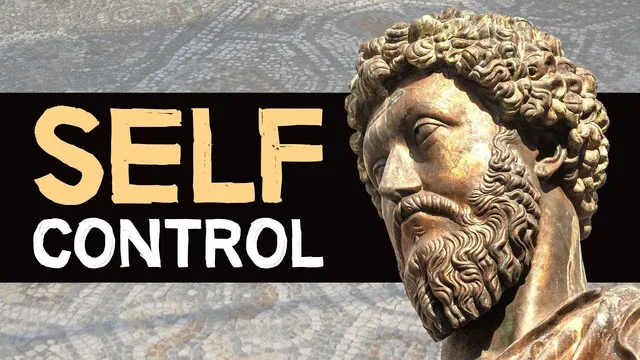
Mastering Self Control | Stoic Exercises For Inner Peace
Based on Einzelgänger's video on YouTube. If you like this content, support the original creators by watching, liking and subscribing to their content.
Stoic self-control centers on strengthening the mental faculty that remains under personal control, so impulses and temptations lose power.
Briefing
Stoic self-control is framed as a practical way to break the grip of impulses, cravings, and outside pressures by strengthening what’s truly under personal control: one’s own mental faculty. The core move is distinguishing between controllable and uncontrollable factors, then training the controllable faculty so triggers and temptations lose their power. In that view, inner peace isn’t achieved by eliminating desire, but by making the mind less “enslaved” to it—so changing circumstances don’t dictate emotional outcomes.
That principle is illustrated through a personal 72-hour water fast. The first day is described as the hardest, while the second day becomes unexpectedly “blissful,” with normal tasks still completed. The experience shifts how food is perceived: the belief that one would faint after a day without eating is replaced by evidence that functioning continues after a period of abstinence. The lesson drawn is that many needs and desires are not purely bodily; they’re also driven by ingrained ideas. By abstaining for 72 hours, the relationship with food changes—less “needy” dependence, less worry, and greater confidence that the body can endure without constant feeding.
The transcript then grounds self-control in Stoic authorities. Epictetus is cited for abstaining from vulgar talk, while Marcus Aurelius is used to justify setting limits on comfort and consumption. Seneca is presented as arguing that refusing the city’s feasts and drunken indulgence takes courage, but even more courage lies in participating differently—without extravagance. Seneca’s prescription is to schedule days of scarcity: eat the cheapest, coarsest fare, wear rough clothing, and ask oneself, “Is this the condition that I feared?” The point is to test whether feared discomfort is as terrifying as imagined.
Marcus Aurelius adds a broader ethical lens: people should not spend life eating, drinking, and sleeping to excess, especially when the rest of the planet performs its roles. His analogy of plants, birds, ants, spiders, and bees emphasizes each creature doing its task, followed by a challenge to humans to do theirs. The transcript also stresses “living in agreement with nature,” meaning human nature as defined by Stoic ethics: virtue aligns with nature, and vice does the opposite. Courage and moderation are highlighted as cardinal virtues, with courage including endurance and industriousness, and moderation including modesty and self-control.
Finally, the practical training methods are made concrete. Fasting is described as effective (with a caution to consult a doctor). Digital restraint is offered as another route—restricting smartphone, social media, and internet use. A behavioral exercise is also suggested: pause in front of the dish before eating and chew deliberately for a set number of times, making self-control feel physically difficult. The payoff is contentment with what’s available, reduced dependence on imagined needs, and a deeper familiarity with hardship—hunger, bad luck, and exhausting work—leading to inner peace. Seneca’s closing sentiment urges becoming “intimate with poverty” so fortune can’t surprise you, because learning how far “poverty” is from real burden strengthens resilience.
Cornell Notes
Stoic self-control is presented as the skill of strengthening what’s within personal control—one’s own mental faculty—so impulses, triggers, and temptations lose their power. The transcript links this to a key Stoic practice: separating controllable from uncontrollable factors and training the mind to remain steady amid change. A 72-hour water fast is used as a lived example, shifting the belief that missing food would be dangerous and reducing anxiety about food. Seneca and Marcus Aurelius are cited to support scheduled discomfort, modest participation in pleasures, and limits on leisure and consumption. The result sought is contentment, reduced dependence on perceived needs, and inner peace grounded in virtue.
How does Stoicism define the “lever” for self-control in this transcript?
What does the 72-hour water fast demonstrate, and what lesson is drawn from it?
Why does Seneca recommend participating in festivities “in a different way”?
How does Marcus Aurelius connect self-control to “living in agreement with nature”?
What concrete exercises are suggested for training self-control beyond fasting?
What is the intended emotional payoff of these practices?
Review Questions
- What does the transcript claim is the main thing Stoicism trains to gain self-control, and why does that matter for impulses?
- How does the 72-hour water fast alter the speaker’s stated beliefs about food and functioning?
- Which Stoic virtues are highlighted as central to moderation and courage, and how are they connected to self-control?
Key Points
- 1
Stoic self-control centers on strengthening the mental faculty that remains under personal control, so impulses and temptations lose power.
- 2
A core practice is separating controllable factors from uncontrollable ones, then training responses rather than trying to control events.
- 3
Scheduled discomfort—such as days of cheap food and rough clothing—functions as a test of whether feared hardship is truly as threatening as imagined.
- 4
Limits on leisure and consumption are framed as part of living according to human nature and Stoic ethics, not as mere deprivation.
- 5
Fasting is presented as an effective training tool, with an explicit caution to consult a doctor before attempting it.
- 6
Digital restraint (reducing smartphone, social media, and internet use) is offered as a modern method for practicing self-control.
- 7
Self-control aims at contentment: less anxiety about needs, less dependence on perceived cravings, and greater inner peace through familiarity with hardship.