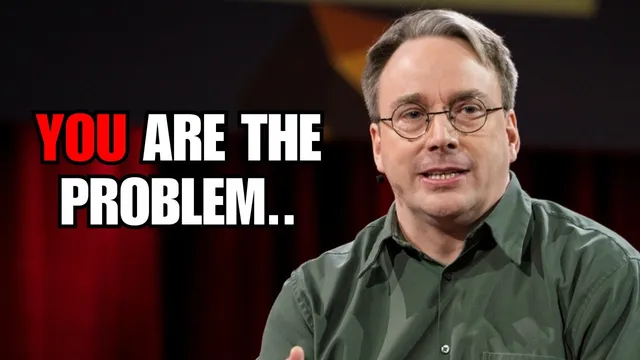
"... maybe the problem is you" - Linus
Based on The PrimeTime's video on YouTube. If you like this content, support the original creators by watching, liking and subscribing to their content.
Rust integration in the kernel is framed as a maintenance-boundary problem, not a pure “Rust vs C” quality debate.
Briefing
A long-running dispute inside the Linux kernel community over adding Rust centers on a single fault line: whether Rust can be integrated without turning core subsystems into a permanently cross-language maintenance burden. The flashpoint mail thread begins with pushback on Rust being used in DMA-related kernel code, with Christopher Helwig arguing that DMA interfaces should remain readable C and that duplicating Rust bindings across drivers would create a “bike-shedding” maintenance nightmare—especially for developers who navigate code with tools like grep rather than modern language servers.
Danilo (spelled “Danilo” in the transcript) counters with a more structured proposal: Rust drivers should not call C DMA APIs directly. Instead, Rust should provide a maintained abstraction layer that wraps the C DMA API once, so each Rust driver consumes the same Rust-side interface rather than re-implementing glue code. The goal is to keep the Rust layer as a single “midlayer consumer” of the DMA API, reducing duplicated code and limiting where breakage would occur when the underlying C interfaces evolve. In this framing, the Rust abstraction would be maintained by Rust maintainers, and changes to the C API would be handled through coordinated updates—similar to how kernel components already collaborate when C-side APIs shift.
Christopher Helwig’s opposition sharpens around maintainability and boundaries. He argues that adding another language consumer increases the maintenance surface area of the kernel as an integrated project, warning that even if Rust maintainers promise to keep up, the practical reality is that Rust becomes downstream of C changes. That downstream position can mean constant “fast-follower” work whenever C APIs change, and it also raises concerns about what happens if Rust maintainers leave or can’t respond quickly enough.
The thread then escalates from technical process to governance expectations. A key exchange references Linus Torvalds’ enforcement stance: Rust-related build failures must be handled in the normal development workflow, and the responsibility for keeping Rust builds working is treated as a shared obligation depending on whether changes are in staging or core paths. Greg Kroah-Hartman weighs in by distinguishing between tooling/build breakage and true API-change breakage, and by emphasizing that when core subsystem changes land and break Rust builds, the Rust maintainers are expected to fix the Rust side as part of the normal kernel integration process.
Beyond the Rust-vs-C technical debate, the transcript also captures a parallel conflict over tone and community norms. A “cancer” remark aimed at another contributor triggers discussion of code-of-conduct boundaries and social-media “brigading,” with Linus Torvalds pushing back on inflammatory language and urging participants to keep arguments technical and process-focused. The thread ultimately lands on a pragmatic compromise: Rust can be integrated, but the community wants clear expectations about where breakage is allowed, who fixes it, and how to avoid multiplying maintainers and duplicated abstractions across drivers.
Overall, the core finding is that Rust integration is less about whether Rust is “better” and more about whether the kernel can absorb cross-language complexity without creating a permanent downstream maintenance tax—an issue that, in practice, depends on coordination speed, maintainer continuity, and explicit rules for when Rust builds must pass versus when staging breakage is acceptable.
Cornell Notes
The dispute over Rust in the Linux kernel’s DMA subsystem boils down to maintenance boundaries. Rust advocates propose a single maintained Rust abstraction layer that wraps C DMA APIs, so individual Rust drivers don’t duplicate glue code. Christopher Helwig objects that any cross-language boundary increases long-term maintenance and makes Rust a downstream “fast follower” whenever C interfaces change. Greg Kroah-Hartman and others emphasize that integration rules already require coordination when C APIs evolve, and that Rust maintainers should fix Rust breakage caused by subsystem changes. Linus Torvalds also intervenes on process and tone, rejecting inflammatory language and pushing for clear, technical expectations rather than social escalation.
Why does Christopher Helwig insist DMA interfaces should stay in readable C rather than Rust bindings spread across drivers?
What is Danilo’s proposed compromise for Rust DMA drivers, and how does it address duplication?
What does the thread reveal about the real cost of being downstream of API changes?
How do Greg Kroah-Hartman’s remarks distinguish between types of breakage in kernel integration?
What role does Linus Torvalds play beyond the Rust technical debate?
Why does the thread keep returning to “maintainers” and continuity rather than pure language quality?
Review Questions
- What technical mechanism does Danilo propose to prevent duplicated Rust DMA code across drivers, and why is that mechanism central to the compromise?
- How do the participants’ views differ on what “responsibility” means when C APIs change and Rust builds break?
- What does Linus Torvalds’ intervention on language (“cancer”) suggest about the kernel community’s tolerance for social escalation versus technical argumentation?
Key Points
- 1
Rust integration in the kernel is framed as a maintenance-boundary problem, not a pure “Rust vs C” quality debate.
- 2
Danilo’s proposal centers on a single maintained Rust abstraction layer wrapping the C DMA API, so Rust drivers don’t duplicate glue code.
- 3
Christopher Helwig’s opposition focuses on keeping DMA interfaces readable and avoiding cross-language complexity spreading into core subsystems.
- 4
Greg Kroah-Hartman distinguishes tooling/build breakage from API-change breakage, arguing that Rust maintainers should fix Rust breakage when subsystem APIs evolve.
- 5
Linus Torvalds emphasizes clear process expectations for Rust build health and rejects inflammatory social language that derails technical work.
- 6
The thread highlights how downstream maintenance can feel like “fast-follower” work, increasing stress and coordination costs even when promises to maintain exist.