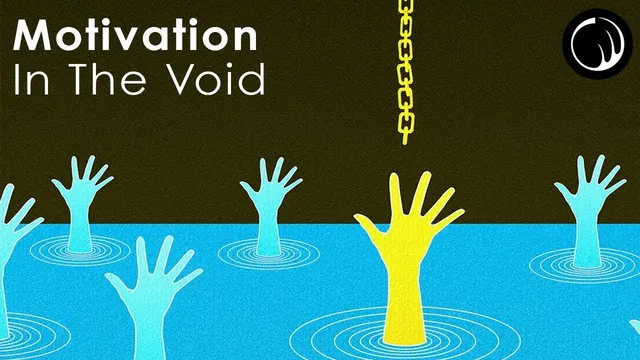
Meaning & Nothingness - Finding Motivation In The Void
Based on Pursuit of Wonder's video on YouTube. If you like this content, support the original creators by watching, liking and subscribing to their content.
Motivation can collapse when people outgrow comforting life narratives and confront uncertainty, absurdity, and apparent meaninglessness.
Briefing
Motivation in modern life is increasingly hard to find because many people feel they’ve outgrown comforting, storybook explanations—only to be left with uncertainty, absurdity, and a sense that existence lacks an obvious narrative or purpose. The core claim is that this bleak feeling isn’t solved by chasing a universal “meaning of life” or a one-size-fits-all formula. Instead, meaningful motivation has to be built from something more grounded: the acceptance that life’s chaos and pain won’t be permanently eliminated, and that no final template—social, financial, or ideological—can guarantee happiness or certainty.
The transcript frames human progress as an evolutionary climb: ancestors developed survival strategies, exchange systems, health practices, and advanced technologies aimed at longevity, safety, and efficiency. Yet despite reaching the “top,” many still report emptiness. That mismatch becomes the central problem: awareness has expanded, but the old narratives no longer fit. The result is a shift from “life has a clear reason” to “life may not have a clear reason at all,” which can make motivation feel irrational or hollow.
To illustrate how limited perspective can misread purpose, the transcript invokes Kurt Vonnegut’s “breakfast of champions” allegory about two yeast cells. The cells debate the purpose of life while unknowingly making champagne—an image meant to show that beings with constrained intelligence can still participate in something larger without understanding it. The point isn’t that humans will definitely discover a benevolent end; it’s that people may be “passengers” in a process they can’t fully interpret. The honest conclusion, then, is not certainty about meaning, but the willingness to live without it.
From there, the transcript argues for a practical alternative: stop waiting for an ultimate answer or afterlife guarantee, and instead cultivate personal meaning based on what a person can do “right now.” It emphasizes that motivation should not be built around impressing others or meeting societal ideals. Each person’s source of drive is unique, and the task is to critically examine inputs and assumptions rather than outsource purpose to mass disillusionment.
Two psychological frameworks are offered as guides for finding a deeper self. Abraham Maslow’s pyramid of needs moves from physiological and safety needs toward love and esteem, culminating in self-actualization—living according to one’s true potential. Carl Jung’s individuation describes layers around a core self: outward social personas, hidden unconscious elements (including Jung’s shadow and animus/anima concepts), and a central self that can become more fully conscious. Together, these ideas support the claim that meaning can be discovered through inner development rather than external guarantees.
Finally, the transcript lands on a communal ethic: people are fragile, scared, and often insignificant at a distance, yet they can still help one another through words, art, honesty, and effort. The “togetherness” isn’t based on the belief that life is easy or fair, but on the shared reality that no one knows what’s going on—and that making something beautiful, helpful, or interesting out of the blank page of existence may be the only enduring project available.
Cornell Notes
The transcript argues that modern motivation often collapses when people outgrow old life narratives and confront uncertainty, absurdity, and apparent meaninglessness. It rejects the idea of a universal “cheat sheet” for happiness or purpose, insisting that life’s chaos can’t be permanently removed by money, achievement, or borrowed ideals. Instead, meaning should be built from acceptance of not-knowing and from personal self-discovery. Maslow’s hierarchy of needs and Jung’s individuation are used to suggest that a deeper “true self” can be uncovered and expressed, leading to more authentic purpose. The message ends with a communal stance: people can’t guarantee meaning, but they can create value together through art, honesty, and effort.
Why does the transcript treat “meaninglessness” as a contemporary crisis rather than a purely philosophical mood?
What does the yeast-cells allegory (via Kurt Vonnegut) contribute to the argument about purpose?
How does the transcript propose replacing the search for universal meaning?
How do Maslow’s pyramid of needs and Jung’s individuation connect to “finding meaning”?
Why does the transcript warn against outsourcing purpose to societal ideals?
What role does community play if no one knows what’s going on?
Review Questions
- What reasons does the transcript give for why motivation fails when old narratives stop working?
- How do Maslow’s hierarchy of needs and Jung’s individuation each describe a path toward a more authentic sense of purpose?
- What does “acceptance of not knowing” change about how a person should pursue meaning according to the transcript?
Key Points
- 1
Motivation can collapse when people outgrow comforting life narratives and confront uncertainty, absurdity, and apparent meaninglessness.
- 2
No universal formula or guaranteed end-state can remove life’s chaos and pain; meaning must be built rather than found as a final solution.
- 3
Waiting for a grand template—social ideals, wealth, achievement, or afterlife certainty—undermines authentic motivation.
- 4
Kurt Vonnegut’s yeast allegory is used to argue that limited perspective can misread purpose, and that humans may participate in larger processes without understanding them.
- 5
Maslow’s pyramid of needs links purpose to development from basic needs toward self-actualization.
- 6
Jung’s individuation frames meaning as emerging from integrating outer personas and unconscious layers into a more conscious “core self.”
- 7
Even without certainty, people can create value together through art, honesty, and sustained effort.