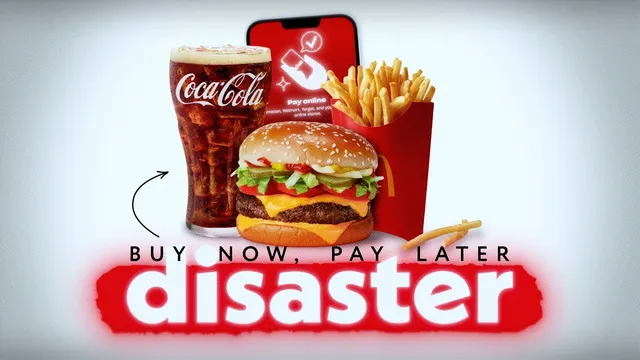
Microfinancing a Burrito
Based on Second Thought's video on YouTube. If you like this content, support the original creators by watching, liking and subscribing to their content.
BNPL lets shoppers pay in installments after purchase, but it operates like credit even when marketed as “financial wellness.”
Briefing
Buy now pay later (BNPL) services are booming by offering instant, short-term credit at checkout—often framed as “financial wellness” with “no interest.” But the underlying business model relies on fees, vendor markups, and data advantages, while consumer protections lag behind credit cards. The result is a system that can keep people spending while quietly shifting risk onto borrowers, especially during a cost-of-living squeeze.
BNPL works by letting shoppers purchase items without paying the full amount upfront, then splitting the cost into smaller payments over a set period (commonly “four easy payments”). Companies such as Clara, Affirm, and Afterpay market the experience as convenient and non-bank-like, emphasizing that they don’t want to lend to people who can’t repay. Yet the mechanics are more like credit: BNPL firms act as middlemen, taking commissions from sellers and charging late fees when payments are missed. Even without interest rates, late fees can function like high-cost borrowing for those who fall behind. Vendors also pay negotiated fees (often described as a percentage), and those costs may be passed to consumers.
A major unknown—and a key concern—is how much harm is actually occurring. BNPL companies are not tightly regulated and often don’t report consistently to credit agencies, meaning the scale of defaults and total debt exposure is unclear. Public claims about late-fee rates conflict with outside reporting: one cited figure says only about 4% of users are charged late fees, while a Bloomberg survey found that number could be as high as 43%. Either way, the consequences can be severe for the minority who get trapped.
Two case examples illustrate how quickly small debts can spiral. One participant accumulated roughly AU$70,000 after using multiple BNPL services under different names and later facing job loss and car repossession tied to credit card debt. Another account described a user locked out of their Clara account after switching phone carriers; customer support was handled by AI, and the inability to resolve a few hundred dollars of debt reportedly contributed to a credit score drop of about 300 points until the story drew press attention and a human intervened.
Beyond repayment terms, BNPL firms are designed to be easy to access and hard to disengage from. The signup process can involve fewer safeguards than traditional lending, including limited friction around identity and affordability. Once onboard, spending can be nudged upward through gamified features—such as spending limits that increase after on-time payments—and personalized “wrapped”-style summaries of purchases that encourage continued consumption.
The political and regulatory angle is central to the risk. Consumer protections that apply to credit cards—like the Truth in Lending Act’s requirements for clear terms and dispute rights—do not automatically extend to BNPL. Efforts to bring BNPL under similar rules have faced lobbying pressure. The Consumer Financial Protection Bureau (CFPB) has also faced major disruption, with employees ordered to stop working and the agency targeted for elimination, reducing enforcement of consumer safeguards.
In a broader cost-of-living crisis, BNPL is portrayed as part of an infrastructure that financializes everyday life—turning necessities into debt-managed transactions. The fear is not that debt is new, but that a deregulated model makes it easier to become dependent, while profits from fees and data help entrench a government with fewer consumer protections. The endgame, as described, is a middleman system that profits from desperation—and expands beyond retail into areas like healthcare and insurance.
Cornell Notes
Buy now pay later (BNPL) apps let shoppers buy now and pay later in installments, often marketed as “financial wellness” rather than credit. Behind the friendly branding, BNPL firms earn money through commissions from sellers, late fees when payments are missed, and vendor charges that may be passed to consumers. Regulation and reporting are weaker than for credit cards, so the full scale of defaults and borrower harm is harder to measure. Case examples show how quickly small debts can escalate into large credit and collections problems. The broader concern is that, amid unaffordable living costs, BNPL makes debt easier to access and harder to escape—while lobbying and reduced enforcement limit consumer protections.
How do BNPL companies make money if they advertise “no interest” for on-time payments?
Why is it difficult to know how risky BNPL is compared with credit cards?
What makes BNPL feel more “dangerous” than traditional credit, even if debt exists in both systems?
How do the regulatory and political dynamics affect consumer protection for BNPL users?
What do the personal case stories suggest about how BNPL problems escalate?
Review Questions
- What revenue mechanisms besides interest payments drive BNPL profitability, and how do late fees function for borrowers?
- How do weaker reporting and regulation change what consumers (and researchers) can know about BNPL default risk?
- Which specific safeguards tied to credit cards are described as missing or less applicable to BNPL, and why does that matter during a cost-of-living crisis?
Key Points
- 1
BNPL lets shoppers pay in installments after purchase, but it operates like credit even when marketed as “financial wellness.”
- 2
BNPL firms earn money through seller commissions, vendor fees, and late fees when payments are missed.
- 3
Because BNPL is less regulated and may not report consistently to credit agencies, the true scale of defaults and borrower harm is harder to quantify.
- 4
Gamified features—such as spending limits that increase after on-time payments—can encourage users to spend beyond their initial comfort level.
- 5
Case examples show how identity complexity, customer support failures, and small debts can escalate into large credit and collections problems.
- 6
Regulatory gaps matter: credit-card protections like the Truth in Lending Act are described as not automatically applying to BNPL.
- 7
Lobbying and enforcement disruptions (including CFPB targeting) reduce consumer safeguards, increasing the risk for vulnerable borrowers.