More Evidence for UAPs! Scientists Afraid to Speak Out
Based on Sabine Hossenfelder's video on YouTube. If you like this content, support the original creators by watching, liking and subscribing to their content.
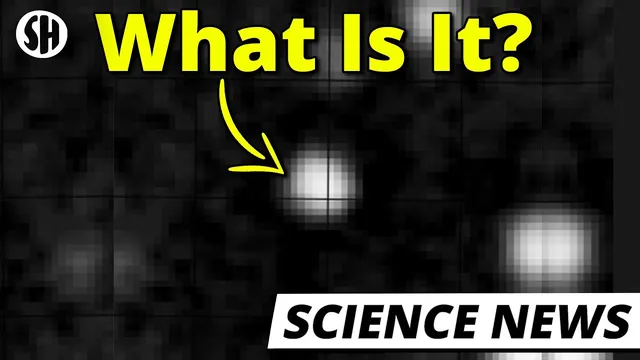
Independent reanalysis of different archival photographic plates reports the same type of brief “transient” events, adding 35 cases to earlier findings.
Briefing
A new independent analysis strengthens the case that some unidentified anomalous phenomena (UAPs) are real physical transients—objects that appear briefly and then vanish—based on decades-old telescope photographs. The key claim is that multiple short-lived events in archival plates look like fast-moving, nearby objects, and that their light behavior in Earth’s shadow points to reflective surfaces inconsistent with common natural explanations like asteroids. Even more striking, the events reportedly occur before the era when satellites were in orbit, narrowing the range of conventional sources.
The earlier October work analyzed old photographic plates and identified repeated “transients,” short-duration appearances that imply the objects moved quickly and were close enough to produce detectable changes. The researchers also noted patterns in how some events lined up and found additional cases in images taken in Earth’s shadow—an observational geometry that suggests the objects were reflecting light. That reflection would require relatively even, polished surfaces, which the analysis argues doesn’t fit typical asteroid characteristics. The new paper repeats the approach on a different set of photographic plates and reports the same type of transient behavior, adding 35 cases to the tally.
The findings matter not only because they add another dataset, but because they land in a fraught publication and career environment. The October results were published in two peer-reviewed papers, yet the preprint server widely used in physics reportedly refused to post them, while the follow-up analysis did appear there despite not being peer-reviewed. That mismatch fuels concern that moderation and gatekeeping—whether “disorganized” or otherwise—can discourage researchers from pursuing UAP-related work.
Beyond the archival evidence, the transcript highlights why mainstream scientific study remains limited. A sociologist’s interviews with 21 researchers describe a “stigma” that persists even among scientists who may be curious, with many waiting until tenure to reduce career risk. Several researchers reportedly fear that being publicly associated with UAPs could jeopardize funding and reputation in an already underfunded scientific landscape. The result is a feedback loop: few qualified researchers study UAPs, which leaves the topic more vulnerable to sensational or politically driven narratives.
The transcript also points to unresolved cases that have resisted easy explanations, including a 2013 incident near an airport in Puerto Rico captured by infrared cameras. In that case, scientists analyzing frame-by-frame footage reported the object appeared to split after entering the ocean and then briefly reemerge, while ruling out simple explanations like reflections or a second object emerging from water.
Taken together, the archival confirmation strengthens the “something physical is happening” argument, while the career and funding barriers explain why the scientific community’s attention remains thin. The central takeaway is that more rigorous, independent analysis is possible—and urgently needed—but institutional incentives currently make it hard for researchers to take the subject on openly.
Cornell Notes
Independent reanalysis of archival photographic plates finds the same kind of short-lived “transients” reported earlier: objects appear and disappear quickly, implying fast motion and proximity. Additional cases reported in Earth’s shadow suggest the events involve reflected light, and the required surface properties are argued to be inconsistent with typical asteroid characteristics. The events are dated to before satellites were in orbit, reducing one common source of confusion. The transcript also links these scientific efforts to a persistent stigma: interviews with 21 researchers describe career and funding risks that lead many to wait until tenure or avoid the topic altogether. That dynamic leaves unresolved cases and government-released footage with fewer qualified investigators.
What observational features in the archival plates are used to argue these are real physical transients rather than artifacts?
Why does Earth’s shadow matter in the argument about UAPs reflecting light?
How does the “before satellites” timing narrow possible explanations?
What publication and moderation issues are described, and why do they affect research?
What does the sociologist’s interview study claim about why scientists avoid UAP research?
What unresolved case is cited as an example of difficulty in explaining UAP footage?
Review Questions
- How do the archival-plate arguments connect transient duration, proximity, and reflective behavior to support a physical interpretation?
- What role does stigma and funding risk play in shaping who studies UAPs, according to the interview-based account?
- Why does the transcript treat “before satellites” dating as a meaningful constraint on conventional explanations?
Key Points
- 1
Independent reanalysis of different archival photographic plates reports the same type of brief “transient” events, adding 35 cases to earlier findings.
- 2
Earth’s shadow observations are used to argue the events involve reflected light, implying surface properties that the analysis says are unlike typical asteroids.
- 3
The reported events predate the first satellites in orbit, reducing the likelihood that satellite activity explains the sightings.
- 4
Publication friction—such as refusal to post results on a major physics preprint server—can discourage researchers from pursuing UAP-related work.
- 5
Interviews with 21 researchers describe persistent stigma, with some waiting until tenure to reduce career risk.
- 6
Career and funding incentives can create a feedback loop where fewer qualified scientists study UAPs, leaving the topic more exposed to non-scientific narratives.
- 7
Unresolved incidents like the 2013 Puerto Rico infrared case illustrate how even frame-by-frame analysis can leave key questions unanswered.