My Wife Is Embarrassed by Me on YouTube!
Based on Tiago Forte's video on YouTube. If you like this content, support the original creators by watching, liking and subscribing to their content.
Lauren and Tiago Forte’s relationship began with early attraction and rapid connection after a co-working space introduction, then evolved alongside contrasting attitudes toward risk and stability.
Briefing
A marriage built around entrepreneurship runs on alignment—and when work pulls focus, even small shifts can trigger real instability. In a wide-ranging conversation, Lauren Valdez and Tiago Forte trade personal stories about how they met, how motherhood reshaped her sense of self, and why their business life is both the best and worst part of their relationship.
Their origin story begins at a San Francisco co-working space, where Lauren initially clocked Tiago as “interesting” but “too nerdy,” until a free meal at C B (the transcript reads “C B”) pushed them into a two-hour conversation. They bonded quickly over background and shared interests, then watched their lives diverge and converge: Tiago’s early career risk-taking and Lauren’s more conservative approach to money and stability. Both were short on resources during the early years, but later, job stability gave Lauren the confidence to quit her work and pursue creative freedom—while Tiago’s business success helped cover student loans and expand their options.
The emotional center of the interview is Lauren’s account of losing identity while becoming a mother. She describes motherhood as more than a role change: it came with repeated failures, constant demands, and a sense that she was shedding her previous self while also grieving personal loss. Over time, she says she regained a version of herself that feels more comfortable—still different from pre-kids, but more grounded.
They also compare how each partner manages public life and productivity. Lauren admits feeling “embarrassed” by Tiago’s YouTube presence because it can feel “unauthentic,” even though she recognizes he’s trying. She contrasts his online persona—organized, analytical, and highly system-driven—with how she experiences him in real life: faster, more intuitive, less linear, and less strictly analytical. Her critique isn’t about competence; it’s about mismatch between performance and personality, to the point where she jokes he should take acting classes.
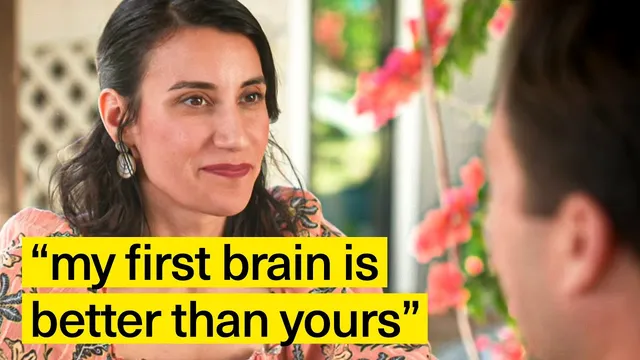
Productivity becomes a practical debate. Lauren prefers physical systems she can see and touch, arguing that her “first brain” (memory and recall) is strong enough that her “second brain” can be simpler or even unnecessary. She finds Tiago’s approach too complex and fragile—too many steps, too many places to put things, and too much maintenance. Her guiding principle is that what’s pleasurable motivates; if the system feels like a burden, it won’t last.
Finally, the couple frames entrepreneurship as a relationship stress test. The best part is the freedom it creates: time with their kids, less dependence on a 9-to-5 office routine. The worst part is the same engine—success can make Tiago more afraid of losing what they built, while Lauren worries it will pull him away from family life. They argue that love alone isn’t enough; they do ongoing work through counseling, coaching, and deliberate alignment. Their metaphor of a nuclear reactor captures the theme: when connection and configuration are right, the relationship powers everything; when they drift, chaos follows. The conversation ends with gratitude for the vulnerability and the effort required to keep dreams, values, and family life in sync.
Cornell Notes
Lauren Valdez and Tiago Forte describe how entrepreneurship reshapes marriage—creating freedom while also threatening daily connection. Lauren recounts losing her identity during motherhood and gradually finding a more comfortable self again. She also contrasts Tiago’s online persona with her lived experience of him as less linear and more intuitive, even joking that acting classes might help his authenticity. Their productivity philosophies diverge sharply: Lauren relies on visible, physical tools and a strong “first brain,” while Tiago’s “second brain” systems feel too complex and break down too often for her. They conclude that love isn’t sufficient; ongoing counseling, coaching, and alignment work are necessary to keep competing goals from destabilizing the relationship.
How did Lauren and Tiago Forte’s early differences shape their relationship trajectory?
What does Lauren mean by “losing identity” during motherhood, and what changed afterward?
Why does Lauren feel “embarrassed” about Tiago’s YouTube presence?
How do their productivity philosophies differ, and what principles guide Lauren’s approach?
What makes entrepreneurship both the best and worst part of their marriage?
Why do they say love isn’t enough for a good marriage?
Review Questions
- What specific differences in productivity and memory does Lauren attribute to her “first brain” versus Tiago’s “second brain” approach?
- How does Lauren’s view of authenticity on YouTube connect to her description of Tiago’s real-life personality (organized vs intuitive, linear vs improvisational)?
- In what ways do entrepreneurship and success create both freedom and relational risk in their marriage?
Key Points
- 1
Lauren and Tiago Forte’s relationship began with early attraction and rapid connection after a co-working space introduction, then evolved alongside contrasting attitudes toward risk and stability.
- 2
Motherhood reshaped Lauren’s identity, bringing repeated feelings of failure and loss, before she later regained a more comfortable sense of self.
- 3
Lauren’s “embarrassment” about Tiago’s YouTube presence centers on perceived authenticity gaps between his online persona and her lived experience of his intuition-driven style.
- 4
Their productivity systems diverge: Lauren favors visible, physical tools and simpler, sustainable routines guided by what feels pleasurable and motivating.
- 5
Lauren relies heavily on memory and recall (“first brain”), while she finds complex “second brain” systems too fragile and maintenance-heavy.
- 6
Entrepreneurship delivers major relationship benefits—time freedom and family flexibility—while also increasing fear that work success will pull Tiago away from home.
- 7
They treat love as insufficient without ongoing alignment work, including counseling/coaching and deliberate balancing of goals, values, and finances.