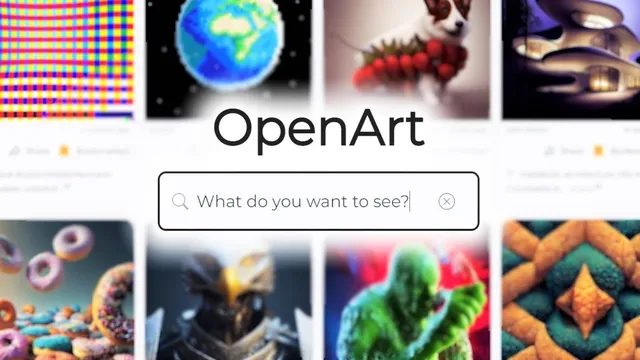
NEW AI Website! Use AI to Discover AI ART & Prompts: DALL E 2 Midjourney Stable Diffusion - Open Art
Based on MattVidPro's video on YouTube. If you like this content, support the original creators by watching, liking and subscribing to their content.
OpenArt is built to share AI art with prompt transparency, addressing growing restrictions on AI work elsewhere.
Briefing
OpenArt positions itself as a social hub for AI art by solving a growing problem: mainstream art sites increasingly restrict AI-generated work because users can’t tell what was made by a machine versus hand-drawn. The platform’s core pitch is simple—make AI art easier to discover, remix, and credit by pairing every image with the prompt (when creators choose to share it) and by organizing work across major generators. With more than 10 million AI images and prompts indexed from DALL·E 2, Midjourney, and Stable Diffusion, OpenArt aims to become the place where people not only browse results, but also learn how they were made.
A standout feature is OpenArt’s search system, which goes beyond keyword matching by using OpenAI’s CLIP model to understand image content and complex text queries. That means searches can work even when the prompt and the resulting image don’t share obvious keywords—such as finding a yellow sunglasses-wearing fruit even when the returned image is actually a pear. The search interface also supports filters for formats, styles, and perspectives, letting users compare how the same concept plays out across different models. In practice, that enables quick “compare and contrast” workflows: search for a theme like “bokeh,” then view results separately under DALL·E 2, Midjourney, and Stable Diffusion to see differences in lighting, composition, and rendering.
OpenArt also functions like a lightweight creator platform. Users can sign up easily, bookmark images to build a personal library, and follow other accounts. Posting is designed to be frictionless: creators can share a DALL·E 2 link, or drag-and-drop images for Midjourney and Stable Diffusion, with the prompt pulled from the link automatically when possible. Each post can include a title, description, and the selected model, and published work becomes viewable immediately within the site.
The platform is still in beta and is actively adding features aimed at deeper community engagement. Planned upgrades include search by image (upload a reference image to find visually similar AI outputs), upvote/downvote and trending sections to surface highly rated work, and bookmark collections similar to Pinterest boards. OpenArt also wants to provide curated prompt templates and presets for free—positioning itself as a “free PromptBase” alternative, while PromptBase is described as a paid, paywalled prompt marketplace. Additional roadmap items include tighter Stable Diffusion integration directly inside the site, comments, token-like rewards to encourage uploads, and challenges or contests.
Overall, OpenArt’s value proposition is less about generating art from scratch and more about building a searchable, prompt-aware marketplace of ideas—one that treats AI prompts as a first-class artifact and makes discovery across DALL·E 2, Midjourney, and Stable Diffusion feel social rather than scattered across separate galleries.
Cornell Notes
OpenArt is a beta social platform built for sharing and discovering AI-generated art, with a focus on prompts and cross-model browsing. It indexes millions of DALL·E 2, Midjourney, and Stable Diffusion images and lets users copy prompts (when creators allow it) to recreate similar results. Its search uses OpenAI’s CLIP model, enabling content-based retrieval that can match what a user means even when keywords don’t line up perfectly. Users can sign up, bookmark favorites, follow creators, and post work by sharing links or uploading images. Planned features include search by image, upvotes/downvotes with trending, bookmark collections, curated free prompt templates, and more community tools like comments and contests.
Why does OpenArt matter as AI art gets restricted on other platforms?
How does CLIP-based search change what users can find?
What does “compare across models” look like in practice?
How do creators post work without manually rebuilding metadata?
What roadmap features would make OpenArt feel more like a traditional social network?
Review Questions
- How does OpenArt’s CLIP-based search differ from keyword-only search, and why does that help with AI art discovery?
- What posting workflows does OpenArt support for DALL·E 2 versus Midjourney and Stable Diffusion?
- Which upcoming features are most likely to increase community participation, and how would they change user behavior?
Key Points
- 1
OpenArt is built to share AI art with prompt transparency, addressing growing restrictions on AI work elsewhere.
- 2
The platform indexes 10M+ AI images and prompts across DALL·E 2, Midjourney, and Stable Diffusion.
- 3
Search uses OpenAI’s CLIP model for content-based retrieval, handling complex queries beyond simple keywords.
- 4
Results are organized by model, enabling direct comparison of the same concept across different generators.
- 5
Users can bookmark images, follow creators, and post work via links (DALL·E 2) or drag-and-drop uploads (Midjourney/Stable Diffusion).
- 6
Planned features include search by image, upvote/downvote with trending, bookmark collections, and curated free prompt templates.
- 7
OpenArt’s roadmap also includes comments, rewards, and challenges, plus deeper Stable Diffusion integration inside the site.