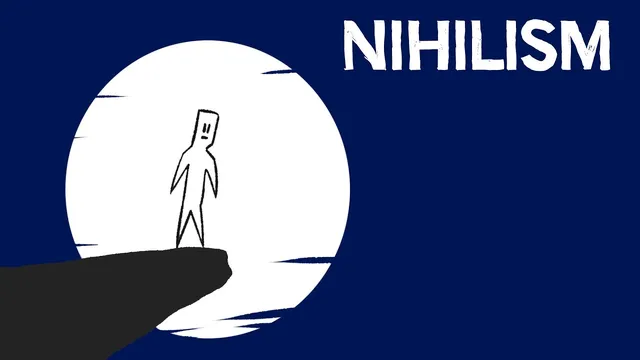
Nihilism: Embracing the Void of Existence
Based on Einzelgänger's video on YouTube. If you like this content, support the original creators by watching, liking and subscribing to their content.
The erosion of religious certainty can remove the moral and purpose framework that once made suffering and life feel meaningful.
Briefing
The central claim is that the decline of traditional religious certainty—captured by Nietzsche’s “God is dead”—leaves modern life exposed to nihilism: the sense that nothing has inherent meaning, value, or objective moral weight. That void matters because it doesn’t just change metaphysical beliefs; it reshapes how people interpret suffering, purpose, and even right and wrong. When the old moral order loses credibility and no afterlife or divine purpose replaces it, the question “what’s the point of living?” returns with force, often producing despair—or, for some, a different kind of freedom.
The transcript frames human beings as uniquely dissatisfied with mere existence. Animals and plants “do their thing” and die without asking why, but humans—equipped to question their own purpose—seek an explanation. Historically, major religions supplied that explanation: where people came from, why they are here, and what morality ultimately means. Yet Western Europe’s religious decline, beginning around the 16th century, eroded religion’s uncontested role. Nietzsche’s warning is that once belief in God and the moral structure tied to it becomes unsustainable, people can swing from one extreme to another: from trusting meaning to mistrusting meaning itself. In that shift, suffering and existence lose any trusted “meaning,” and everything can start to feel “in vain.”
The discussion then distinguishes multiple forms of nihilism—moral, cosmic, existential, and even epistemological—before focusing mainly on existential and moral nihilism. Existential nihilism is described as the experience that life is meaningless and that nothing is inherently good or bad. Moral nihilism follows: if there is no objective moral order and no divine judge, then claims about goodness and virtue lose their grounding. The transcript argues that this can lead to harmful outcomes: some people fall into depression and hopelessness when they conclude nothing they do matters, while others numb themselves with entertainment or, more dangerously, treat moral nihilism as permission for violence. The logic is blunt: if no heaven or ultimate accountability exists, why restrain brutality or revenge?
But the transcript insists nihilism doesn’t have to end in collapse. It contrasts two responses. Nietzsche treats nihilism as a necessary confrontation that clears the way for new values—values created rather than inherited. His ideal figure, the Übermensch, overcomes himself, invents his own standards, and resists replacement “structures of meaning” offered by movements such as fascism, neo-Nazism, or nationalism. Camus offers a different route: the universe may be meaningless, but the proper response is to accept that “The Absurd” and revolt against it by living fully anyway. Camus rejects the search for top-down, provable purpose; he calls the attempt to force objective meaning without evidence a kind of “philosophical suicide.” Instead, meaning becomes something like a lived practice—maximizing experience in the present, without pretending the universe owes an explanation. In that framing, nihilism is not merely a dead end; it becomes a test of whether people will despair, escape, or create and live.
Cornell Notes
The transcript links modern nihilism to the erosion of religious certainty. As belief in God and an objective moral order declines, existential nihilism can follow: life may seem meaningless, and moral nihilism can follow too, making “good” and “bad” feel ungrounded. The result can be depression, distraction, or even justification of violence when people treat the absence of divine accountability as permission. Yet nihilism is not portrayed as the only outcome. Nietzsche responds by creating new values through self-overcoming, while Camus responds by accepting “The Absurd” and living fully without demanding cosmic proof of meaning.
Why does the decline of Christianity lead to a “void” rather than just a change in beliefs?
What distinguishes existential nihilism from moral nihilism in the transcript?
How does the transcript connect nihilism to both despair and violence?
What is the Nietzschean response to nihilism described here?
How does Camus’s “Absurd” differ from nihilism, and what does he recommend?
Why does the transcript argue that top-down meaning is hard to justify today?
Review Questions
- What chain of reasoning links the collapse of religious belief to existential and moral nihilism in the transcript?
- Compare Nietzsche’s and Camus’s proposed ways of living with meaninglessness: what does each person create or accept?
- What risks does the transcript associate with moral nihilism, and what alternative responses does it offer?
Key Points
- 1
The erosion of religious certainty can remove the moral and purpose framework that once made suffering and life feel meaningful.
- 2
Existential nihilism is presented as the experience that life lacks inherent meaning, while moral nihilism denies objective moral truths.
- 3
Without objective meaning, people may respond with despair and hopelessness, distraction through entertainment, or—at its worst—justifications for violence.
- 4
Nietzsche’s response centers on creating new values through self-overcoming, embodied by the Übermensch.
- 5
Nietzsche also warns against replacing religion with rigid political ideologies that manufacture meaning and suppress critical thinking.
- 6
Camus’s response accepts “The Absurd” and recommends revolt through fully lived experience in the present, without demanding cosmic proof of purpose.