One of the Most Unsettling Phenomena of the Human Brain
Based on Pursuit of Wonder's video on YouTube. If you like this content, support the original creators by watching, liking and subscribing to their content.
Identity is portrayed as depending on memory’s ability to maintain subjective continuity of the past in the present.
Briefing
Memory isn’t just a personal archive—it’s the mechanism that stitches identity into a continuous “me.” Dementia, especially Alzheimer’s disease, attacks that continuity by damaging the brain’s ability to store and retrieve information, and the result is both medically devastating and philosophically unsettling: as memory fades, the world loses its stable meaning and the self can effectively dissolve.
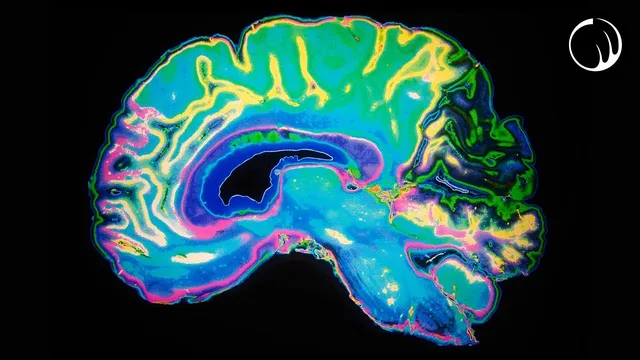
The transcript frames dementia as a cluster of symptoms that impair memory, thinking, and other general cognitive functions, with Alzheimer’s disease responsible for roughly 60–80% of cases. It’s also described as the seventh leading cause of death in America, with the Alzheimer’s Association estimating that about 10% of people aged 65 have Alzheimer’s—rising sharply with age as more older adults survive due to advances in medicine and technology. While the cause is “mostly unknown,” the biological hallmark is clear: abnormal protein deposits form plaques and tangles. Amyloid and tau are said to accumulate, damaging neurons, disconnecting brain networks, shrinking brain regions, and progressively degrading the functions those regions support.
Seven stages of dementia are outlined, from minor forgetfulness and occasional word-finding trouble to severe cognitive decline. By later stages, the mind is portrayed as being pulled away from the person’s prior sense of self: severe memory loss, confusion about identity and surroundings, major personality changes, and even delusions and hallucinations. Stage seven is described as near-total loss of recognition, language, and basic bodily functioning, leaving disorientation and dysfunction. The transcript emphasizes what this means for meaning-making: when labeling, defining, recognizing, and recalling disappear, the ability to map the world into symbols collapses.
To make the erosion of selfhood visible, the transcript points to American artist William U. T. M. (William U. T. M.)olan, diagnosed with Alzheimer’s at 61. Over five years, his self-portraits reportedly shift from detailed accuracy to abstraction—unusual colors and shapes—ending in grungy shaded circles that resemble only the faint shadows of facial features. The portraits are presented as an external record of internal change: autonomy and symbolic understanding erode over time, even if the artist’s comprehension of the work may also fade.
The discussion then broadens from dementia to memory’s fragility in everyone. Recalling is likened to “watching a video” produced in the past, but with no consistent, tangible record—only a present act of remembering. Because many life events lack witnesses or have conflicting accounts, memory becomes the sole source of the past. That vulnerability matters because false memories can form: a 1994 study by psychologist Elizabeth Loftus is cited, where participants described a childhood event (getting lost in a shopping mall) that never happened. After suggestion, 25% reportedly generated detailed confabulated memories. The transcript connects this to suggestibility, mislabeling, projection of current beliefs, and cognitive biases, arguing that people may be “playing a lifelong game of telephone” with themselves.
Ultimately, dementia is framed as unsettling not only for the prospect of firsthand loss, but for what it implies about existence: identity is a fragile construction built from imprecise memories and vulnerable synaptic connections. If memory can be distorted or erased, then the “self” may be less solid than it feels—making the question “who am I?” inseparable from the health of the brain that holds the continuity of “me.”
A sponsor segment follows, promoting Blinkist, an app offering condensed learning from non-fiction books and podcasts, illustrated through a personal story about using it to build a reading list and learn during daily routines.
Cornell Notes
The transcript argues that identity depends on memory’s ability to provide subjective continuity, and dementia—especially Alzheimer’s—destroys that continuity by damaging brain networks. It describes Alzheimer’s as the leading cause of dementia (about 60–80% of cases), driven by amyloid plaques and tau tangles that lead to neuron death, disconnection, and brain shrinkage. Seven stages are outlined, culminating in severe cognitive decline where recognition, language, and basic functions deteriorate. The discussion then extends beyond dementia to show that memory can be unreliable even in healthy people, citing a 1994 Elizabeth Loftus study where 25% of participants formed detailed false memories after suggestion. The implication: the self is a fragile construction built from memories that can be lost or distorted.
Why does dementia threaten the sense of self, beyond causing forgetfulness?
What biological mechanism is described for Alzheimer’s disease?
How do the stages of dementia progress in the transcript?
What role do William U. T. M.olan’s self-portraits play in the argument?
How does the transcript argue that memory can be unreliable even without dementia?
What factors are linked to false memories?
Review Questions
- How does the transcript connect memory impairment to changes in identity and meaning-making?
- What evidence is offered for memory unreliability in healthy people, and what percentage of participants reportedly formed false memories in the cited study?
- Which Alzheimer’s-related proteins are named, and how are they described as affecting brain cells and networks?
Key Points
- 1
Identity is portrayed as depending on memory’s ability to maintain subjective continuity of the past in the present.
- 2
Alzheimer’s disease is described as the leading cause of dementia, responsible for roughly 60–80% of cases.
- 3
Amyloid and tau are presented as the key pathological proteins forming plaques and tangles that disrupt neurons and brain networks.
- 4
The transcript outlines a seven-stage progression from subtle forgetfulness to severe cognitive decline with loss of recognition, language, and basic functioning.
- 5
Memory is framed as a present reconstruction rather than a stable record, making it vulnerable to distortion.
- 6
False memories can form through suggestion and cognitive biases; a cited 1994 study reports 25% of participants generating detailed confabulated memories.
- 7
The overall implication is that the “self” is a fragile construction built from vulnerable synaptic and cognitive systems.