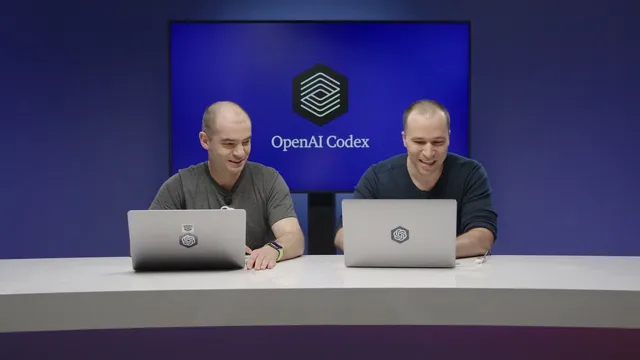
OpenAI Codex Live Demo
Based on OpenAI's video on YouTube. If you like this content, support the original creators by watching, liking and subscribing to their content.
Codex is presented as an instruction-to-code system that generates runnable code for tasks spanning multiple steps, not just autocomplete-style snippets.
Briefing
OpenAI’s Codex is being positioned as a practical “instruction-to-code” system: give it a plain-language task, and it generates runnable code that can drive real software—web pages, email blasts, browser games, and even Microsoft Word—rather than just answering questions. The central takeaway is the jump from basic code snippets to multi-step programs that work end-to-end, with Codex handling the boring glue work (imports, API calls, event wiring) so users can focus on the problem they actually want solved.
The demo begins with a classic “hello world,” then quickly turns ambiguous intent into working behavior. Typing “hello world with empathy” produces code that prints the message, and adding session context lets the model back-reference earlier instructions. When the request becomes more specific—printing five empathetic lines—Codex generates a loop-based solution after an initial attempt that didn’t match the exact formatting. From there, it escalates to a web page: Codex writes Python that serves HTML, starts a local web server, and the page appears with the generated content. The emphasis isn’t just that the output runs; it’s that the model can translate across languages within one workflow, producing HTML from Python and handling the mechanics of serving content.
A key theme emerges during the explanation: coding is split into understanding the problem and mapping pieces of functionality into code. Codex is portrayed as strong at the second part—turning small, well-scoped requirements into correct implementations—while still benefiting from iterative prompting when tasks get too broad. That shows up again when the demo moves from a single web page to sending emails. Using the Mailchimp API, Codex is given readable API documentation plus an API key wrapper, then asked to include both “hello world” and the current Bitcoin price. It generates the API call, triggers a Mailchimp campaign, and the system queues 1,472 emails for delivery.
Next comes a browser game built in multiple passes: a controllable character dodges a falling boulder. Codex generates JavaScript for the game, then iteratively improves it—adding arrow-key movement, preventing off-screen escape, disabling scrollbars, implementing upward/downward controls, spawning and resizing the boulder, and finally detecting overlap to trigger a “you got squashed” loss state with encouragement. When an instruction fails (the boulder “wrap around” behavior), the workaround is to break the task into smaller steps and re-run, leveraging the fast iteration loop of in-browser execution.
The final leap is voice-driven software control. A Microsoft Word add-in uses speech recognition to capture user instructions, then feeds an API reference into Codex so it can generate JavaScript that calls Word’s API. The demo shows formatting changes—like making every fifth line bold—based on spoken commands. The message is that Codex’s code generation turns voice and intent into actions inside real applications, moving beyond “talking back” toward manipulating the computer on a user’s behalf.
Alongside the demos, access is the practical headline: Codex is announced as available via the OpenAI API in beta, with a sign-up waitlist and a programming competition scheduled for Thursday at 10 a.m. Pacific where Codex will act as a teammate on a leaderboard.
Cornell Notes
Codex is presented as a model that turns natural-language instructions into runnable code that can operate real systems. The live demos start with “hello world,” then expand to generating a web page, sending a Mailchimp email blast that includes a live Bitcoin price, and building a browser game with iterative fixes. A key pattern is that Codex performs best when tasks are decomposed into smaller, concrete steps, especially when higher-level instructions fail. The most consequential demo shows voice-controlled Microsoft Word actions via a Word API add-in, highlighting Codex’s ability to translate intent into API calls that modify software behavior.
What performance milestone does the demo claim for Codex compared with earlier models?
How does Codex handle ambiguous or evolving instructions in the “hello world” sequence?
Why does the web-page demo matter beyond showing that code runs?
How is Mailchimp used, and what role does API documentation play?
What strategy fixes failures during the browser game build?
How does voice control translate into actions inside Microsoft Word?
Review Questions
- What evidence in the demos suggests Codex can handle multi-step workflows rather than single-shot code generation?
- Describe one moment where breaking an instruction into smaller parts improved results. What was the original failure mode?
- How does providing API documentation (plus an API key wrapper) change what Codex can do with external services like Mailchimp?
Key Points
- 1
Codex is presented as an instruction-to-code system that generates runnable code for tasks spanning multiple steps, not just autocomplete-style snippets.
- 2
Codex can maintain and use conversational context to adjust outputs when instructions evolve (e.g., formatting changes after earlier prompts).
- 3
Cross-language generation is demonstrated by producing server code and HTML from a single workflow, then executing it to serve a live web page.
- 4
External integrations work by pairing Codex with an API wrapper and readable API documentation, enabling it to construct correct calls to services like Mailchimp.
- 5
The browser game build highlights an iterative prompting strategy: when a broad instruction fails, decomposing it into smaller steps improves reliability.
- 6
Voice commands become actionable software changes by combining speech recognition with Codex-generated JavaScript that calls Microsoft Word’s API.
- 7
Access is announced via an OpenAI API beta waitlist and a Thursday 10 a.m. Pacific programming competition where Codex acts as a teammate.