OpenAI Insights and Training Data Shenanigans - 7 'Complicated' Developments + Guest Star
Based on AI Explained's video on YouTube. If you like this content, support the original creators by watching, liking and subscribing to their content.
OpenAI’s leadership dispute is portrayed as both personal and procedural, with an independent review planned and uncertainty around Ilia Satya’s board status.
Briefing
OpenAI’s leadership shake-up is tangled with deeper, unresolved questions about safety, training-data privacy, and how hard it is to keep frontier models from leaking what they were trained on. The fallout began with the board firing Sam Altman, but reporting and internal reactions now point to a mix of interpersonal breakdowns and technical anxiety—especially around whether recent capabilities could create risks that weren’t fully contained.
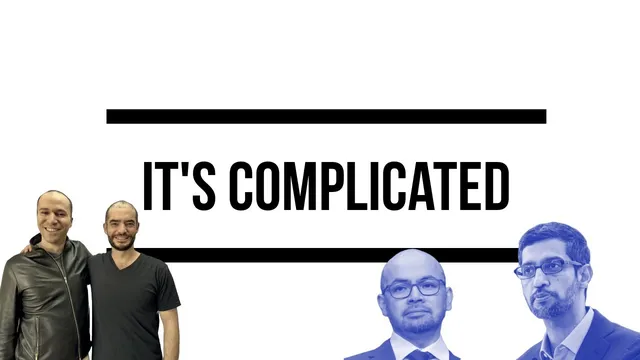
Greg Brockman and Ilia Satya (Ilia “Sutskever” Satya) publicly reunited, exchanging gestures that underscored how personal the dispute has become. The complication: Altman’s message after returning as CEO said Satya would no longer sit on the board while also insisting he “love[s] and respect[s]” him and holds “zero ill will,” even though Satya had previously fired Altman. That contradiction leaves Satya’s future unclear, even as the broader “OpenAI saga” is already shaping up as a story that will be written about for years.
More detail emerged on why the board moved against Altman. A New Yorker exclusive reports that some board members viewed Altman as “an unnervingly slippery operator,” including claims that he approached directors individually to replace Satya. When members compared notes, some felt Altman misrepresented what others thought—an allegation framed as a pattern of playing people off against each other. At the same time, an independent review is planned into the events leading up to Altman’s firing, and Altman is described as “super excited” about it.
Beyond governance drama, the transcript pivots to a technical theme: frontier models can leak training data and system details in ways that are surprisingly practical. A recent paper—described as a bombshell—claims that multiple large language models, including Llama and ChatGPT, have memorized portions of their training sets. The authors built a 9-terabyte dataset by merging web-scale training sources and then matched against it, reporting coverage of over 10,000 ChatGPT training examples for about $200. They also disclose responsible disclosure timelines: the vulnerability was found July 11, reported to OpenAI August 30, and given a 90-day window to address it. The paper warns that training and deploying LLMs for privacy-sensitive uses without extreme safeguards is unsafe.
The transcript also connects these privacy issues to jailbreak and multilingual weaknesses. Google DeepMind delayed Gemini to January, citing trouble handling non-English queries reliably. The concern is not just translation quality—it’s that low-resource languages can enable jailbreaks that bypass safeguards at high rates, while higher-resource languages are harder to exploit. That multilingual angle is tied to marketing pressure: models like PaLM 2 have been sold on strong language performance, making it awkward if those same languages can be used to extract restricted behavior.
Finally, the transcript points to a potential direction for mitigation: synthetic training data. Sebastian “Seb” Bock (Falcon/Llama training context) argues for training models without exposure to web pages at all, using entirely synthetic data generated by teams, to avoid the toxic and privacy-sensitive content that comes with internet-scale corpora. The core message across governance and research is consistent: the most consequential risks aren’t always obvious at first glance—and they can persist long after they’re first noticed.
Cornell Notes
The Altman–Satya–board conflict at OpenAI is portrayed as both political and technical, with an independent review promised and ongoing uncertainty about Satya’s role. Reporting suggests some board members believed Altman misrepresented others’ views and tried to engineer replacements. In parallel, new research argues that large language models can memorize and later emit parts of their training data, enabling privacy breaches and system-prompt extraction. The same vulnerability class appears to intersect with jailbreak behavior, including multilingual jailbreaks that work better in low-resource languages. A proposed mitigation direction is training on fully synthetic data rather than internet corpora to reduce memorization and leakage risk.
What governance details are described as contributing to the board’s decision to fire Sam Altman?
Why does the transcript connect multilingual jailbreaks to Gemini’s delay?
What does the new privacy paper claim about memorization in models like ChatGPT and Llama?
How does the transcript describe the responsible disclosure timeline for the memorization vulnerability?
What is the proposed mitigation direction involving synthetic data, and why?
Review Questions
- What specific board-behavior allegations are described as driving the OpenAI firing decision, and how do they differ from claims about “normal boardroom debate”?
- How does the memorization-and-matching method in the privacy paper enable training-data extraction, and what dataset size is cited?
- Why are low-resource languages emphasized as a jailbreak vector, and how does that relate to product launch incentives for multilingual models?
Key Points
- 1
OpenAI’s leadership dispute is portrayed as both personal and procedural, with an independent review planned and uncertainty around Ilia Satya’s board status.
- 2
Reporting claims some board members believed Sam Altman misrepresented others’ views and tried to engineer replacements by approaching directors individually.
- 3
New research argues that large language models can memorize training data and later emit it, enabling privacy breaches and system-prompt extraction.
- 4
The memorization vulnerability is described with a concrete disclosure timeline: discovered July 11, reported to OpenAI August 30, with a 90-day remediation window.
- 5
Gemini’s delay is linked to non-English reliability problems, with multilingual jailbreak risk highlighted—especially in low-resource languages.
- 6
The transcript connects multilingual jailbreakability to marketing pressure, since multilingual performance is a key selling point for major Google models.
- 7
A proposed mitigation path is training on fully synthetic data to reduce exposure to internet-scale privacy risks and memorization.