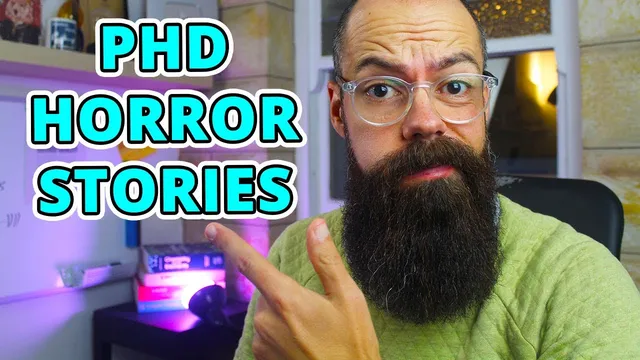
PhD Horror Stories: You Won't Believe What These Supervisors Did!
Based on Andy Stapleton's video on YouTube. If you like this content, support the original creators by watching, liking and subscribing to their content.
Excessive workload becomes especially harmful when paired with vanished oversight and refusal to provide concrete guidance.
Briefing
Five recurring “horror story” patterns emerge from the accounts: supervisors who treat PhD students as labor, block normal academic oversight, and build toxic lab cultures that damage mental health. Across the cases, the most damaging theme is not just poor mentorship—it’s active self-interest, where students’ progress is delayed or redirected so supervisors can publish, secure grants, or keep research running without real accountability.
In the first case in Australia, a PhD student joins a lab only to watch the supervisor vanish for two months, then return to pile on work that delays the student by a full year. The output appears to benefit the supervisor rather than the student, and when the student asks for guidance, the only instruction is the familiar demand to “publish more papers”—without any concrete plan for how to do so. Years later, the student runs out of funding while the supervisor avoids reviewing the thesis. The student becomes the only PhD graduate from that supervisor, underscoring how hands-off supervision can still be paired with heavy exploitation.
The second case centers on a student named Stephen. Early on, the supervisor buries Stephen under tasks that advance the supervisor’s theory more than Stephen’s own start. Stephen later discovers the theory is wrong, proves it, and then faces a reversal when a “postdoc” supposedly returns with a counter-theory that must be disproved again. The situation turns suspicious: the postdoc may be fabricated, with Stephen effectively doing the work while the supervisor receives the intellectual credit. Even when Stephen finishes the thesis, the supervisor refuses to review it, claiming only one thesis can be handled at a time. Meanwhile, the supervisor delays submission so Stephen can be employed as a research assistant, extracting more labor until grant money dries up.
The third case describes a supervision team that lacks both competence and basic resources. Requests for external collaboration are blocked, and the student faces gender-based hostility, including repeated references to being a woman in science. After accusations of fabricating work—triggered by conflict—she drops out due to mental health strain, with the transcript framing the broader issue as an academic system that punishes career interruptions and makes it harder for some people to sustain long gaps.
The fourth and fifth cases highlight lab culture and health norms. One supervisor creates an oppressive environment where students are expected to work constantly, including weekends and late nights, with Christmas time met by an email demanding grant applications instead of rest. The culture rewards those who stay in the lab the longest, producing burnout that serves the supervisor’s publication output. The final account describes a workaholic supervisor who claims anyone needing more than four hours of sleep isn’t suited for science, then dies of multiple organ failure—an outcome presented as the extreme end of years of unhealthy work expectations.
Taken together, the stories portray academia as a system where red flags—vanishing oversight, refusal to review theses, fabricated collaborators, blocked resources, sexism, and “always-on” labor—can be spotted early. The message is to speak up so new PhD students can recognize these patterns before they become trapped.
Cornell Notes
The accounts describe five “horror story” patterns in PhD supervision: supervisors who disappear or refuse thesis oversight, supervisors who overload students with work that mainly advances the supervisor’s agenda, and supervisors who delay submission to keep students employed as research assistants. One story involving Stephen suggests a possible fabricated “postdoc” used to funnel tasks and intellectual credit to the supervisor. Other cases point to systemic problems—lack of equipment, blocked collaboration, and gender-based harassment—leading to dropout and mental health harm. The final stories emphasize toxic lab culture and extreme work expectations, including weekend labor and even a claim that more than four hours of sleep disqualifies someone for science. The stakes are career outcomes, mental health, and basic academic fairness.
What makes the first case especially damaging beyond heavy workload?
Why does Stephen’s story raise suspicion about the supervisor’s motives?
How do resource and collaboration barriers contribute to the third case’s collapse?
What specific lab-culture tactics appear in the fourth case?
What does the fifth case suggest about the relationship between work norms and harm?
Review Questions
- Which behaviors in these cases most directly undermine academic fairness at the thesis stage?
- How do the stories distinguish between “difficult supervision” and supervision that appears exploitative or self-serving?
- What early warning signs—workload patterns, communication style, resource access, or lab culture—could a new PhD student use to assess a supervisor?
Key Points
- 1
Excessive workload becomes especially harmful when paired with vanished oversight and refusal to provide concrete guidance.
- 2
Delaying thesis review while extracting additional labor can turn supervision into exploitation, not mentorship.
- 3
Blocked collaboration and missing equipment can trap students on an “island,” making progress impossible even with effort.
- 4
Gender-based hostility and accusations tied to conflict can contribute to mental health crises and dropout.
- 5
Toxic lab cultures that reward constant presence and weekend work often serve publication output at the cost of student wellbeing.
- 6
Extreme work norms—such as dismissing sleep needs—can signal deeper dysfunction and carry real health consequences.