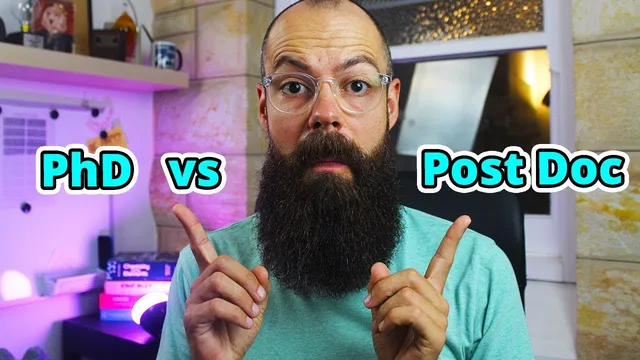
PhD vs Post Doc - the real differences
Based on Andy Stapleton's video on YouTube. If you like this content, support the original creators by watching, liking and subscribing to their content.
Postdocs often shift daily priorities from long-term thesis exploration to short-term milestone delivery and project management.
Briefing
The biggest shift from a PhD to a postdoc is how the work feels in practice: a PhD tends to center on long-term thesis exploration, while a postdoc often turns into a deadline-driven job focused on delivering milestones, publishing, and securing the next step. In a PhD, the work is framed around earning a qualification—six-month milestones may exist, but the day-to-day mental focus stays on the thesis end goal. In a postdoc, short-term deliverables take over. Regular reportable milestones force researchers to think in near-term outputs, and the role can expand into project management—coordinating timelines and pushing teams to hit targets—so the work starts to resemble operational employment more than open-ended research.
That change in structure feeds a second, more personal difference: the pressure level. A postdoc can come with persistent anxiety about publishing, funding, and independence—especially because the position is typically employed by someone else and tied to their grant. The “what next?” question doesn’t fade after each milestone; it keeps returning as researchers look for grants to apply for and papers to publish to prove they’re worthy of independence. The result is a constant balancing act: meeting project obligations to keep the job funded while simultaneously trying to “split away” toward a personal research trajectory.
Publishing becomes the central currency. During the PhD, the thesis can act as a fallback—results that don’t fit neatly into a paper can still support the dissertation. In a postdoc, that safety net shrinks. The work is oriented toward producing publishable results for peer-reviewed journals, including high-impact-factor targets, and researchers often compare themselves to peers based on recent papers and ongoing manuscripts. Even when milestone responsibilities pull attention toward the project’s immediate needs, the career clock keeps ticking toward independent academic output.
Compensation and lifestyle also change the emotional tone. Postdocs generally pay more than PhD positions, which can make the transition feel like “being an adult” and briefly increases spending confidence. But the money isn’t truly high relative to the education and time invested, so there’s still a check-in about overspending—especially after years of lower student wages.
Mentoring is another meaningful difference. Postdocs often carry more formal responsibility for training and supporting PhD students, master’s students, and undergraduates. Some researchers find the constant requests for help stressful; others, including the account here, describe it as rewarding and aligned with teaching and engagement.
Finally, postdocs demand more networking. Building a publication “cabal” or network of collaborators becomes a strategy for accelerating output—sometimes framed as collaborations that can lead to reciprocal authorship and shared productivity. This networking happens through conferences, seminars, and outreach, with an emphasis on finding overlap in research interests.
Even small cultural signals shift, from a more business-casual dress style to a stronger sense of professional presentation—captured in the idea that people dress for the job they want, not the one they have.
Cornell Notes
Moving from a PhD to a postdoc shifts research from long-term thesis exploration to short-term, milestone-driven delivery. Postdocs often function like employment tied to someone else’s grant, which raises ongoing pressure to publish, secure funding, and become independent. That pressure reshapes daily priorities: project management and milestone reporting compete with the need to generate peer-reviewed papers that build a personal publication record. Postdocs also tend to increase mentoring responsibilities for training PhD and other students, and they require more deliberate networking to form collaborations that can speed up publishing. Compensation rises compared with PhD wages, changing lifestyle and spending behavior, but not enough to remove financial anxiety entirely.
How do milestone expectations differ between a PhD and a postdoc, and why does that change the day-to-day feel of work?
Why does the postdoc create a persistent “what next?” pressure that often doesn’t exist in the same way during a PhD?
What role does publishing play in a postdoc compared with a PhD?
How do mentoring responsibilities change after moving into a postdoc role?
What networking strategy becomes more important during a postdoc, and how is collaboration framed?
What lifestyle or cultural differences are mentioned beyond academic responsibilities?
Review Questions
- Which specific mechanisms make postdoc work feel more like a job than a PhD—milestones, project management, or something else? Give examples.
- How does the lack of a thesis “fallback” change incentives for what gets produced during a postdoc?
- What steps are described for building independence during a postdoc, and how do networking and publishing interact?
Key Points
- 1
Postdocs often shift daily priorities from long-term thesis exploration to short-term milestone delivery and project management.
- 2
Persistent pressure in postdocs comes from needing to publish, secure funding, and become independent while working under someone else’s grant.
- 3
Publishing becomes the dominant career currency in postdocs, with fewer opportunities to treat results as thesis-only material.
- 4
Postdocs typically increase mentoring and training responsibilities for PhD, master’s, and undergraduate students.
- 5
Higher postdoc pay can feel like financial adulthood, but it still requires careful spending control.
- 6
Networking becomes a deliberate strategy for building collaborations and accelerating publication output.
- 7
Professional norms can change too, including a stronger expectation to dress more formally for the role.