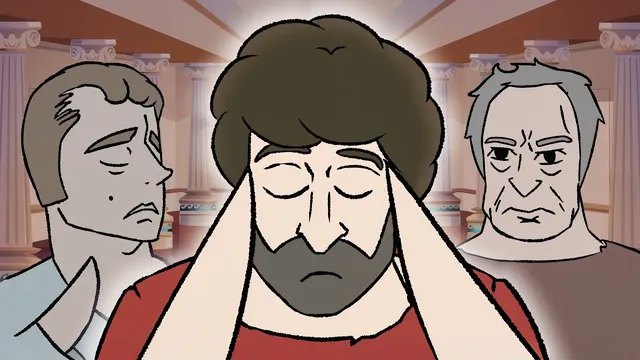
Philosophers: "Stop Caring About People's Opinions" (Diogenes, Schopenhauer, Epictetus, Nietzsche)
Based on Einzelgänger's video on YouTube. If you like this content, support the original creators by watching, liking and subscribing to their content.
Stoic practice centers on what remains under personal control: other people’s opinions are largely not yours to manage, so emotional injury from them is irrational.
Briefing
A common thread across Diogenes, Schopenhauer, Epictetus, Emerson, and Nietzsche is the same hard-nosed prescription: stop treating other people’s opinions as something that can harm you, steer your life, or define your worth. The payoff is practical—less suffering, more independence, and a clearer path to living with integrity—even when ridicule, contempt, or political hostility is unavoidable.
Stoic emperor Marcus Aurelius frames the problem in everyday terms: people can be unkind, dishonest, jealous, and arrogant, and yet the only workable response is to focus on what remains under personal control. If someone despises or hates him, that’s their issue; his responsibility is to avoid acting “despicably” in return and to stay patient, cheerful, and upright. The core idea is not that other people’s behavior is pleasant, but that being emotionally “harmed” by what can’t be controlled blocks virtuous action. Even the mightiest person, Aurelius notes, can’t control the opinions and actions of those nearby—so treating their judgments as a source of injury becomes unreasonable.
Diogenes of Sinope pushes the logic further with Cynic indifference. He lived without chasing status or appearances, and he treated social conventions as optional. His famous lantern search for “a man” wasn’t about finding a literal person so much as exposing dishonesty and irrationality in society. Diogenes compared human shame to a dog’s shamelessness: dogs don’t overthink what others think, don’t get offended by laughter, and don’t become politically distressed. In this view, caring about opinions gives other people power over the self; indifference makes a person “invincible,” even against the attention of figures like Alexander the Great.
Schopenhauer adds a psychological diagnosis. Life is driven by an irrational force he calls the “will to live,” which fuels insatiable striving. One major striving is seeking high esteem from others—a “peculiar weakness” that trades short-term approval for long-term loss of peace and independence. Worse, the validation people chase is often baseless because most opinions are false, perverse, erroneous, or absurd, and rarely exert real positive influence.
Epictetus grounds the argument in control and moral focus. A man tried to persuade others not to pity him for poverty and low status, then considered performing wealth through borrowed servants and luxury goods. Epictetus called the whole project futile: you can’t truly convince others without first convincing yourself, and suffering comes from fixating on what lies outside one’s moral purpose—what isn’t actually in your control.
Emerson and Nietzsche shift the emphasis from emotional resilience to authenticity and self-creation. Emerson’s “Self-Reliance” warns that conforming to others’ judgments kills individuality—“Imitation is suicide”—because each person has a unique inner guiding “over-soul” and experiences no one else can fully understand. Nietzsche’s “overman” (Übermensch) goes further: break from herd mentality and conventional morality, endure ridicule as the cost of difference, and forge new values to escape emptiness and nihilism. In polarized times, the philosophers’ shared message is blunt: other people’s opinions may be loud, but they don’t have to be steering wheels for a life well lived.
Cornell Notes
Across five philosophers, the central claim is that other people’s opinions should not govern a person’s inner life. Marcus Aurelius ties this to Stoic control: what others think and do is largely outside one’s power, so emotional injury from it is irrational and blocks virtuous action. Diogenes treats social approval as a form of domination and counters it with Cynic indifference—shameless authenticity that makes ridicule powerless. Schopenhauer frames approval-seeking as a trap driven by the “will to live,” producing dependence and peace-of-mind loss. Epictetus adds a control test: only one’s own attitudes and moral purpose are truly changeable, so chasing others’ judgments is a vain pursuit. Emerson and Nietzsche then argue that authenticity requires resisting conformity and herd values, even when misunderstanding follows.
Why does Marcus Aurelius treat other people’s opinions as a problem of control rather than character?
How does Diogenes of Sinope make “not caring” feel concrete instead of abstract?
What does Schopenhauer claim is the psychological cost of chasing esteem?
Why does Epictetus call it futile to try to change how others see you?
How do Emerson and Nietzsche connect resisting public opinion to authenticity and value-making?
Review Questions
- Which philosopher’s argument most directly depends on the idea of “control,” and what is the specific control claim?
- How do Diogenes and Schopenhauer each explain why caring about opinions leads to dependence or powerlessness?
- What distinguishes Emerson’s “inner voice” approach from Nietzsche’s “self-overcoming and new values” approach?
Key Points
- 1
Stoic practice centers on what remains under personal control: other people’s opinions are largely not yours to manage, so emotional injury from them is irrational.
- 2
A virtuous response to hostility is to avoid retaliatory “despicable” behavior while staying patient, cheerful, and upright.
- 3
Cynic indifference treats social approval as a lever others use to control you; rejecting status and appearances reduces the leverage.
- 4
Approval-seeking can be a psychological trap: it trades brief pleasure for long-term loss of peace and independence, and it often rests on unreliable judgments.
- 5
Epictetus frames the problem as misplaced effort—trying to change others’ minds is futile when the only fully controllable target is one’s own attitudes and moral purpose.
- 6
Authenticity requires resisting conformity: Emerson warns that imitation kills individuality, while Nietzsche argues that herd morality blocks self-creation and meaning.
- 7
Ridicule and misunderstanding are presented as predictable costs of living differently, not proof that the authentic path is wrong.