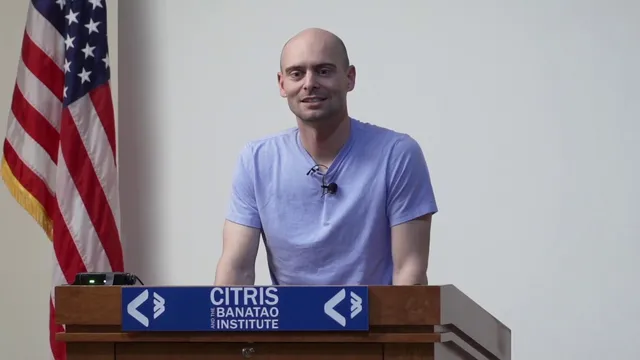
Pieter Abbeel on Research Directions (Full Stack Deep Learning - November 2019)
Based on The Full Stack's video on YouTube. If you like this content, support the original creators by watching, liking and subscribing to their content.
MAML trains a model initialization so that one (or a few) gradient steps on a new task produce strong performance, reframing generalization as “across tasks after adaptation.”
Briefing
Research frontiers in deep learning are increasingly about learning systems that can adapt quickly—often with only a few examples or trials—while closing a stubborn gap between impressive lab demos and real-world reliability, especially in robotics.
A central thread is “few-shot” learning for machines: supervised deep learning works extremely well but typically demands large labeled datasets. The talk frames a mismatch with human learning—people recognize new object categories from a single example—then asks how to give neural networks a comparable prior. Model-agnostic meta-learning (MAML) becomes the flagship idea. Instead of training a network to solve one task, MAML trains it so that a small gradient update at test time rapidly adapts to a new task. During meta-training, many related tasks are sampled; for each, the model takes a gradient step on task-specific training data to produce adapted parameters, and performance is then measured on task-specific validation data. If the same initial parameters lead to good post-update performance across tasks, the initialization is treated as a “ready-to-fine-tune” starting point. This reframes generalization as moving from training tasks to unseen test tasks, with the adaptation step included in the evaluation.
The talk grounds the approach in standard few-shot benchmarks such as Omniglot and miniImageNet, reporting that MAML-style methods achieve very low error rates in one-shot and still strong results in five-shot settings—far better than chance baselines. It also extends the meta-learning mindset beyond classification: the same adaptation principle can guide optimization (learning better update rules than gradient descent for families of problems) and can support generative modeling (learning to generate new handwritten characters from one example).
Reinforcement learning (RL) is treated as the next major frontier, but with a clear explanation of why it remains harder than supervised learning: credit assignment (outcomes are observed after many actions), instability (mistakes compound through feedback loops), and exploration (learning requires trying uncertain actions). Despite these challenges, deep RL has delivered general-purpose successes in games—from Atari to Go to Dota 2—by combining neural policies with search-like lookahead and value estimation. In robotics, the talk highlights deep RL controlling real systems (including legged robots learning to stand, and robots learning to move under perturbations), and emphasizes that the same core algorithm can transfer across different robots.
Yet the talk pivots to a key limitation: mastering a task is not the same as mastering it efficiently. Humans can learn new skills in minutes; sample-hungry RL can require hundreds of hours. The proposed bridge is meta-RL: train an agent across a distribution of environments so it can adapt in only a few episodes. The architecture idea uses recurrent networks whose internal activations encode experience; different environments induce different internal states, effectively yielding different RL algorithms and priors. Experiments on bandits and increasingly complex navigation tasks (including maze exploration without maps) illustrate the goal: fast adaptation to new reward functions or new layouts.
Finally, the talk widens to other research directions—imitation learning with one-shot behavior via meta-learning over paired demonstrations, domain randomization and domain adaptation to transfer from simulation to reality, architecture search and automated data augmentation, and unsupervised/self-supervised learning that improves performance in low-label regimes. Across all of it sits a recurring message: real-world deployment—particularly robotics—demands far higher success rates than benchmarks typically require, and that reliability gap is a major reason robots remain scarce outside demos. Keeping up with the flood of papers is framed as a practical skill: structured reading, newsletters/recommendation systems, and especially reading groups to cut time and increase coverage.
Cornell Notes
The talk argues that the most important research direction is building models that can adapt quickly—often from one or a few examples or trials—rather than relying on massive supervised datasets or long RL training. Model-agnostic meta-learning (MAML) trains an initialization so that a single gradient step on a new task yields strong performance, turning “generalization” into “generalization across tasks after adaptation.” Reinforcement learning is harder because of credit assignment, instability, and exploration, but meta-RL aims to close the sample-efficiency gap by training across many environments so agents learn new tasks in only a few episodes. The same adaptation mindset also appears in imitation learning, domain randomization for sim-to-real transfer, architecture/data search, and self-supervised learning that boosts low-label performance. The real-world bottleneck is reliability: robotics needs near-continuous success rates far beyond typical benchmark thresholds.
How does MAML change what “generalization” means in few-shot learning?
Why are humans able to recognize categories from one example, and how is that used to motivate meta-learning?
What makes reinforcement learning fundamentally different from supervised learning?
How does meta-RL aim to address the sample-efficiency gap between RL and human learning?
Why does sim-to-real transfer often fail, and what strategies are proposed to fix it?
What reliability gap does the talk highlight between research benchmarks and real robotics deployment?
Review Questions
- In MAML, what roles do the inner-loop (task-specific update) and outer-loop (meta-update using validation performance) play in producing a transferable initialization?
- Which three challenges make RL credit assignment and learning dynamics harder than supervised learning, and how does meta-RL try to reduce the resulting sample inefficiency?
- How do domain randomization and domain confusion differ in their mechanism for transferring from simulation to real-world data?
Key Points
- 1
MAML trains a model initialization so that one (or a few) gradient steps on a new task produce strong performance, reframing generalization as “across tasks after adaptation.”
- 2
Few-shot learning success depends on learning a prior from many related tasks, not just learning a single task’s mapping from inputs to labels.
- 3
Reinforcement learning’s core obstacles are credit assignment, instability from feedback loops, and exploration without direct action supervision.
- 4
Meta-RL targets the sample-efficiency gap by training across distributions of environments so agents can achieve high reward after only a few episodes in a new environment.
- 5
Sim-to-real transfer can work without perfect simulators by using domain randomization and/or domain confusion to learn invariances that persist across simulation and reality.
- 6
Real-world robotics requires success rates far higher than typical benchmark thresholds; otherwise failures become too frequent to be practical.
- 7
Keeping up with fast-moving research requires structured paper reading and scalable workflows like newsletters, recommendation systems, and reading groups.