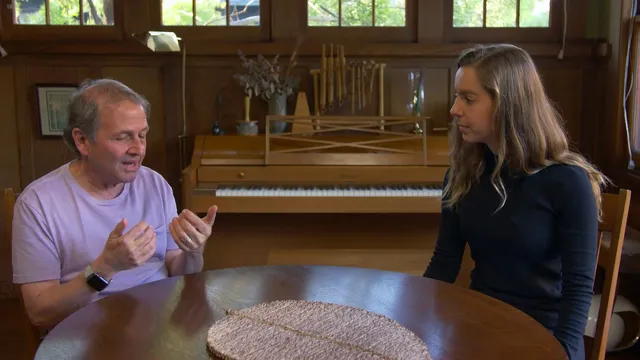
Pioneers: Andy Hertzfeld
Based on Notion's video on YouTube. If you like this content, support the original creators by watching, liking and subscribing to their content.
The Macintosh was built as a cost-conscious blend of Lisa’s mouse-driven accessibility and the Apple II’s hacker culture, targeting a dramatically lower price point.
Briefing
The Macintosh didn’t emerge from a fixed master plan—it was built by iterative prototyping, tight budget tradeoffs, and an unusually deliberate commitment to making a “people’s” computer that third parties could extend. Andy Hertzfeld’s account centers on a practical goal: take the Lisa’s mouse-driven, accessible user interface and combine it with the Apple II’s hacker energy and affordability, then deliver it at a fraction of the cost. The result mattered because it helped define the modern personal-computing experience—graphical interaction with a mouse—while also setting expectations that software ecosystems could grow beyond the original team.
Hertzfeld traces the team’s early involvement in user culture through Apple II enthusiasts and local user groups, where people swapped programs and chased rumors long before personal-computer software was a clear commercial category. That grassroots enthusiasm shaped how the Macintosh was conceived: not just as an exquisite product, but as an open platform. The team actively recruited third parties and supported them from the start, aiming to replicate the Apple II’s pattern where outsiders built some of the coolest extensions.
Technically, the Macintosh’s affordability required ruthless efficiency. Hertzfeld highlights the removal of Pascal in favor of hand-coded assembly, describing how assembly could make code roughly three times more efficient—an approach that fit the broader “clever hardware” philosophy. He contrasts Lisa’s more standard, large-team process with Macintosh hardware designer Burrell Smith’s inspiration from Woz, including “crazy tricks” that squeezed more capability into less cost. Even the software feel came from small, iterative discoveries rather than a single grand vision. Mouse scaling is offered as a concrete example: instead of moving the cursor one pixel per notch (which feels sluggish), the system introduced acceleration so faster mouse movement traversed more pixels, and the team even provided controls to adjust or disable it during refinement.
Inside the team, the Macintosh’s long-term durability wasn’t fully understood. Hertzfeld says the group expected the architecture to be replaced in a few years, assuming a new wave of hardware would quickly make it obsolete. In hindsight, they should have built more “industrial-strength” foundations—less optimization for the specific hardware of the moment and more emphasis on longevity.
After personal computing, Hertzfeld and colleagues shifted to a different bet: communication as the next platform. At General Magic, they pursued the “pocket communicator” idea—graphical, postcard-like messages arriving in your pocket—positioning it as an iPhone-like concept decades early. Yet timing and execution fell short. They also invested heavily in an ambitious approach to mobile communication services, including a new language (Teller Script) for code to travel across servers, only to find that simpler request/response models—remote procedure call and the web’s HTTP-based pattern—were ultimately sufficient. The throughline is a development philosophy: no one starts with a complete picture, and each dead end or partial success clarifies the next step.
Cornell Notes
Andy Hertzfeld describes the Macintosh as a budget-driven fusion of Lisa’s accessible, mouse-driven interface and the Apple II’s hacker spirit—built to become a platform third parties could extend. The team relied on incremental prototyping rather than betting on ideas “on paper,” and they refined user experience through many small engineering discoveries, such as mouse acceleration (“mouse scaling”). Internally, they underestimated how long the Macintosh architecture would last, expecting replacement within a few years; in hindsight, they would have strengthened foundational, industrial-grade underpinnings. Hertzfeld later co-founded General Magic to pursue communication-first handheld computing, but ambitious infrastructure ideas (like Teller Script) were overtaken by simpler web-style request/response models.
How did the Macintosh team reconcile the Lisa’s interface strengths with the Apple II’s affordability and culture?
Why did cost and performance constraints push the team toward assembly language and “clever” hardware?
What does “open platform” mean in this context, and how did the team try to make it real?
How did small UX engineering decisions like mouse scaling change the feel of the system?
What misconception did the Macintosh team have about the architecture’s lifespan?
What was General Magic’s “pocket communicator” vision, and why did some technical bets fail?
Review Questions
- What specific engineering tradeoffs (software language and hardware design approach) does Hertzfeld cite as crucial to meeting the Macintosh price target?
- How did the team’s view of third-party developers influence both the Macintosh’s design goals and its ecosystem strategy?
- Compare Teller Script’s approach to server interaction with the web’s HTTP-based request/response model—what problem was each trying to solve?
Key Points
- 1
The Macintosh was built as a cost-conscious blend of Lisa’s mouse-driven accessibility and the Apple II’s hacker culture, targeting a dramatically lower price point.
- 2
Assembly language replaced Pascal to achieve major efficiency gains, helping the system fit within tight hardware constraints.
- 3
Macintosh hardware design leaned on unconventional techniques inspired by Woz, contrasting with Lisa’s more standard, large-team approach.
- 4
From the start, the Macintosh was treated as an open platform, with active recruiting and support for third-party developers to expand what the system could do.
- 5
Mouse scaling (cursor acceleration) emerged through iterative refinement, turning a sluggish default into a more responsive interaction model.
- 6
The team underestimated how long the Macintosh architecture would remain relevant, and later reflected that stronger, more durable foundations were needed.
- 7
General Magic pursued communication-first handheld computing, but some ambitious infrastructure ideas (like Teller Script) were overtaken by simpler web-style request/response patterns.