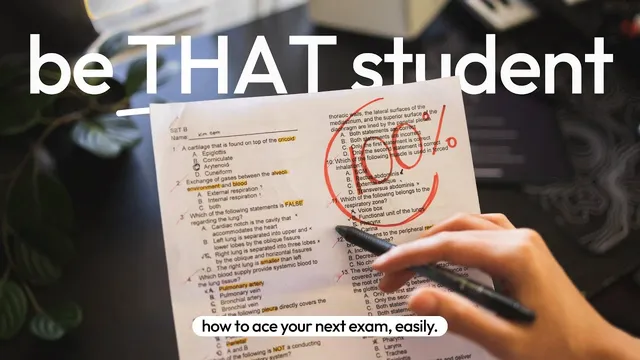
please watch this video before your next exam...
Based on Kai Notebook's video on YouTube. If you like this content, support the original creators by watching, liking and subscribing to their content.
Treat exam success as a system built on disciplined effort, not an overnight trick.
Briefing
Acing an exam isn’t treated as a last-minute trick; it’s framed as a disciplined system built around two things: knowing what the test will look like and running a study routine that forces retention. The core message is blunt for anyone starting late—there’s no overnight “magic secret,” so the practical goal becomes setting expectations and building methods that make studying efficient and durable.
The first lever is exam-specific preparation. Even when someone knows the subject matter, that knowledge only accounts for part of the outcome; the rest comes from understanding how the exam is structured—question types, formats, and what gets tested. That’s why practice tests and review courses for specific exams (like SAT-style or entrance exams) work better than only rereading base material. When official materials are limited, the advice shifts to information gathering: ask seniors or classmates who took the same exam (ideally under the same professor) for insights on the test’s patterns.
With the exam’s shape understood, the next step is scheduling. Instead of long, single-subject blocks, the transcript pushes interleaving: split study time into multiple segments across the week and rotate subjects within those segments. For example, rather than studying math for three straight hours, a student would divide the session into smaller parts and mix subjects. The payoff is twofold—less burnout per topic and more frequent revisiting, which strengthens memory. A sample multi-exam plan illustrates the difference between chunking (A/B one day, C/D the next, E later) and true interleaving across days (cycling A–E in different orders so each topic gets repeated and reviewed).
To make the repetition stick, the transcript adds a simplified spacing rule. After each review, rate the topic as weak, moderate, or proficient. Weak topics get reviewed the next day, moderate ones after two days, and proficient ones after three days (and the cycle continues). This turns review into a feedback loop rather than a fixed schedule.
Finally, the method targets understanding, not passive reading. The “translate” technique (also described as a “fine man” style prompt) asks students to look away from a syllabus passage and explain it in their own words. If they can’t do that, they haven’t truly learned it yet. The transcript closes by emphasizing fundamentals—sleep, time management, eating well, and studying during peak energy—plus consistent daily study over cramming. Top performance is positioned less as talent and more as dedication and drive, supported by the routines above.
Cornell Notes
The transcript argues that exam success comes from systems, not last-minute tricks: learn how the exam is structured, then study in a way that improves retention and understanding. It recommends interleaving—mixing subjects across the week instead of long blocks—so topics get revisited frequently and students avoid draining themselves. A spacing approach follows: after each review, label topics as weak, moderate, or proficient and schedule the next review sooner for weaker material. For comprehension, it uses a “translate” method: read a passage, look away, and explain it in one’s own words to confirm real understanding. Consistency (sleep, good routines, daily effort) is treated as the foundation that makes these methods work.
Why does knowing the subject matter only partially predict exam results?
How does interleaving differ from studying in chunks, and why is it supposed to help?
What is the simplified spacing rule for reviews?
What does the “translate” technique do to prevent passive studying?
What daily habits are presented as the foundation for the study system?
Review Questions
- How would you redesign a one-subject study block into an interleaved weekly plan for five upcoming exams?
- What would you do differently if, after using the translate technique, you can’t explain a syllabus passage in your own words?
- How would you schedule reviews for a topic you rated as weak versus one you rated as proficient?
Key Points
- 1
Treat exam success as a system built on disciplined effort, not an overnight trick.
- 2
Identify the exam’s structure and question patterns using practice tests or exam-specific review materials.
- 3
If official materials are limited, gather insights from seniors or classmates who took the same exam under the same professor.
- 4
Use interleaving by rotating subjects across the week and within study sessions to reduce burnout and increase revisiting.
- 5
Apply spacing based on performance: review weak topics sooner (next day) and proficient topics later (after three days).
- 6
Confirm understanding with the translate technique: read, look away, and explain the passage in your own words.
- 7
Prioritize fundamentals—sleep, good nutrition, time management, and daily study—to make retention methods work.