Postdoc Interview Secrets They're Not Telling You
Based on Andy Stapleton's video on YouTube. If you like this content, support the original creators by watching, liking and subscribing to their content.
Answer “getting to know you” questions with a tight, professional summary tied directly to the postdoc’s research focus, publications, and transferable skills.
Briefing
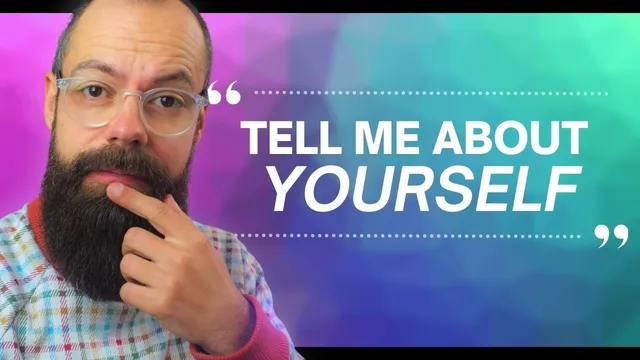
Postdoc interviews reward candidates who can steer answers toward the lab’s needs—papers, funding, and fit—while staying coachable under pressure. The “getting to know you” phase is treated as an icebreaker, but it’s also where interviewers quietly assess whether a candidate can frame their background in a way that signals momentum rather than self-focus. Instead of broad personal introductions, candidates should deliver a tight, professional snapshot: research background, relevant publications, and why the specific postdoc matters to their career trajectory and the group’s goals. Even “lazy” prompts like “tell me a little about yourself” are best handled by staying laser-focused on the position, not the person.
That same early section can include curveballs designed to test how someone responds to criticism. Questions about annoying qualities or what bothered them in others aren’t really about personality quirks; they’re a proxy for coachability and the ability to think on one’s feet. The practical advice is to prepare short, simple answers—three or four facts tied to professional behavior—so the response stays calm, thoughtful, and not overly defensive. The underlying goal is to show the interviewer that the candidate can absorb feedback and collaborate effectively.
Once the conversation moves into research, interviewers shift from “fit” to “evidence.” Candidates are expected to know their past work deeply enough to connect it directly to the postdoc topic, not to recount every detail of a doctoral dissertation. Strong answers highlight transferable skills, describe one or two projects with a clear contribution, and communicate genuine enthusiasm. Complaining about a difficult PhD is discouraged; even if the experience was rough, the interview is framed as a chance to extract “gold” from it—what was learned, what improved, and what the candidate can do next. Interviewers also probe whether someone can start from scratch on a new project and how they keep research current with the latest developments.
The skills and abilities segment becomes the “nuts and bolts” test. Candidates should be ready to discuss key methodologies, techniques, software, and experimental workflows, ideally aligned with what the specific interviewers use and value. Reliability and reproducibility matter, so answers should reflect an understanding of how to avoid unreliable results. Advanced equipment proficiency is treated as especially important: candidates should name instruments they’ve operated and explain how those skills transfer across similar tools. Examples mentioned include nanotechnology-relevant equipment such as Atomic Force microscopy, scanning electron microscopy, and optical microscopy, with an emphasis on transferable competence between related microscopes.
Later, pointed questions often surface around problem-solving: failed results, troubleshooting experiments, staying motivated, and changing direction when outcomes diverge from expectations. The recommended approach is to stay positive and solution-oriented—describe past challenges in terms of what was fixed, learned, or improved. The wrap-up phase signals the interview’s end and should be handled with short, prepared answers plus smart questions. Candidates are encouraged to ask about first-week or first-month expectations, expected publication output, and broader contributions to the department or community—questions that make the interviewer imagine the candidate already working there. Finally, candidates should be ready for logistics like availability to start and expectations from the role, with answers that match the lab’s goals (papers and funding) and remain upbeat. The overall strategy is simple: relax, smile, prepare targeted stories, and communicate enthusiasm without rambling.
Cornell Notes
Postdoc interviews are structured to test both fit and capability, starting with “getting to know you” and moving into research, technical skills, and problem-solving. Candidates should answer early questions with a tight, professional focus on relevant research background and publications, not a broad personal biography. Curveball questions about annoying qualities are used to gauge coachability and how someone handles criticism under pressure. Later sections demand evidence: transferable research skills, enthusiasm for specific projects, hands-on methodology, software, and instrument proficiency (with examples like Atomic Force microscopy, scanning electron microscopy, and optical microscopy). Wrap-up questions should be short and forward-looking, prompting interviewers to picture the candidate already contributing to papers, funding, and the lab’s work.
How should a candidate handle “tell me a little bit about yourself” in a postdoc interview?
Why do interviewers ask questions like “Do you have any annoying qualities?”
What’s the difference between recounting a PhD dissertation and answering “Tell me about your doctoral dissertation” effectively?
What should candidates emphasize in the “skills and abilities” section?
How should candidates respond when asked about failed results or troubleshooting?
What makes wrap-up questions effective at the end of a postdoc interview?
Review Questions
- What would you include—and exclude—in a 60–90 second answer to “Tell me about yourself” for a specific postdoc?
- Which parts of your PhD experience are most “transferable,” and how would you prove that connection in one or two project stories?
- How would you describe a time an experiment failed in a way that highlights troubleshooting and learning rather than frustration?
Key Points
- 1
Answer “getting to know you” questions with a tight, professional summary tied directly to the postdoc’s research focus, publications, and transferable skills.
- 2
Prepare short, simple responses to coachability tests (including questions about annoying qualities) so you can think calmly under pressure.
- 3
Connect doctoral work to the postdoc by highlighting relevant projects, specific contributions, and enthusiasm—without turning the story into complaints.
- 4
In the skills section, emphasize methodologies, software, reproducibility practices, and hands-on instrument operation, tailored to the interviewer’s technical preferences.
- 5
Treat advanced equipment proficiency as a major differentiator by naming instruments operated and explaining transferable competence between similar tools.
- 6
For problem-solving questions, frame failures as troubleshooting and learning, staying positive and solution-oriented.
- 7
Use wrap-up questions to make the interviewer picture you already working—ask about first-week/first-month expectations, publication expectations, and broader contributions.