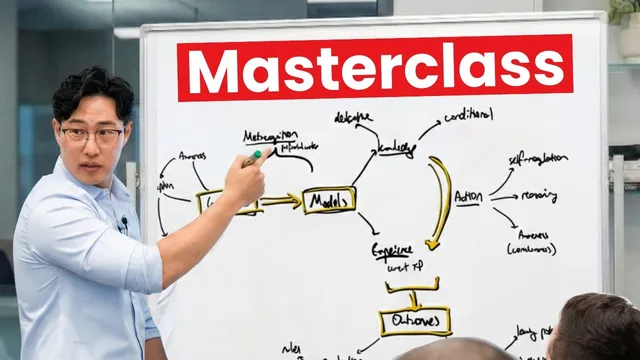
Private Workshop - How to Learn Anything Faster
Based on Justin Sung's video on YouTube. If you like this content, support the original creators by watching, liking and subscribing to their content.
Durable learning depends on processing that connects new information into a schema; memory and depth are outcomes of that processing, not things you can will directly.
Briefing
Fast learning hinges on one controllable lever: how information gets processed into a connected schema. When processing is weak, knowledge stays shallow and quickly disappears—like reading page after page only to realize later that recall is gone. When processing is strong, memory becomes “sticky,” understanding deepens, and the information can be applied to solve problems. The core idea is that people don’t truly control memory or depth directly; those are outcomes of the processing method. The practical north star is to prevent “information in isolation,” because the brain prunes most incoming data unless it can justify keeping it through relationships, implications, and consequences.
The brain’s default behavior is to discard most sensory and informational inputs because constant retention would be too energy-expensive. Even when someone tries to force memorization—“this is important for my exam/job”—the brain still treats the material as low priority unless it sees why it belongs in an existing network. The workshop’s remedy is to make every new fact look like part of a web. Instead of treating each detail as a standalone item, learners actively build connections so the brain can treat the new input as relevant to multiple anchors already stored in memory.
That web-building is framed as the “snowball effect.” Learning feels like flow when new dots of information start snapping into an existing schema—a network built from prior knowledge, experiences, and learned patterns. Early on, there are few anchor points, so new information either connects and grows the schema or gets lost. As connections accumulate, the schema expands, making it easier to integrate future information. The workshop links this to a felt experience: early mapping can feel chaotic and cognitively demanding, but that sensation is treated as a sign the brain is actively reorganizing rather than failing.
To operationalize the approach, participants use an exercise called “blind mapping.” They start by writing 15 keywords for a topic (no sentences, no bullet points). Then they pick one keyword, mark it, and draw a simple arrow-based map showing which other keywords it influences or connects to—without worrying about accuracy. The map is intentionally messy at first. Learners then pause when overload hits, and “consolidate” by redrawing the connections more cleanly: reduce line crossings, group related keywords, thicken the most foundational links, and set arrow direction. This cycle—rough mapping after consumption, then simplifying after overload—repeats as new information is looked up and added.
A key coaching principle is pacing: speed and quantity of connections come first, because accuracy emerges over time through repeated regeneration of the map. When learners feel overwhelmed, the fix is not to abandon the task but to simplify and reorganize. The workshop also situates this technique inside a broader learning system: balanced consumption, accurate digestion (the mapping/simplifying process), and ongoing testing. Testing can be formal (quizzes, flashcards) or organic—like teaching what was learned to colleagues or using the knowledge in real work decisions. The GST demonstration shows how the method turns scattered terms into an intuitive structure quickly, even when some details are initially uncertain.
Overall, the workshop argues for a repeatable method to force connections: build a schema by mapping keyword webs, consolidate when messy, and keep testing so gaps surface and get filled. The result is not just better recall, but usable understanding that can be expressed and applied fluidly.
Cornell Notes
The workshop’s central claim is that fast, durable learning comes from controlling processing—specifically, preventing new information from staying isolated. Because the brain prunes most inputs, learners must connect each new fact into a growing schema (a network of related ideas). The “blind mapping” exercise turns that into a repeatable workflow: write ~15 keywords, pick one, draw arrow connections to other keywords, then simplify and redraw when the map becomes overwhelming. Accuracy is not the first goal; speed and connection-building come first, with correctness improving through repeated map regeneration. Finally, learning efficiency depends on balancing consumption with digestion (mapping/simplifying) and adding testing—formal or “win-win” testing through teaching and real work decisions.
Why does trying to “remember harder” often fail, even when something seems important?
What does “information in isolation is death” mean in practice?
How does the “snowball effect” explain why learning gets easier over time?
What is blind mapping, and why does it start messy?
How do learners know when to pause and simplify?
How does testing fit into the learning system?
Review Questions
- When does the brain decide information is worth keeping, and how does the keyword-web approach change that decision?
- Describe the blind mapping cycle from keyword list to consolidation. What changes when the map becomes overwhelming?
- How can “win-win” testing (teaching or applying knowledge at work) replace or complement flashcards?
Key Points
- 1
Durable learning depends on processing that connects new information into a schema; memory and depth are outcomes of that processing, not things you can will directly.
- 2
Most inputs are pruned because retention is energy-expensive; new facts stick when they relate to multiple existing anchors via implications and consequences.
- 3
Use blind mapping: write ~15 keywords, draw rough arrow connections without sentences, then consolidate by redrawing cleaner and grouping related concepts.
- 4
Pace matters: build connections quickly first, accept imperfect accuracy early, and let correctness emerge through repeated map regeneration.
- 5
Overload is a cue to simplify and reorganize, not a reason to abandon the task.
- 6
A complete learning system balances consumption with digestion (mapping/simplifying) and includes testing to reveal gaps.
- 7
Testing can be formal or organic—teaching others and using knowledge in real decisions both function as retrieval practice.