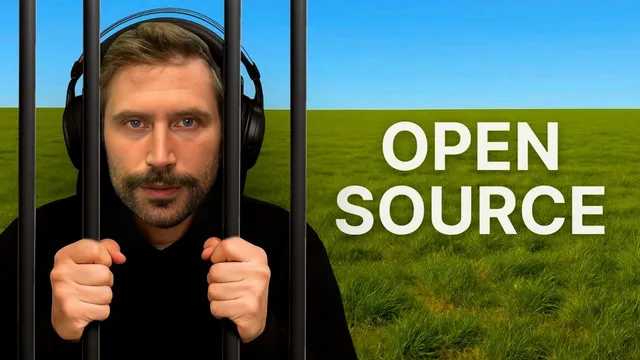
Programming From Prison
Based on The PrimeTime's video on YouTube. If you like this content, support the original creators by watching, liking and subscribing to their content.
Sustained open-source contributions can become a hiring signal strong enough to overcome incarceration barriers when recruiters and project leads notice the work.
Briefing
A software engineer serving time in prison landed a full-time job at Turso after building a track record of open-source contributions—culminating in work on Project Limbo, a Rust rewrite of SQLite’s storage layer. The central takeaway is less about a feel-good comeback and more about a concrete pipeline: limited access to a computer, sustained daily output, and visible engineering work that eventually made outside recruiters look past incarceration.
The story traces how incarceration became an unlikely launchpad. After years of drug-related charges and a long sentence, he entered a prison college program that provided access to a computer with limited internet. That access reignited his programming drive, and he quickly outgrew the curriculum—spending roughly 15+ hours a day on projects and open-source contributions. He also credits prison-based remote work opportunities through the Department of Corrections, which allowed him to pursue legitimate employment if he met requirements and avoided disciplinary issues.
With that structure, he moved from self-directed learning to professional engineering. He landed a software engineering job at Unlocked Labs, building education solutions for incarcerated learners while continuing to contribute to open source. After about a year, he was leading their development team. From there, he found Turso’s Project Limbo—Turso’s effort to rewrite SQLite from scratch. Although he hadn’t worked deeply on relational databases before, he used his prior storage-engine interest (from cache work) to dive into the codebase, academic database internals, and Andy Pavlo’s CMU lectures. His early contributions were driven by the practical reality of prison time: programming consumed much of his life, with reports of around 90 hours a week spent on coding and infrastructure.
A key turning point came when Globber (Turso’s CTO) noticed his work. A Discord introduction led to a meeting, and Globber’s later public attention—reading his blog post on a stream—brought broader visibility. Over time, he began receiving messages from developers and students, including people trying to restart after addiction or similar circumstances, asking how to contribute to open source and build a learning path.
The narrative also argues for “luck plus hard work” as a workable model. Opportunity, he says, arrives unpredictably, but it tends to reward the person who has already been grinding in the same direction for a long time. He describes how remote career chances and hiring decisions became possible only after sustained preparation.
Finally, the account turns to policy and second chances. He praises “fair chance” hiring and suggests that prison systems can produce measurable rehabilitation signals—course completion, program participation, and reductions in sentence—information employers can use to evaluate candidates. He also notes that his return date has shifted due to court outcomes, but frames the remaining time as an opportunity to keep building skills. The broader message: incarceration can be a dead end, but with access, discipline, and organizations willing to look beyond a criminal record, it can also become a starting line.
Cornell Notes
An incarcerated software engineer credits a prison college program and remote-work eligibility for turning limited computer access into a full-time job at Turso. He spent years contributing to open source, then focused on Turso’s Project Limbo—a Rust rewrite of SQLite—using database study and deep code dives to close knowledge gaps. Visibility followed when Turso leadership noticed his GitHub and blog work, leading to conversations and eventual hiring. The story emphasizes that “luck” matters, but opportunity tends to land on top of sustained preparation. It also argues that fair-chance hiring can leverage measurable rehabilitation signals from prison programs.
How did limited prison computer access translate into a professional engineering career?
Why did Project Limbo matter to his growth, and what made it a steep learning curve?
What role did visibility and community interaction play in getting hired?
How does the story frame “luck” versus “hard work”?
What argument does he make for fair-chance hiring, and what evidence does he say employers can use?
What does he say about the remaining time in prison and how he plans to use it?
Review Questions
- What specific mechanisms (programs, eligibility, access) does the story identify as turning points from incarceration to employment?
- How did he approach learning relational databases well enough to contribute to a SQLite rewrite project?
- What “luck plus hard work” model is used, and how does the story illustrate it with a real example?
Key Points
- 1
Sustained open-source contributions can become a hiring signal strong enough to overcome incarceration barriers when recruiters and project leads notice the work.
- 2
A prison college program with limited internet access can provide the practical foundation for long-term coding output and self-directed learning.
- 3
Remote work eligibility through the Department of Corrections can create a legitimate pathway from prison-based study to paid software engineering.
- 4
Project Limbo’s early stage and the ability to contribute to a young codebase helped him build credibility despite limited prior relational database experience.
- 5
Deep database study—pairing code dives with academic resources like Andy Pavlo’s CMU lectures—was used to close technical gaps.
- 6
The narrative argues that fair-chance hiring should be expanded because prison programs can generate measurable evidence of rehabilitation, such as course completion and sentence reductions.
- 7
The “luck plus hard work” framework suggests opportunity matters, but it rewards people who have already prepared through consistent effort.