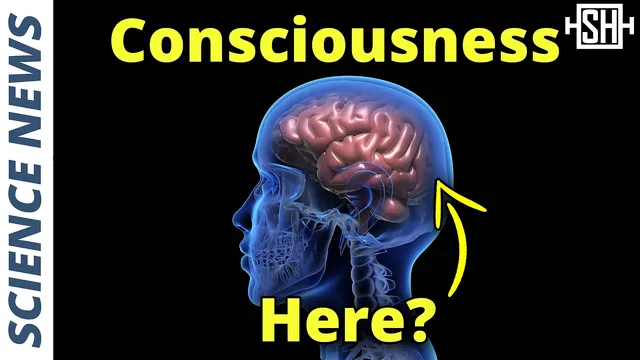
"Pseudoscientific" Theory Correctly Predicts Location of Consciousness
Based on Sabine Hossenfelder's video on YouTube. If you like this content, support the original creators by watching, liking and subscribing to their content.
IIT ties consciousness to an integration measure (Φ), which can imply panpsychism because even simple systems may have integrated connectivity.
Briefing
A new round of brain-imaging tests is forcing a rare, concrete confrontation between two rival theories of consciousness—Integrated Information Theory (IIT) and Global Neuronal Workspace (GNW)—and the results point to a partial win for both, with neither theory landing cleanly.
IIT, associated with neuroscientist Julia Toni, ties consciousness to a single quantity often written as “phi” (Φ): the more integrated connections a system has, the more conscious it is. That framing implies that even simple systems—like electronic circuits—could be “a little bit conscious,” pushing IIT toward panpsychism. Toni has also pursued practical applications, including a patent for using IIT in a “consciousness beta,” and reporting has linked IIT proponents to efforts to translate the theory into clinical settings.
The controversy around IIT isn’t just philosophical. Critics argue that Φ is effectively impossible to calculate for real brains, because it would require evaluating connections across all possible partitions of a system. That computational burden forces researchers to simplify the theory, which critics say makes its predictions ambiguous. In 2023, more than 100 researchers published an open letter asserting that, given IIT’s panpsychic commitments, the theory as a whole still lacks empirical testability and therefore earns the “pseudoscience” label. A later commentary in Nature Neuroscience echoed the concern, arguing that IIT’s core claims are untestable even in principle.
IIT supporters counter that the theory is objective and testable, and that labeling it pseudoscientific reflects a deeper dispute about the dominant “computational functionalist” paradigm. The debate also raises a broader scientific question: is it fair to demand that every foundational axiom be directly testable? Some argue that physics often works by deriving testable consequences from assumptions that themselves aren’t measured directly.
Against that backdrop, researchers recently extracted predictions from IIT and GNW and tested them in human participants. GNW predicts that conscious access depends on rapid, front-of-brain activity—especially involving the prefrontal cortex—broadcasting signals across the rest of the brain. IIT instead predicts that conscious perception should correlate with steady, complex, tightly connected activity in the back of the brain.
The strongest signals tied to conscious perception appeared in the back of the brain, aligning with IIT’s localization claim that consciousness is generated in posterior processing. But IIT’s more specific expectation—unusually complex, tightly integrated patterns—did not show up as predicted. GNW’s signature front-burst was also largely absent, failing its central timing prediction. Still, GNW did get something important right: conscious perception recruited more brain areas than unconscious processing.
Taken together, the findings suggest that consciousness may hinge more on sensory signal processing in posterior regions than on executive-style control from the prefrontal cortex. Just as importantly, the exchange signals that consciousness research is moving from abstract disputes toward measurable, falsifiable predictions—even if the dream of reducing consciousness to a single number remains contentious.
Cornell Notes
Integrated Information Theory (IIT) and Global Neuronal Workspace (GNW) make sharply different predictions about where and when consciousness emerges. IIT links consciousness to a single integration quantity (Φ), implying that posterior brain activity should be steady, complex, and tightly connected. GNW instead expects brief, rapid bursts in the prefrontal cortex that broadcast across the brain. In tests using fMRI, magnetic field measures, and implanted electrode signals from 256 participants, the strongest conscious-perception signals appeared in the back of the brain, supporting IIT’s localization. However, IIT’s complexity/tight-connection prediction and GNW’s front-burst timing prediction both largely failed, while GNW correctly predicted broader brain-area involvement during conscious perception.
Why does IIT imply that many systems could be at least partly conscious?
What makes IIT difficult to compute for real brains?
What are the contrasting spatial and temporal predictions of IIT vs GNW?
Which brain-region finding most strongly supported IIT?
How did the results challenge both theories?
What broader conclusion about consciousness research emerges from the test?
Review Questions
- How do IIT and GNW differ in both the predicted location and timing of neural correlates of consciousness?
- Why is computing Φ considered computationally prohibitive for large biological systems?
- What specific prediction from IIT failed in the reported results, and what prediction from GNW failed?
Key Points
- 1
IIT ties consciousness to an integration measure (Φ), which can imply panpsychism because even simple systems may have integrated connectivity.
- 2
Critics argue Φ is impractical to compute for real brains because it requires evaluating all possible partitions, forcing simplifications that can blur predictions.
- 3
A major dispute over IIT centers on whether its foundational claims are testable in principle and whether “pseudoscience” is an appropriate label.
- 4
GNW predicts consciousness involves brief, front-of-brain (prefrontal) bursts that broadcast across the brain, while IIT predicts steady, complex, tightly connected posterior activity.
- 5
In tests with fMRI, magnetic field readings, and implanted electrode signals from 256 participants, posterior signals tracked conscious perception more strongly than frontal bursts.
- 6
IIT’s localization support came with a failure to observe its predicted complexity/tight-connection signature, and GNW’s timing prediction largely did not appear.
- 7
The mixed results suggest consciousness may be rooted more in posterior sensory signal processing than in frontal executive broadcasting alone.