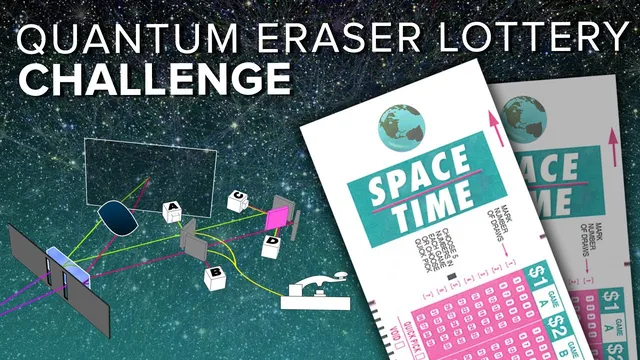
Quantum Eraser Lottery Challenge
Based on PBS Space Time's video on YouTube. If you like this content, support the original creators by watching, liking and subscribing to their content.
Which-path information (which slit the original photon took) removes interference, producing a single-pile screen distribution.
Briefing
A quantum eraser experiment can make interference appear or disappear depending on whether “which-path” information is available—an effect that looks like information about measurement choices propagates backward in time. In the setup described, single photons pass through a double-slit apparatus, but each photon is paired with an entangled twin. The twin is routed so that, depending on which detector it hits, the experiment either reveals which slit the original photon used (“which way”) or erases that path information (“eraser”). When the path is known, the screen shows no interference: photons accumulate in a single pile as if they behaved like particles. When path information is erased, interference returns, and the interference pattern depends on whether the twin landed in one eraser detector versus the other—patterns for detector C align with the complementary peaks/valleys of those for detector D.
The key twist is the timing: the choice to obtain or erase which-path information is made after the original photon has already landed on the screen. That delayed-choice structure creates the impression that the later measurement choice determines what the earlier screen distribution “should have been,” even if the time gap is tiny. The transcript then proposes a “time-traveling communication device” by replacing the usual random beam-splitter choice with a controllable switch. With mirrors tied to the switch, photons are either sent to the which-way detectors (no interference) or to the eraser detectors (interference forms). In principle, this lets a binary control setting at the which-way/eraser side imprint a corresponding pattern on the distant screen, potentially even across time.
The “lottery cheating” plan follows: before the lottery draw, photons are “frozen” for a day (the transcript admits this is an idealization, suggesting repeated bouncing between Earth and the Moon as a stand-in). The device is then turned on so that photons build up an interference pattern on the screen. After the winning numbers are known, the switch is toggled to encode those numbers in binary. The claim is that the encoded information would emerge in the interference patterns that were recorded earlier—so “future me” would receive tomorrow’s results.
But the scheme fails at the crucial step: although the later switch setting does determine which interference pattern is present with perfect fidelity, the experimenter cannot directly read the lottery numbers from the recorded data. The transcript frames this as a puzzle: what prevents extracting a usable message from the interference record, despite the apparent backward-in-time influence? The implied resolution is that the interference patterns alone do not provide an unambiguous, locally readable encoding without additional information or post-selection—meaning the “backward” effect changes correlations rather than granting a straightforward, deterministic channel for extracting the binary digits from a single run. The challenge question asks for a detailed explanation of exactly what breaks the ability to decode the numbers.
Cornell Notes
The quantum eraser effect hinges on whether which-path information is available for an entangled photon pair. If the twin photon’s detection reveals the original slit (“which way”), the screen shows no interference; if the twin’s path information is erased, interference reappears, with a pattern that depends on which eraser detector (C vs D) fired. A proposed device replaces the random beam-splitter choice with a controllable switch, suggesting a binary message could be written into interference patterns after the photons already hit the screen. The lottery plan assumes that toggling the switch after the draw would let “future me” read tomorrow’s numbers from patterns recorded a day earlier. The catch is that, even with perfect fidelity of the correlations, the recorded interference does not yield a directly readable binary encoding for the experimenter.
Why does interference disappear when which-path information is available?
How can the eraser restore interference, and why do C and D matter?
What does the delayed-choice timing change, and why does it look like information travels backward?
How does the proposed switch-based device attempt to turn erasing into communication?
Why does the lottery scheme still fail even if the interference patterns match the future switch settings?
What role does the “freeze photons for a day” assumption play?
Review Questions
- In the described setup, what specific measurement outcome (which detector group) corresponds to “no interference,” and what corresponds to “interference with complementary fringes”?
- What additional information or event-sorting step seems necessary to decode a message from quantum eraser interference patterns, and why would that block deterministic communication?
- How does replacing a random beam splitter with a controllable switch change the experiment’s behavior, and what limitation remains even with perfect fidelity of correlations?
Key Points
- 1
Which-path information (which slit the original photon took) removes interference, producing a single-pile screen distribution.
- 2
Erasing which-path information restores interference, and the interference depends on whether the twin photon is detected in the C or D eraser channel.
- 3
Delayed-choice timing makes the interference outcome appear to depend on a later measurement choice, suggesting backward-in-time influence at the level of correlations.
- 4
A controllable switch could, in principle, replace random routing and map binary settings onto whether interference forms.
- 5
The lottery plan fails because the recorded interference patterns do not provide a directly readable, deterministic encoding without the needed correlation/conditioning information.
- 6
Even perfect fidelity of the correlations does not automatically translate into a usable communication channel for extracting specific bits from raw screen data.