Real World Telekinesis (feat. Neil Turok)
Based on minutephysics's video on YouTube. If you like this content, support the original creators by watching, liking and subscribing to their content.
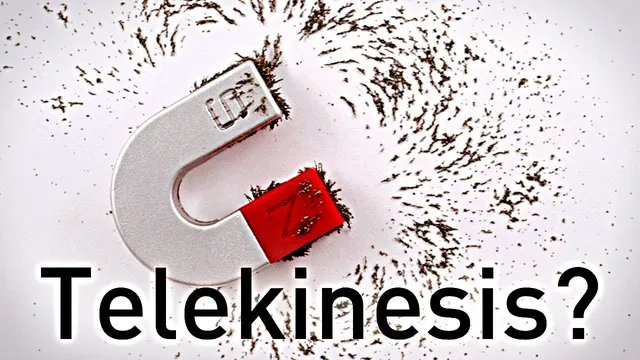
Telekinesis is reinterpreted as the propagation of changes in an electromagnetic field rather than instant action across empty space.
Briefing
Telekinesis sounds like supernatural mind power, but modern physics treats “motion at a distance” as an illusion created by something more concrete: electromagnetic fields that carry influence through space. The central shift—made in the 1800s—is that forces like magnetism, electricity, and even light don’t act instantly across empty space. Instead, they propagate through changes in a field, so distant effects arrive because the field updates nearby points in sequence.
The groundwork began with Michael Faraday, a London bookbinder’s apprentice whose experiments convinced him that magnetic and electric forces aren’t telekinetic action at a distance. Faraday proposed an underlying physical “thing” permeating space: a field. The field idea reframes what happens between objects. Rather than one object directly “reaching” another, the region around each object is described by properties at every point in space.
James Clerk Maxwell then turned Faraday’s intuition into a unified mathematical framework. Maxwell showed that electricity and magnetism can be described using a single electro-magnetic field that exists throughout space. In this view, a field assigns numbers to every point—simple values like temperature in one case, but for electromagnetism more complex quantities that include strength and direction. Crucially, Maxwell’s equations link the field at one location to the field at neighboring locations, creating a chain reaction: when the source changes, the field changes nearby first, then farther away, and so on.
That “bucket brigade” picture explains why magnets can attract or repel without direct contact. A magnet disturbs the electromagnetic field around it; when the magnet moves, the field near the magnet changes, which forces the next region to change, and the effect ripples outward until it influences another magnet or a compass needle. The same mechanism applies to electric charges. An electron doesn’t just impose a static instruction on other electrons; it creates a field disturbance that can be thought of as telling other electrons to “get away,” and if the electron is shaken, the disturbance spreads outward as ripples.
Maxwell’s most consequential insight was that these electromagnetic ripples travel at the same speed as light. That identification—light as an electromagnetic wave—connects everyday phenomena to the same field dynamics. Heat from the Sun reaches Earth because electromagnetic waves transport energy across millions of kilometers. Cell-phone signals work because information is encoded into electromagnetic waves that propagate through space to receivers. Even the light from a bulb reaches the eye through these traveling field changes.
The upshot is that “action at a distance” persists as a human intuition only because the intermediate field process is invisible. Countless experiments since Faraday’s era have supported the field-based mechanism. By replacing instant telekinesis with propagating field changes, Faraday and Maxwell laid the foundation for 20th-century physics and the modern picture of how the universe transmits forces, energy, and information.
Cornell Notes
Telekinesis is reinterpreted as a field effect: objects influence one another by changing electromagnetic fields that propagate through space. Faraday argued that magnetism and electricity arise from an underlying “field” rather than direct action across distance. Maxwell built a mathematical framework showing that a single electro-magnetic field describes electricity and magnetism, with equations that link the field at one point to nearby points. When a magnet or charge moves, the field changes spread outward like a chain reaction. Maxwell further identified electromagnetic waves as light, explaining how heat, radio signals, and visible light travel without any need for instant action at a distance.
Why does physics move away from “action at a distance” when describing magnets and charges?
What does it mean for a field to assign values at every point in space?
How does the field “bucket brigade” explain magnet interactions?
What role do moving charges play in producing electromagnetic waves?
Why is Maxwell’s identification of light as an electromagnetic wave so important?
What makes “action at a distance” feel real to people?
Review Questions
- How do Faraday’s and Maxwell’s ideas together replace instant telekinesis with a field-based mechanism?
- In Maxwell’s framework, what mathematical relationship connects the field at one point to the field at nearby points, and why does that matter for long-range effects?
- What evidence in the transcript links electromagnetic waves to light, and how does that connection explain heat and communication over long distances?
Key Points
- 1
Telekinesis is reinterpreted as the propagation of changes in an electromagnetic field rather than instant action across empty space.
- 2
Faraday’s experiments supported the idea that electric and magnetic effects come from an underlying field permeating space.
- 3
Maxwell unified electricity and magnetism using a single electro-magnetic field described at every point in space.
- 4
Field equations connect the field at one location to neighboring locations, so disturbances spread outward like a chain reaction.
- 5
A moving magnet changes the electromagnetic field, and the resulting disturbance propagates until it influences another object.
- 6
Shaken charges generate ripples in the field that travel outward as electromagnetic waves.
- 7
Maxwell’s key link—electromagnetic waves travel at the speed of light—explains light, heat transfer, and wireless communication without telekinesis.