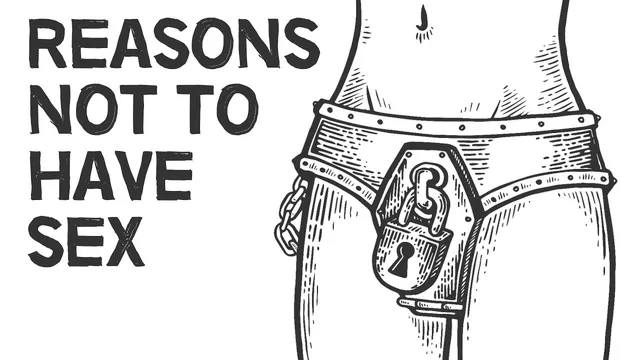
Reasons Not to Have Sex
Based on Einzelgänger's video on YouTube. If you like this content, support the original creators by watching, liking and subscribing to their content.
Sex is portrayed as carrying practical costs—uncertain partner-finding, chemistry and performance issues, and potential safety risks—especially for people not in relationships.
Briefing
Sex may be treated as a life necessity, but the case for skipping it rests on a simple pattern: sexual desire tends to create costs, cravings, and a life structure that can shrink freedom. Even when sex is available, the pursuit can become a recurring “itch” that demands more scratching—temporarily relieving dissatisfaction while leaving the underlying drive intact, and sometimes intensifying it.
The argument begins with the practical price of sex. For people not in a relationship, finding partners can mean time-consuming searches in person or through dating apps, with no guarantee of chemistry, confidence, or safety. Even when a match is found, performance anxiety and mismatched expectations can derail the experience. For others, sex becomes a transaction—raising questions about money, risk, and the motivations of those involved. The broader point is that sex often arrives bundled with uncertainty and potential harm, not just pleasure.
Philosophical and religious perspectives then frame why sex may not be required for well-being. Epicurus is cited for the view that sex is a “natural desire” but not a route to happiness; fulfillment of this desire is unnecessary and may be harmful by default. The transcript also points to studies linking casual sex and poorer mental health, while acknowledging causation is unclear. An International Academy of Sex Research publication is quoted to emphasize that sexual behavior can carry risks to physical and mental health, including unintended pregnancy, sexually transmitted infections (STIs), and sexual assault.
A second line of reasoning comes from Buddhist psychology of desire. Sensual cravings are described as a mechanism for escaping dissatisfaction with life; pleasures can numb pain, but repeated numbing strengthens the craving. Addiction is treated as extreme indulging in sensuality, and the “itch” metaphor is used to argue that relief is short-lived while desire returns stronger. Ajahn Nyanamoli is quoted to describe how celibacy can free a person from being defined by desire—reducing the “wetness” of sensual longing so the mind is no longer organized around finding mates, building status, or maintaining attractiveness.
The transcript then shifts from deprivation to expansion. Personal testimony from Mary Talbot in Tricycle describes celibacy as liberating because it removes the mental space spent strategizing, analyzing, and agonizing over sex and romance. The same logic is extended to everyday life: if one no longer wants a thing, the behaviors and expenditures that support it lose power, freeing energy for other pursuits. The Jesuits are mentioned as an example of celibacy framed as a conscious choice aimed at devotion to God rather than repression.
Finally, the transcript addresses “sexual transmutation,” the claim that abstinence can convert sexual energy into creativity or discipline. Nikola Tesla is used as a case study: he remained celibate and argued that romantic entanglement could distract inventors, even claiming abstinence supported his creativity. The transcript notes that transmutation lacks scientific proof but cites anecdotal support from the N*Fap movement, Muhammad Ali’s pre-fight abstinence, and Lady Gaga’s celibacy for creativity, alongside Henry David Thoreau’s praise of chastity in Walden.
The conclusion is pragmatic: celibacy may offer benefits, but most people won’t adopt it outside religious contexts because it is “way too hard,” and reproduction remains a biological reality. Still, the core claim holds—sex is not automatically a necessity, and choosing not to engage can reduce risk, weaken craving loops, and redirect attention toward a broader life.
Cornell Notes
The transcript argues that sex is often treated as essential, but it can carry hidden costs—time, risk, and mental-health tradeoffs—while also reinforcing desire loops. Using Epicurus and Buddhist teachings, it frames sex as unnecessary for happiness and as a craving mechanism that temporarily soothes dissatisfaction but can intensify longing over time. Celibacy is presented as a way to loosen the mind’s fixation on mate-seeking, freeing energy from status and attractiveness games and redirecting it toward other goals. The piece also discusses “sexual transmutation,” citing Nikola Tesla and various anecdotes as possible benefits of abstinence, while noting the lack of scientific proof. Overall, it portrays celibacy as a potentially liberating choice, even if most people won’t sustain it.
What practical “price” does the transcript associate with sex, especially for people without a partner?
How do Epicurus and the cited research support the claim that sex may not be beneficial?
What does the Buddhist “itch” model say about why desire can intensify?
How does celibacy change a person’s daily priorities according to Ajahn Nyanamoli?
What is “sexual transmutation,” and how does the transcript treat evidence for it?
Review Questions
- Which risks and uncertainties does the transcript list as part of pursuing sex outside a relationship?
- How does the Buddhist framework explain the difference between temporary relief from desire and long-term changes in craving?
- What does the transcript claim about celibacy freeing energy, and what examples are used to illustrate that shift?
Key Points
- 1
Sex is portrayed as carrying practical costs—uncertain partner-finding, chemistry and performance issues, and potential safety risks—especially for people not in relationships.
- 2
Epicurus is cited to argue sex is unnecessary for happiness and may be harmful by default, even if it is a “natural desire.”
- 3
The transcript links casual sex to poorer mental health through cited studies, while acknowledging the direction of causation is not settled.
- 4
Buddhist psychology frames sensuality as a strategy for escaping dissatisfaction; repeated indulgence can strengthen craving through a “scratch the itch” cycle.
- 5
Celibacy is presented as reducing the mind’s fixation on mate-seeking, weakening incentives tied to status and attractiveness.
- 6
Personal testimony (Mary Talbot) and religious examples (the Jesuits) are used to argue that removing sex and romance can create mental space and redirect energy.
- 7
“Sexual transmutation” is discussed as a possible benefit of abstinence, with Tesla and other anecdotes offered despite the lack of scientific proof.