Reasons Not to Worry What Others Think
Based on Einzelgänger's video on YouTube. If you like this content, support the original creators by watching, liking and subscribing to their content.
Approval-seeking makes emotional stability dependent on factors you can’t reliably control, so praise and rejection swing your mood.
Briefing
Caring too much about what other people think doesn’t just cause stress—it hands over control of your emotions, wastes time on judgments you can’t influence, and erodes authenticity. The core message is blunt: other people’s opinions are unreliable, often outside your control, and frequently reflect their own inner conflicts rather than your worth. In a world where social media turns approval into a constant metric, that dependence can become a cycle of craving validation and collapsing when it’s withheld.
The argument starts with power. When happiness depends on external approval, emotional stability becomes hostage to strangers’ whims. Praise can feel like a high, but disapproval triggers sadness and anger, even when the people involved barely know you. The transcript adds a practical critique: many of the people whose opinions matter most are unknown to you, their judgments can shift quickly, and their views may lack substance. That makes the effort to win their approval feel both unnecessary and self-defeating.
Next comes control. Worry grows from the attempt to manage what can’t be managed—especially other people’s minds. Drawing on Stoic ideas, the discussion contrasts what’s fully controllable, what’s not controllable at all, and what sits in between. You can influence others through your words and actions, but you can’t control how they interpret you or what they think in response. Since the internal reactions of others remain outside your command, obsessing over them becomes “futile,” and attention is better spent on behavior you can actually choose.
A third pillar reframes negative reactions: hostility or indifference may say more about the other person than about you. Using Carl Jung’s concept of projection, the transcript argues that people often repress unwanted traits into the unconscious “Shadow,” then unconsciously recognize and react to those traits in others. In that light, an adverse reaction can be less a verdict on your character and more a mirror of someone else’s unresolved discomfort.
The transcript then widens the lens. It challenges the instinct to treat yourself as the center of the universe, noting that solipsism—the idea that only one’s own mind is certain to exist—can’t be proven, but also that even if other minds exist, most people are too preoccupied with their own concerns to focus on you as intensely as you fear. Their judgments are also portrayed as brief and erratic; memory fades quickly, and social approval rarely lasts.
Finally, the discussion connects the habit of approval-seeking to authenticity and time. Nietzsche’s critique of herd mentality is used to argue that conformity rewards “master and slave morality” dynamics: the crowd values uniformity, punishing those who stand out. A “National Worry Audit” survey is cited to quantify the cost—British adults reportedly spend years worrying, much of it tied to appearance and social evaluation. The takeaway is that life is short, and the energy spent chasing approval is energy stolen from living.
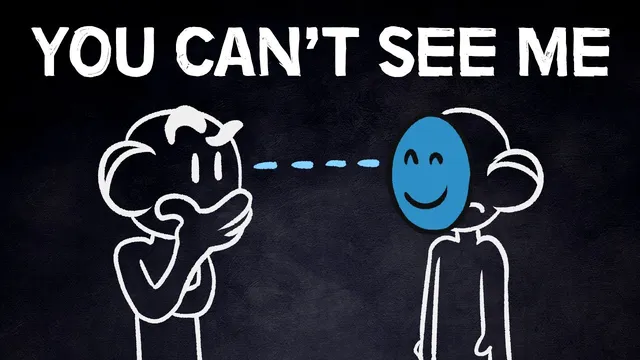
Even with the value of outside perspective, the transcript ends on an inward claim: you know your motives best. Jung’s model of the persona as a mask explains why others can misread your true self. Feedback can help, but the “truth” about what you want and who you are ultimately lives inside, making self-alignment the antidote to anxious conformity.
Cornell Notes
The transcript argues that over-focusing on other people’s opinions steals emotional control, because approval and rejection are outside an individual’s command. It uses Stoic control categories to distinguish what can be influenced (one’s words and actions) from what cannot (other people’s internal judgments). It also reframes others’ reactions through Jung’s concept of projection, suggesting hostility often reflects the other person’s unconscious conflicts. The discussion adds philosophical and practical pressure: people are unlikely to think about you as much as you fear, social judgments fade, and worrying consumes years of life. Authenticity suffers when conformity becomes the goal, but self-knowledge—what one truly wants beneath the persona—provides a steadier compass.
Why does tying happiness to other people’s approval “give away power” over emotions?
How does the Stoic “trichotomy of control” change what it means to worry about others?
What does Jung’s projection theory add to the interpretation of criticism or indifference?
Why does the transcript argue that other people’s opinions are often brief and not worth obsessing over?
How do Nietzsche’s ideas connect approval-seeking to a loss of authenticity?
What role does self-knowledge play in the final argument about opinions?
Review Questions
- Which category of control (fully, partially, or not at all) best fits other people’s opinions, and what practical behavior follows from that?
- How does projection change the way you interpret criticism or hostility from others?
- What does the persona concept imply about why other people’s perceptions of you might not match your true motives?
Key Points
- 1
Approval-seeking makes emotional stability dependent on factors you can’t reliably control, so praise and rejection swing your mood.
- 2
Other people’s opinions are largely outside personal control; present behavior can be influenced, but internal judgments cannot be commanded.
- 3
Negative reactions may reflect the other person’s unconscious conflicts through projection, not a direct assessment of your character.
- 4
Most people are preoccupied with their own lives, making fears about constant scrutiny less realistic than they feel.
- 5
Social conformity can undermine authenticity by rewarding uniformity and punishing deviation, echoing Nietzsche’s critique of herd mentality.
- 6
Worry consumes substantial time and energy; quantifying it highlights how much life gets traded away for social evaluation.
- 7
Self-knowledge matters most because others can misread the persona; true motives and desires remain private.