Roam for Research
Based on Conor White-Sullivan's video on YouTube. If you like this content, support the original creators by watching, liking and subscribing to their content.
Paste source material into Roam, then immediately convert key passages into quoted blocks so evidence stays attached to the original wording.
Briefing
Roam for Research is a workflow for turning a single reading session into a connected research network—using quotes, key terms, and bidirectional links so ideas can be reused across projects. The core move is to paste an article into Roam, then immediately convert useful passages into quoted blocks and tag them with “key terms” (like “project management” and “return on attention”). Those tags become pages that automatically gather relevant quotes, letting a researcher skim the exact lines tied to each concept instead of hunting through the original source.
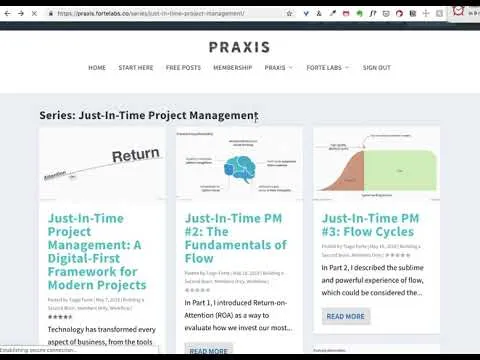
The walkthrough uses Thiago Forte’s productivity writing as the example. After pasting the material, the researcher searches within the notes and creates Roam pages for key concepts. When a page is created, Roam pulls in the quoted paragraphs that mention that term, effectively building a mini index of evidence. A key distinction emerges: “return on investment” is treated as less useful for the researcher’s purposes, while “return on attention” is kept because it contains the most relevant passages. The result is a curated set of concept pages that function like living evidence folders.
A second, more structural step is naming and correcting terminology so links don’t break. The researcher remembers an idea from Forte’s “just-in-time project management” series, initially mislabeling it as “intermediate deliverables.” After realizing the correct phrase is “intermediate packets,” they update the term in one place. Roam then automatically updates the internal links and page titles across the database, preventing the common problem of scattered, inconsistent naming that fragments a knowledge base.
The workflow also emphasizes capturing “mentions” and linking them into new context. The researcher creates additional key-term pages (including “intermediate packets” and even a separate “intermediate deliverables” page for comparison), then uses Roam’s unlinked mentions to surface where the idea appears. From there, they place an image and a short caption into the relevant page, and link specific quotes into a “Just-in-time project management” page. This creates a navigable trail: reading one page surfaces the original quote, and reading the quote surfaces where it was used elsewhere.
Finally, the approach is framed as active reading rather than passive collection. By connecting quotes, images, and concept pages through bidirectional links, the system makes it easier to extract small components from what’s being read and reuse them in new projects. The researcher’s stated goal is to “roam or wander” through curated material—turning research into a set of reusable building blocks that support ongoing thinking and project work.
Cornell Notes
The workflow builds a research database in Roam by pasting an article, converting key passages into quoted blocks, and tagging them with concept pages. Creating a page for a key term (e.g., “project management” or “return on attention”) automatically gathers the relevant quoted paragraphs, turning scattered reading into searchable evidence. A major reliability feature is consistent naming: when “intermediate deliverables” is corrected to “intermediate packets,” Roam updates links and titles so the network stays intact. The system then uses mentions, unlinked mentions, and bidirectional links to connect quotes and images across pages, making it easy to reuse ideas in new contexts. This supports active reading—extracting small, reusable components and connecting them to current projects and questions.
How does the workflow turn a long article into usable research material instead of a static dump?
Why does “return on attention” matter more than “return on investment” in this setup?
What problem does the workflow solve by correcting “intermediate deliverables” to “intermediate packets”?
How does Roam’s “mentions” and “unlinked mentions” help with building a connected knowledge base?
What does bidirectional linking enable during reading and reuse?
Review Questions
- When creating a new concept page in Roam, what automatically happens to the quoted text that contains that term?
- Why is consistent naming (like correcting “intermediate deliverables” to “intermediate packets”) important for maintaining a usable link structure?
- How do bidirectional links change the way a researcher can move between a quote’s source and its later applications?
Key Points
- 1
Paste source material into Roam, then immediately convert key passages into quoted blocks so evidence stays attached to the original wording.
- 2
Create concept pages for key terms; Roam automatically aggregates the quoted paragraphs that mention each term, turning reading into an index of evidence.
- 3
Use term selection to focus: keep the concepts that contain reusable passages (e.g., “return on attention”) and drop those that don’t fit the research goal.
- 4
Fix naming mistakes in one place when possible; updating a term (e.g., “intermediate deliverables” → “intermediate packets”) propagates link and title changes across the database.
- 5
Use mentions and unlinked mentions to find where ideas appear but aren’t yet connected, then link them into the right project or concept pages.
- 6
Add supporting media (like images) directly into the relevant concept page so the page becomes a reusable “component,” not just text.
- 7
Rely on bidirectional links to support active reading: trace an idea back to its quote and forward to where it’s being used in new context.