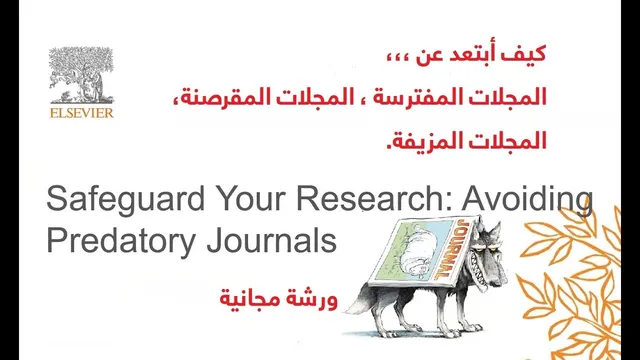
Safeguard Your Research: Avoiding Predatory Journals
Based on Research and AI's video on YouTube. If you like this content, support the original creators by watching, liking and subscribing to their content.
Predatory journals monetize open access by charging article processing fees without delivering core editorial services such as credible peer review and plagiarism/ethics checks.
Briefing
Predatory journals turn the open-access pay-to-publish model into a money-making scheme by charging article processing fees while skipping the core editorial services researchers rely on—especially peer review and basic quality controls. That combination has career consequences for individual researchers and reputational damage for institutions, because funding and promotion decisions increasingly scrutinize where work was published.
The term “predatory” traces back to 2010, when librarian Jeffrey Beall at the University of Colorado Denver coined it after spotting publishers exploiting open access. Beall’s early work involved compiling lists of suspected predatory publishers, but later efforts to standardize definitions showed that not everyone agreed on what should count. By November 2019, researchers in science and technology formalized a widely cited definition in the Nature-branded “UtoA Declaration”: predatory journals and publishers prioritize self-interest over scholarship, use false or misleading information, deviate from editorial and publication norms, and often rely on aggressive, indiscriminate solicitation.
Breaking that definition into practical terms, predatory publishing is characterized by extortion of article processing charges without delivering the expected work. Legitimate journals typically run peer review to validate findings; predatory outlets often omit it, undermining the scientific system built on expert scrutiny. They also tend to lack copyediting, typesetting, proofreading, plagiarism detection, and other ethical checks (such as verifying originality and ensuring research compliance). Even when articles appear online, weak metadata practices and poor indexing can limit discoverability, reducing visibility, citations, and real academic impact.
Because many of these failures are hard to prove from the outside—predatory journals may claim peer review even when it isn’t real—researchers are advised to treat “signals” as warning lights rather than courtroom evidence. Common red flags include fake or unverifiable editorial boards, fabricated impact factors, incorrect addresses, and false claims of being indexed in Scopus or Web of Science. Other cues are unprofessional websites with spelling and grammar errors, vague transparency about fees and editorial decision-making, and heavy spam solicitation. Some scams push impossible timelines such as publication within 48 hours, and they may misuse terminology—confusing search engines like Google Scholar with true indexing services.
The briefing also distinguishes predatory journals from related misconduct. “Hijack journals” imitate legitimate titles by cloning websites or using URL spoofing and domain hijacking to steal submissions and fees. Other unethical practices—like citation manipulation, citation cartels, excessive self-citation, paper brokerage for authorship, and plagiarism disguised through “tortured phrases”—may aim at prestige or citation metrics rather than direct fee extraction. The key difference is scope: predatory and hijack operations target the entire publication process as a fraudulent business model, while many other abuses affect specific articles or behaviors.
To counter these threats, Scopus relies on journal curation and ongoing re-evaluation. An independent board applies selection criteria (including evidence of peer review, publication regularity, ethics statements, and content quality), while algorithms flag outlier behavior for review. Journals found to no longer meet standards can be discontinued and published on lists of removed titles. For individual researchers, the recommended default is to distrust unsolicited invitations, verify journal legitimacy through reputable indexes, and use structured journal-selection guidance such as Think. Check. Submit. rather than chasing titles based on name recognition alone. The overarching message: understand what “predatory” specifically means, read the warning signals carefully, and choose journals aligned with the research topic and reputable indexing sources.
Cornell Notes
Predatory journals exploit open-access publishing by charging article processing fees while skipping essential editorial and ethical safeguards—most critically peer review and plagiarism/ethics checks. The term gained traction after 2010, and a widely used definition was formalized in the UtoA Declaration (published in Nature in November 2019), describing predatory outlets as prioritizing profit, using misleading information, deviating from editorial norms, and relying on aggressive solicitation. Because proof is often difficult from the outside, researchers should treat warning signals—such as fake editorial boards, fabricated indexing claims, unprofessional websites, and impossible publication timelines—as reasons to investigate further. Scopus counters by curating and re-evaluating journals using an independent board, algorithms, and discontinuation when standards fail. Researchers are urged to avoid responding to unsolicited emails and to select journals through trusted directories and structured checklists like Think. Check. Submit.
What makes a journal “predatory” rather than merely “low quality” or “sloppy”?
Why is peer review hard to verify directly, and what should researchers do instead?
What are common red flags in predatory solicitation emails?
How do “hijack journals” differ from predatory journals?
What unethical practices are mentioned that are not primarily about charging fees?
What does Scopus do to reduce the risk of predatory journals appearing in its index?
Review Questions
- Which specific editorial and ethical functions are repeatedly described as missing in predatory publishing, and why do those omissions matter for research validity?
- List at least four warning signals from the transcript that should trigger further journal verification before submitting a manuscript.
- Explain the difference between predatory journals and hijack journals, using the transcript’s examples of how each scam operates.
Key Points
- 1
Predatory journals monetize open access by charging article processing fees without delivering core editorial services such as credible peer review and plagiarism/ethics checks.
- 2
A widely used definition (UtoA Declaration, published in Nature in November 2019) links predatory publishing to profit-driven motives, misleading information, editorial norm violations, and aggressive solicitation.
- 3
Because direct proof is often difficult, researchers should treat warning signals—fake editorial boards, fabricated indexing claims, unprofessional websites, and impossible timelines—as reasons to investigate further.
- 4
Hijack journals steal submissions by cloning legitimate journal identities through website cloning, URL spoofing, or domain hijacking, then collecting article processing fees.
- 5
Other unethical publishing behaviors (citation cartels, paper brokerage, plagiarism via translation “tortured phrases,” and special-issue conflicts) may target prestige or metrics rather than fee extraction across the whole journal.
- 6
Scopus reduces exposure risk through independent curation, ongoing re-evaluation, algorithmic monitoring for outliers, and discontinuation of journals that no longer meet standards.
- 7
Researchers are advised to avoid responding to unsolicited journal emails by default and to select publication venues using structured guidance (e.g., Think. Check. Submit.) and trusted indexing sources.