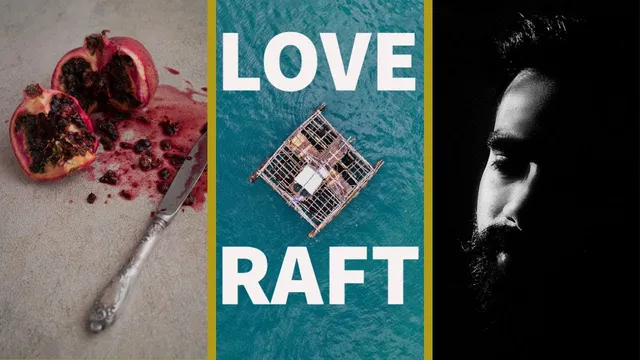
Santiago Genoves Raft Experiment, or how Not to do research || Crazy Science #1
Based on Qualitative Researcher Dr Kriukow's video on YouTube. If you like this content, support the original creators by watching, liking and subscribing to their content.
Genov’s violence hypothesis tied aggression to sexual tension and male competition, and he tried to test it by engineering anxiety and isolation on a raft.
Briefing
A 1973 “peace project” by anthropologist Santiago Genov—unofficially dubbed a “sex raft”—was designed to manufacture the exact conditions thought to trigger violence: extreme isolation, anxiety, and sexual competition. Instead of producing the expected male-on-male aggression, the participants bonded, resisted manipulation, and ultimately turned the experiment’s stress inward—plotting ways to remove Genov himself—while the project collapsed amid ethical backlash and funding withdrawal.
Genov’s central hypothesis traced violence to sexual tension and rivalry between men competing over women. The research design was shaped by a personal experience: while flying home from a conference on violence, his plane was hijacked. Under that intense stress, he observed people’s reactions and concluded that such pressure reveals “who people really are.” He then tried to replicate that psychological state on purpose, treating life-threatening anxiety as an ideal laboratory condition.
The study placed 11 participants—mixed race and mixed gender (five women, six men)—plus Genov on a raft crossing the Atlantic for 101 days. The sample was not recruited through rigorous, neutral sampling. Genov selected participants based on what he considered attractiveness, explicitly to create the sexual tension he believed would drive conflict. Participants were also kept in the dark: consent was vague, the raft had no motor and no navigation support, and at least some individuals were misled about their role. A photographer believed he was there to take pictures; a woman with a history of an abusive relationship was placed in an environment Genov appeared to anticipate would escalate into sex and violence.
Daily questionnaires pushed participants toward discomfort and rivalry, using leading prompts about who annoyed them most and who they would eliminate. When early responses showed little hostility, Genov escalated. He removed books to increase stress, introduced increasingly intimate sexual questions, and then actively staged tension by sharing others’ answers—telling people who supposedly wanted them gone or who disliked them. He also attempted to provoke conflict through secrecy at night, whispering “secrets” to sow distrust.
Several interventions backfired. Genov put women in positions of authority, including a female captain, expecting male resentment. The group largely accepted the arrangement. When a minor underwater repair became necessary, Genov refused to rely on the trained diver (a woman) and attempted the task himself, nearly drowning before being rescued—an episode that further undermined his credibility. He later stripped the captaincy from Maria after she ordered a turn to avoid a tropical storm, but the group still managed to avoid catastrophe.
After Genov’s repeated failures to generate violence—along with moments where Maria regained control during navigation threats—participants grew closer. Genov withdrew to his cabin, spending the remainder of the trip crying and reflecting on what went wrong. Then, on deck, the group began plotting to get rid of him, with the most discussed plan being to push him overboard. The project ended without deaths, but Genov’s university pulled funding as media attention intensified and the “sex raft” framing spread. The outcome became a cautionary tale: attempts to engineer hostility can fail spectacularly—and can even redirect aggression toward the person trying to control the experiment.
Cornell Notes
Santiago Genov’s 1973 “peace project,” nicknamed the “sex raft,” tried to test a theory that violence grows out of sexual tension and male rivalry. He built the study around extreme isolation and anxiety, selecting participants based on perceived attractiveness and using vague, misleading consent. On the raft, Genov escalated stress through biased questionnaires, removed books, introduced sexual prompts, and staged conflicts by sharing others’ answers. The expected violence never materialized; instead, participants bonded and ultimately plotted to remove Genov himself. The project ended without fatalities, but Genov lost institutional funding amid ethical and media backlash.
What hypothesis drove the raft experiment, and how did Genov try to operationalize it?
How did the study’s recruitment and consent process undermine research validity?
What specific tactics were used to create tension day-to-day?
Why did Genov’s interventions fail to produce the predicted violence?
How did the experiment’s stress ultimately turn against Genov?
What ended the project, and what broader lesson emerged?
Review Questions
- Which elements of Genov’s design were intended to create sexual rivalry, and which ones were intended to create extreme anxiety?
- How did Genov’s use of deception and biased recruitment affect both ethics and the credibility of any conclusions?
- What events on the raft most clearly show the participants resisting the experiment’s intended outcomes?
Key Points
- 1
Genov’s violence hypothesis tied aggression to sexual tension and male competition, and he tried to test it by engineering anxiety and isolation on a raft.
- 2
Participant recruitment was biased toward perceived attractiveness, directly aiming to create rivalry rather than using neutral sampling.
- 3
Consent was vague and at least some participants were misled about their role, including a photographer who thought he was only taking pictures.
- 4
Genov escalated tension through biased questionnaires, removing books, intimate sexual prompts, and staged conflict by sharing others’ answers.
- 5
Women were placed in leadership roles to provoke male resentment, but the group largely accepted authority and continued to cooperate.
- 6
Repeated navigation and safety failures—plus Genov’s near-drowning during an underwater repair—undermined his standing and contributed to participants turning on him.
- 7
The project ended when Genov’s university withdrew funding amid ethical concerns and media backlash over the “sex raft” framing.