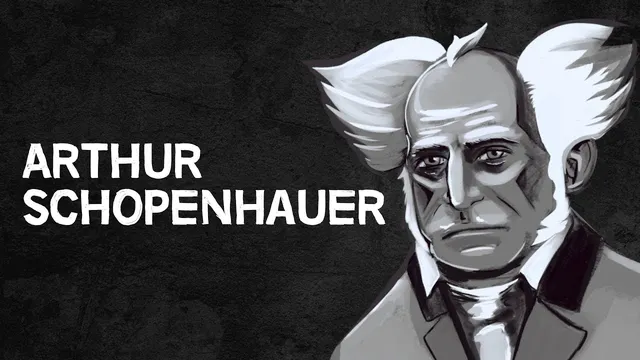
Schopenhauer: The Philosopher Who Knew Life’s Pain
Based on Einzelgänger's video on YouTube. If you like this content, support the original creators by watching, liking and subscribing to their content.
Schopenhauer’s pessimism centers on the Will-to-Live: an irrational, autonomous force that drives survival, reproduction, and ambition.
Briefing
Schopenhauer’s central claim is that life is dominated by an irrational, blind driving force—“the Will” (or Will-to-Live)—and that this force makes human existence structurally dissatisfied. The result is a world where desire never truly ends, pleasure is brief and shallow, and suffering is persistent, intense, and psychologically “sticky.” That bleak diagnosis matters because it reframes everyday motives—survival, sex, ambition, status—not as rational choices but as symptoms of a deeper compulsion shaping how reality is experienced.
Schopenhauer ties this pessimism to a metaphysical picture of what people can actually know. Reality, in his view, splits into the phenomenal world (how things appear through perception) and the noumenal world (things as they are in themselves). Humans can only access the phenomenal realm because perception is limited; the noumenal remains hidden. Yet the Will-to-Live sits underneath experience and filters perception, meaning people don’t see the world “as it is,” only as it is presented through their drives and cognitive constructions. A useful analogy in the transcript compares this to hidden “code” that governs what appears on the surface: the system’s rules shape everything, but those trapped inside can’t directly see the rules.
The Will-to-Live is described as autonomous and uncontrollable. It operates separately from intellect, so reasoning cannot simply override it. It pushes beings to persist, reproduce, and chase improvements—status, prestige, and future security—often without conscious justification. Even procreation is portrayed as largely instinctive rather than deliberative: animals propagate because the urge arises, not because they weigh reasons.
On the experiential side, the transcript emphasizes why suffering outweighs pleasure. Life is portrayed as relentless striving: once one desire is met, another appears, turning satisfaction into a cycle of longing and disappointment. Pleasure is treated as negative in character—more like the relief from pain than a robust good—while pain is positive, more intense, and more memorable. The examples are meant to illustrate the asymmetry: the momentary enjoyment of eating pales beside the agony of being eaten; heartbreak is framed as more devastating than the happiness of the relationship; even romantic love is depicted as euphoria followed by fear, then disillusionment, boredom, and long-lasting pain after separation.
Schopenhauer also argues that suffering comes in many forms—illness, betrayal, loss, and the aging process that ends in death. Youth is compared to sitting in a theater with rosy expectations: later, the “promised” life turns out to have delivered far less than hoped. Still, the philosophy is not only diagnosis. It includes practical responses aimed at reducing pain: asceticism through renunciation (though not for everyone), and for most people, strategies that minimize suffering—choosing simpler pleasures, prioritizing health over fame or wealth, and resisting the anxiety of public opinion. Intellectual pleasures are singled out as relatively “cheap” and sustainable even in old age. Even with these mitigations, the overall verdict remains grim: existence is inherently dissatisfactory, and tomorrow is unlikely to improve the balance between pain and pleasure.
Cornell Notes
Schopenhauer’s pessimism rests on the idea that an irrational force called the Will (Will-to-Live) drives all beings. Because the Will operates independently of intellect, people can’t reason their way out of desire, ambition, reproduction, and self-preservation. This produces a cycle of striving: satisfaction is brief, and new wants quickly replace old ones, leaving life dominated by dissatisfaction. Schopenhauer also distinguishes between the phenomenal world (what perception constructs) and the noumenal world (reality as it is in itself), arguing that the Will underlies experience even though it can’t be directly seen. He offers partial remedies—ascetic renunciation for some, and for others, simpler pleasures, health over status, and less concern for others’ opinions—while maintaining that suffering still outweighs pleasure overall.
What is the Will-to-Live, and why does it matter for Schopenhauer’s view of suffering?
How does the phenomenal/noumenal distinction explain why people can’t see “reality as it is”?
Why does the transcript claim pleasure is “negative” while pain is “positive”?
What keeps desire from ending, according to Schopenhauer?
What practical strategies does Schopenhauer recommend to make life more bearable?
Which influences shaped Schopenhauer’s philosophy, and how did his work spread despite early neglect?
Review Questions
- How does Schopenhauer’s separation of will and intellect support the claim that people can’t simply “think” their way out of suffering?
- What do the phenomenal and noumenal worlds mean, and how does that distinction affect what humans can know about the Will?
- Which everyday choices (pleasures, health, concern for reputation) does Schopenhauer recommend changing, and how are those changes supposed to reduce pain?
Key Points
- 1
Schopenhauer’s pessimism centers on the Will-to-Live: an irrational, autonomous force that drives survival, reproduction, and ambition.
- 2
The Will operates independently of intellect, so reasoning cannot reliably control the impulses that generate dissatisfaction.
- 3
Humans can only access the phenomenal world (perception-shaped representations), while the noumenal world (things in themselves) remains hidden.
- 4
Life’s dissatisfaction comes from an endless cycle of desire: satisfaction is temporary, and new wants quickly replace old ones.
- 5
Pain is portrayed as more intense and persistent than pleasure, which functions mainly as relief from pain.
- 6
Suffering takes many forms—illness, heartbreak, betrayal, aging, and death—making the overall balance of life grim.
- 7
Schopenhauer offers partial remedies: ascetic renunciation for some, and for most people, simpler pleasures, prioritizing health, and reducing anxiety about others’ opinions.