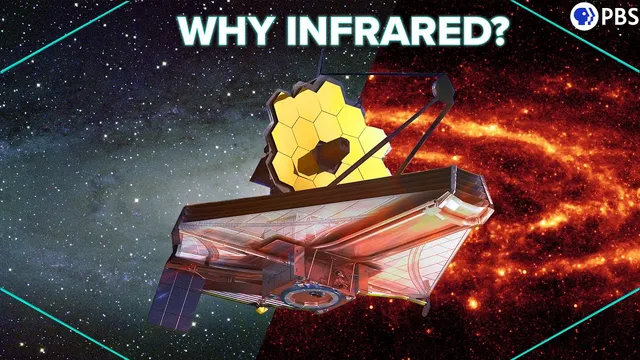
Science of the James Webb Telescope Explained!
Based on PBS Space Time's video on YouTube. If you like this content, support the original creators by watching, liking and subscribing to their content.
JWST’s infrared design is central to observing the early universe because expanding space stretches ultraviolet light into infrared by the time it reaches Earth.
Briefing
The James Webb Space Telescope (JWST) is built to do more than deliver prettier images—it’s engineered to observe the universe in infrared wavelengths, letting astronomers see farther back in time and peer through cosmic dust. That design choice matters because the earliest galaxies emitted energetic ultraviolet light, which the expanding universe stretches by more than a factor of 10 into infrared by the time it reaches Earth. JWST is already being used to observe galaxies closer to the Big Bang than ever before, while also mapping galaxy evolution across cosmic history and studying planet formation and exoplanet atmospheres.
JWST’s capabilities trace back to its core hardware decisions. The telescope’s mirror had to scale up from Hubble’s 2.4-meter diameter to an 8-meter class aperture to boost sensitivity to faint targets—yielding about six times the collecting area. Because an 8-meter mirror can’t be launched as a single rigid structure, engineers adopted a foldable mirror approach early in the program. Another persistent decision was to prioritize infrared observations. Compared with Hubble’s focus on visible light shifted toward ultraviolet, JWST targets longer wavelengths: it can detect cool dust and gas between stars and see through dust that blocks shorter-wavelength light.
The mission’s development was turbulent, with setbacks spanning technology, funding, and politics. Costs ballooned to consume roughly 25% of NASA’s budget before being cut, reinstated, and eventually streamlined; it launched about a decade after the original goal. After decades of planning and billions spent, the deployment succeeded, and JWST now operates at Earth’s second Lagrange point (L2), with its mirrors unfolded and infrared instruments running.
On the science side, JWST runs four instruments that support both imaging and spectroscopy across visible-red through near-infrared and out to mid-infrared wavelengths. It can also take spectra of multiple objects at once and use a coronagraph to block a star’s bright light to better observe nearby planets. These tools support several major research themes: studying early galaxies, investigating how galaxies evolve over time, examining planet-forming environments around young stars, and analyzing exoplanet atmospheres—steps that feed into the broader search for life.
Just as important as what JWST can do is how astronomers get access to it. Most observations flow through NASA’s General Observer (GO) program, where researchers submit detailed proposals. A Phase 1 proposal lays out the science case, targets, and observation types; a Phase 2 proposal specifies exact sky locations, instrument choices, settings, and exposure times. After NASA queues approved programs, data are executed over the following year. Successful teams then receive a download link and typically get about a 12-month proprietary period before the data become available to everyone.
Beyond proprietary projects, legacy programs aim to maximize scientific value for the broader community, often with no proprietary period. The Hubble Ultra Deep Field is cited as a landmark example, and JWST’s own deep-field work includes the SMACS 0723 cluster—observed for 12.5 hours across multiple filters to produce the deepest infrared image of any spot on the sky at the time. For newcomers, the transcript points to public tutorials and shows how people can download and process JWST data themselves, turning raw infrared observations into accessible visualizations.
Cornell Notes
JWST’s defining advantage is its infrared design, which captures ultraviolet light from the early universe after cosmic expansion stretches it into infrared. That enables observations closer to the Big Bang, clearer views through dust, and studies of planet formation and exoplanet atmospheres. Access typically comes through NASA’s General Observer program: researchers submit a Phase 1 proposal (science goals and targets) and a Phase 2 proposal (precise observing plans), then wait for queued execution and data delivery. Teams usually have a 12-month proprietary period before data enter public archives like MAST. Legacy programs further broaden access by maximizing community use of major datasets, including deep-field observations such as SMACS 0723.
Why does JWST’s infrared focus unlock earlier-universe observations that Hubble can’t match?
What engineering tradeoffs shaped JWST’s mirror and sensitivity?
How do astronomers win observing time on JWST, and what’s the difference between Phase 1 and Phase 2?
What happens to JWST data after observations, and how does public access work?
What’s the purpose of legacy programs, and how do deep fields illustrate it?
How does JWST observe planets and exoplanets differently from galaxies?
Review Questions
- What specific chain of effects turns early-universe ultraviolet light into the infrared JWST is designed to detect?
- Describe the key steps and decision points in the GO program from Phase 1 through Phase 2, including what must be specified in each phase.
- Why do legacy programs matter for scientific progress, and what role do deep-field observations like SMACS 0723 play?
Key Points
- 1
JWST’s infrared design is central to observing the early universe because expanding space stretches ultraviolet light into infrared by the time it reaches Earth.
- 2
An 8-meter-class aperture boosts sensitivity to faint targets, and a foldable mirror enables that large collecting area to fit within launch constraints.
- 3
The mission’s development faced major political, fiscal, and technical setbacks before launching successfully at Earth’s second Lagrange point (L2).
- 4
JWST’s four-instrument suite supports both imaging and spectroscopy from near-infrared to mid-infrared, including multi-object spectroscopy and coronagraphy for planet detection.
- 5
Access to JWST observing time typically runs through NASA’s General Observer program, with Phase 1 building the science case and Phase 2 locking in exact observing parameters.
- 6
After execution, teams receive data with a typical 12-month proprietary period before the broader community can access it via archives like MAST.
- 7
Legacy programs and deep fields (e.g., SMACS 0723) are structured to maximize community-wide scientific return, often without proprietary restrictions.