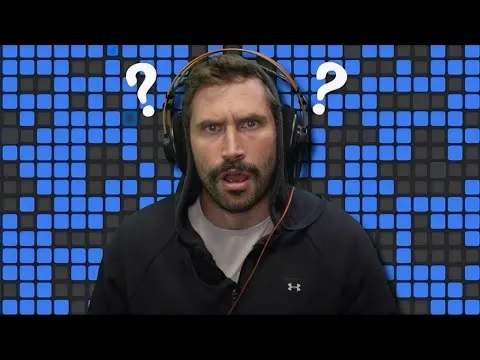
Secret Message In One Million Check Boxes
Based on The PrimeTime's video on YouTube. If you like this content, support the original creators by watching, liking and subscribing to their content.
OMCB stored checkbox states as bits (checked=1, unchecked=0) and packed one million bits into about 125 KB for efficient storage and transmission.
Briefing
A million-checkbox website turned into an accidental cipher machine—one that teens used to hide and broadcast messages, then built a whole community around decoding and drawing on the grid. The site’s creator launched “1 million checkboxes” (OMCB) expecting casual participation, but within two weeks roughly 650 million boxes were toggled by more than 500,000 players, and the project even drew coverage from outlets like The New York Times and The Washington Post. The surprise came when the creator believed the database had been compromised—only to discover the “hack” was actually a coordinated binary message embedded in checkbox states.
OMCB functioned like a shared canvas: each checkbox could be checked or unchecked, and changes propagated instantly to everyone. To keep storage and transmission efficient, the creator treated each checkbox as a bit—checked for 1, unchecked for 0—then packed one million bits into about 125 KB. Data was stored in Redis and base64-encoded for delivery, with real-time updates handled via server-sent mechanisms. A few days after launch, the creator rewrote backend components and, while inspecting stored data, noticed something impossible: the database contained URL-like strings where only binary should have existed. The panic was immediate—logs looked normal, code looked correct, and the only anomaly was the checkbox pattern itself.
The breakthrough came by mapping the checkbox grid back into bytes. Since eight checkboxes formed one byte, the creator realized the “strings” were being reconstructed from bit patterns. When the creator examined the specific checkbox regions corresponding to the suspicious URLs, the repeating structure aligned perfectly with the encoded message. The teens had effectively used the site as a steganographic channel: flipping bits to spell printable ASCII characters, which then formed URLs. One decoded link led to a Discord called “checking boxes,” where participants shared what they were doing and asked whether the creator had seen a rendered 1,000-by-1,000 visualization of the grid.
That Discord became the engine of the project. Members downloaded the full checkbox state and rendered it as a high-resolution black-and-white image, then iterated on techniques for deeper communication—QR codes, base64 payloads, binary noise patterns, and even experiments with animations and color protocols by treating adjacent cells as RGB channels. As reverse engineering improved, so did the drawings’ complexity, and the community grew from under 20 members to over 60 by the time the site shut down.
Not everyone approved. Many users complained about “bots” that rapidly toggled boxes, arguing that automated drawing degraded the experience for ordinary visitors. The creator acknowledged the social downside—similar to other botting behaviors like ticket scalping—while still describing the community’s creativity as genuinely impressive. Before sunset, the creator even removed rate limits to see what the crowd could do, resulting in animations including a Rick Roll. In the end, the episode reframed “hacking” as a learning-driven, community-building exercise—one that turned a simple shared interface into a collaborative cryptography and art platform, with clear boundaries needed to keep the experience fair for newcomers.
Cornell Notes
A shared “1 million checkboxes” website accidentally became a covert communication channel. The creator stored checkbox states efficiently as bits (checked=1, unchecked=0), packed them into bytes, and base64-encoded the data for transmission. When the creator inspected the database, it appeared to contain URLs—leading to a false alarm about being hacked. The pattern resolved into printable ASCII reconstructed from checkbox bits, and the decoded links pointed to a Discord where teens coordinated the technique. The community then scaled up: rendering the grid as a 1,000-by-1,000 image, embedding QR codes and base64 strings, and experimenting with animations and color-like protocols—while bots sparked backlash for harming the experience of normal users.
How did the checkbox grid turn into a message instead of just a drawing toy?
Why did the creator initially think the site was compromised?
What role did base64 play in the teens’ communication strategy?
How did participants make the checkbox art easier to interpret and share?
What caused the backlash, and how did the creator respond?
What kinds of “upgrades” did the Discord community attempt over time?
Review Questions
- If each checkbox is a bit, how many checkboxes are needed to represent one byte, and how does that affect where a hidden message appears in the grid?
- Why would using multiple encodings (binary, base64, and rendered images) make a hidden-message scheme more robust?
- What trade-off did the community face between expressive drawing and fair access for normal users, and how did rate limits factor into that?
Key Points
- 1
OMCB stored checkbox states as bits (checked=1, unchecked=0) and packed one million bits into about 125 KB for efficient storage and transmission.
- 2
Hidden messages emerged when checkbox states were regrouped into bytes and interpreted as printable ASCII, reconstructing readable URLs.
- 3
The decoded URLs led to a Discord (“checking boxes”), where participants coordinated decoding, rendering, and further experimentation.
- 4
Rendering the grid as a 1,000-by-1,000 black-and-white image (checked=black, unchecked=white) helped turn raw checkbox data into shareable visuals and scannable artifacts like QR codes.
- 5
The community scaled from simple binary links to animations and even color-like experiments using adjacent cells as RGB channels.
- 6
Automated botting sparked widespread complaints because it could overwhelm or degrade the experience for casual users, prompting the creator to impose (and briefly remove) rate limits.
- 7
The episode reframed “hacking” as a learning and creativity exercise—while still highlighting the need for boundaries to keep the platform usable for newcomers.