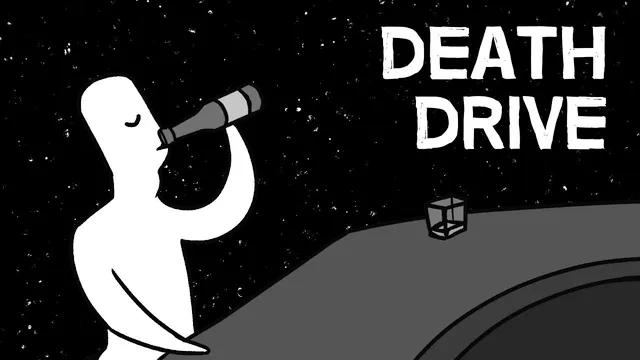
Self-destructive? It could be your death drive…
Based on Einzelgänger's video on YouTube. If you like this content, support the original creators by watching, liking and subscribing to their content.
Freud’s death drive (Thanatos) is framed as an unconscious pull toward an inorganic, tension-free state—death—opposed to Eros, the life drive.
Briefing
Freud’s “death drive” reframes self-destructive behavior as something more than bad choices or trauma responses: it’s an unconscious pull toward an inorganic, tension-free state—death—opposed to the life drive. The idea matters because it offers a single psychological lens for why people sometimes repeat what harms them, seek pain, or turn aggression outward, even when those actions undermine survival and well-being.
The discussion begins with the myth of Daedalus and Icarus as a provocation. Icarus ignores warnings, flies too close to the sun, and dies when the wax holding his wings melts. One reading treats the act as youthful impulsiveness or thrill-seeking. A darker alternative is offered: an unconscious attraction to catastrophe, as if the risk itself were a route out of life’s tension and into “nothingness.” That sets up Freud’s central claim that humans are governed by two opposing drives: Eros (life) and Thanatos (death). Although Freud called the concept speculative, the death drive becomes foundational for later theory.
Freud’s death drive is described as an active, unconscious longing to return to the state that existed before life—an urge for the “aim of all life” to end in death. It can show up as an explicit death wish, but also in subtler patterns: repeating traumatic experiences through “repetition compulsion,” undermining one’s own well-being, or seeking pain in ways that don’t fit the pleasure principle. The transcript illustrates this with examples such as reliving painful memories through music that recreates sadness and melancholy—an experience that feels satisfying despite its harm. The same drive can also turn outward: aggression and sadism are framed as destructive impulses aimed at others, while masochism is linked to self-directed pain.
The argument then broadens beyond psychoanalysis into existential philosophy. Life is portrayed as universally valued, yet shot through with suffering—an idea echoed by thinkers who either seek escape from existence or question the morality of bringing new life into the world. Buddha’s teaching centers suffering and enlightenment as an end to rebirth. Emil Cioran treats birth as catastrophe and death as the ending. Arthur Schopenhauer argues that suffering outweighs pleasure and that a “will to live” keeps humans going despite misery. David Benatar’s anti-natalism, from Better Never to Have Been, claims it’s better not to come into existence because harms like pain, anxiety, grief, and death are inevitable.
Against that backdrop, the death drive is presented as a possible hidden engine behind these philosophical conclusions: not only rational pessimism, but an unconscious desire for relief—peace—through non-existence. The transcript also acknowledges the concept’s controversy. Critics argue Freud lacked empirical proof and that other frameworks—attachment theory, behaviorism, cognitive theories, and cultural factors—can explain self-destruction and aggression. Later thinkers complicate the biological claim: Jacques Lacan relocates the death drive into the symbolic order (language and social norms), while Slavoj Žižek ties it to society, including consumerism.
The closing question pushes the concept into everyday life: if the death drive is real, it may help interpret not just self-harm and violence, but also behaviors like loneliness and social isolation—choices that can look irrational on the surface yet might reflect a deeper pull toward relief from tension.
Cornell Notes
Freud’s death drive (Thanatos) is presented as an unconscious force pulling living beings back toward an inorganic, tension-free state—death—opposed to Eros, the life drive. The transcript links the idea to behaviors that don’t fit the pleasure principle: repetition compulsion (replaying trauma), self-sabotage, and even a satisfying attraction to pain. It also extends the drive outward through aggression and sadism, while distinguishing it from masochism. Existential and anti-natalist philosophers—Buddha, Emil Cioran, Arthur Schopenhauer, and David Benatar—are used to show how many traditions treat suffering as central and non-existence as relief. The concept remains disputed due to limited empirical evidence and competing explanations, but later theorists like Jacques Lacan and Slavoj Žižek shift the death drive toward language and social structures.
What does Freud mean by the death drive, and how is it different from the life drive?
How does “repetition compulsion” connect the death drive to trauma and self-harm?
Why does the death drive sometimes look like it’s aimed outward rather than inward?
How do existential and anti-natalist philosophers support the idea that non-existence can feel like relief?
What criticisms are raised against Freud’s death drive, and what alternatives are offered?
How do Jacques Lacan and Slavoj Žižek reinterpret the death drive?
Review Questions
- How does the transcript distinguish the death drive from the ordinary fact that living things die?
- Which behaviors are used to illustrate repetition compulsion, and why do they challenge the pleasure principle?
- What changes when the death drive is moved from biology (Freud) to the symbolic order (Lacan) and then to society/consumerism (Žižek)?
Key Points
- 1
Freud’s death drive (Thanatos) is framed as an unconscious pull toward an inorganic, tension-free state—death—opposed to Eros, the life drive.
- 2
The death drive is used to interpret behaviors that repeat harm, including repetition compulsion, even when the person understands the damage.
- 3
Pain-seeking can be treated as a subtle death-drive expression when it feels satisfying despite undermining well-being.
- 4
Aggression and sadism are presented as outward manifestations of the death drive, while masochism is linked to self-directed pain.
- 5
Existential and anti-natalist thinkers are used to show a recurring theme: life’s suffering makes non-existence seem like relief or an escape from cycles of rebirth.
- 6
The concept faces major objections, including limited empirical support and competing explanations from attachment, behavioral, and cognitive theories.
- 7
Later theorists shift the death drive’s source: Lacan places it in the symbolic order, while Žižek emphasizes society and consumerism.