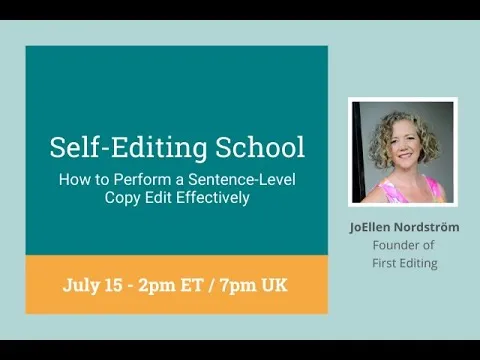
Self Editing School: How to Perform a Sentence-Level Copy Edit Effectively with JoEllen Nordström
Based on ProWritingAid's video on YouTube. If you like this content, support the original creators by watching, liking and subscribing to their content.
Sentence-level copy editing should happen before formatting, with a separate proofread after formatting and upload to catch any new issues.
Briefing
Sentence-level copy editing is the last line of defense before a manuscript is formatted, uploaded, and shared—and it’s where small grammar, spelling, punctuation, and syntax problems can quietly derail clarity. The core message is straightforward: self-editing should happen in a disciplined sequence (copy edit first, then format, then proofread), and it should focus on making sentences clean, coherent, and easy to read on phones, tablets, and screens.
JoEllen Nordström frames editing as three distinct layers. Content editing handles structure and concept cohesion; substantive editing sharpens ideas and completeness; line editing improves voice, flow, and readability without reshuffling major sections. Copy editing sits below those levels and targets the sentence mechanics: correct grammar, spelling, punctuation, and syntax, plus coherence and fluidity so readers aren’t “discombobulated.” After formatting, a separate proofread is still necessary to catch upload-related damage and any remaining grammar or punctuation issues.
A major practical theme is what to look for during a sentence-level pass. Wordiness and jargon are flagged as common self-editing blind spots; acronyms and shorthand should be introduced or avoided unless the audience expects them. The editing checklist also emphasizes identifying convoluted sentences—especially those that could be split into two or three complete sentences. That advice isn’t just stylistic. With most readers consuming text on screens, shorter sentences, tighter paragraphs, and clearer sentence structure reduce cognitive load and improve engagement.
Nordström also stresses that tools are support, not authority. ProWritingAid (and similar software) can highlight likely issues and generate reports, but writers should never “accept all.” Each suggestion must be reviewed individually, because creativity can justify exceptions and because software can miss context. The best workflow keeps editing separate from writing: finish drafting in one mindset, then switch to a logical, objective editing mindset later. Breaks matter too—fatigue and immersion in the story make errors harder to see. A recommended technique is to read from the back (or read aloud) to regain distance from the text.
The session repeatedly connects sentence mechanics to professional readiness. Copy editing should be done before distribution, submission, or self-publishing, and citations must match the required style guide (APA, MLA, Chicago, or in-house standards). Language settings also need to match the intended audience—British vs. American English, for example—so spelling and grammar rules align with reader expectations.
Finally, the Q&A reinforces the economic logic: doing grammar and sentence-level cleanup first protects beta readers and makes paid editors more effective. Beta readers evaluate appeal and reaction, not technical correctness, so copy editing should be completed beforehand. For writers who can’t afford high-end editing, Nordström points to affordable tools and suggests using reports to communicate clearly with freelancers. The overarching takeaway is iterative and realistic: revision is a process, and improving one weakness at a time—commas, sentence structure, citations, or punctuation—builds toward a polished final manuscript without sacrificing voice.
Cornell Notes
Sentence-level copy editing is the final, sentence-mechanics cleanup that should happen before formatting and distribution. It targets grammar, spelling, punctuation, syntax, and overall sentence coherence—especially by reducing wordiness, removing jargon, and splitting convoluted sentences into clearer units for screen-based reading. Writers are urged to keep editing separate from drafting, take breaks to regain objectivity, and read aloud or from the back to catch errors. Tools like ProWritingAid can flag issues and generate reports, but suggestions must be reviewed individually—never “accept all.” For best results, complete copy editing before beta readers and before hiring a professional editor, so human feedback focuses on story and style rather than basic correctness.
What does “sentence-level copy edit” actually include, and how is it different from line editing or proofreading?
Why does the advice to shorten convoluted sentences matter for readers, not just style?
How should writers use editing tools like ProWritingAid without letting them override judgment?
What workflow helps writers catch more errors during self-editing?
How do beta readers fit into the editing sequence?
What must be handled carefully regarding citations and language settings?
Review Questions
- When should copy editing occur relative to formatting and proofreading, and what kinds of errors does each stage catch?
- List at least four categories of issues a sentence-level copy edit should target, and explain one reason each matters for reader comprehension.
- Why is “never accept all” a key rule when using automated writing tools, and what should a writer do when unsure about a flagged suggestion?
Key Points
- 1
Sentence-level copy editing should happen before formatting, with a separate proofread after formatting and upload to catch any new issues.
- 2
Copy editing targets grammar, spelling, punctuation, syntax, and sentence coherence—not structural reshuffling or big-picture development.
- 3
Reduce wordiness and jargon, and split convoluted sentences into shorter, complete sentences to improve readability on screens.
- 4
Keep drafting and editing mentally separate, and use breaks plus techniques like reading aloud or from the back to regain objectivity.
- 5
Editing tools provide guidance but must be reviewed individually; never “accept all.”
- 6
Complete copy editing before beta readers so their feedback focuses on engagement rather than basic correctness.
- 7
Match citations to the required style guide and set language preferences (e.g., British vs. American English) consistently throughout the manuscript.