Selfie Waves
Based on Vsauce's video on YouTube. If you like this content, support the original creators by watching, liking and subscribing to their content.
Selfies evolved through four waves: unintentional self-resemblance, intentional self-depiction, photography-enabled self-portraits, and social sharing as a cultural norm.
Briefing
“Selfie Waves” traces how the modern selfie became a cultural habit by moving through four distinct “waves”—from accidental self-resemblances to deliberate self-portraits, then to photography-enabled self-imaging, and finally to the social-media era where selfies became a way to communicate in real time.
The earliest roots aren’t tied to cameras at all. Humans and even earlier life forms can “discriminate” themselves from their surroundings, creating what the transcript calls first-wave selfies: unintentional, automatic self-resemblances. The example is simple but telling—looking into a pool of water produces an image of the self, even though it can’t be preserved or shared. From there, the second wave begins when people intentionally depict themselves. One standout artifact is a sculpted self-portrait attributed to Pharaoh Akhenaten’s chief royal sculptor, showing head-and-shoulders likenesses and even a companion piece featuring the sculptor’s wife. The point isn’t just that self-depiction existed; it’s that intention and craft began to separate “seeing yourself” from “making yourself visible.”
The third wave arrives with photography, which made likenesses faster and more indexical—less mediated by an artist’s hand. The transcript spotlights Robert Cornelius, who in 1839 sat still for about 15 minutes in a self-made camera setup outside his family’s lamp and chandelier store in Philadelphia. The Smithsonian’s archives complicates the “first selfie” story by also pointing to Henry Fitz Jr’s self-photograph in Baltimore the same fall. Even earlier accounts exist (including a lost 1837 self-photo by an unnamed Frenchman), but the key takeaway is that the “first” is hard to pin down; what matters is that photography made self-portraits reproducible and recognizable.
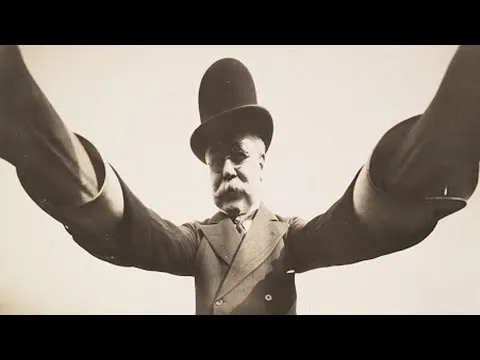
The modern selfie stereotype—arms, poles, and cameras visibly participating—emerges as a recognizable technique. The transcript cites early mirror selfies and an outstretched-arm approach attributed to Joseph Byron in 1909, then follows the gradual spread of tools like selfie sticks and camera extenders. Yet the behavior doesn’t become a mass phenomenon until the fourth wave: when selfies become a social sharing activity rather than a private record. A pivotal moment is credited to “hero mix,” a Japanese teenager whose 1995 photo-diary fame helped normalize frequent self-imaging among young people, driving demand for cameras and features that supported immediate shooting.
The fourth wave accelerates further with connectivity. A 1997 story about Philippe Kahn cobbling together a makeshift camera-phone setup to email a newborn photo to thousands illustrates how selfies become “online first-hand” rather than “second-hand” through someone else’s viewpoint. The transcript argues that social media didn’t invent selfies; it arrived later as a platform that needed content—especially images of bodies—to fill feeds.
Finally, the discussion turns to language and definition. The word “selfie” (with an “ie”) appears in early 2000s usage, while “selfie” as a term for self-centeredness predates it. The transcript treats “selfie” as a flexible label for anything that resembles itself, organized into four waves that explain why selfies feel inevitable: people want images, and technology increasingly puts the power to make them directly into their own hands. The result is a cultural shift where being depicted can happen anywhere, anytime—flattening time and space into a constant stream of self-images.
Cornell Notes
The transcript argues that selfies didn’t start with smartphones; they evolved through four “waves.” First-wave selfies are unintentional self-resemblances (like seeing oneself in a pool). Second-wave selfies are deliberate self-depictions, such as ancient sculpted likenesses. Third-wave selfies are enabled by photography, which made self-portraits more accurate and easier to reproduce, with early examples like Robert Cornelius (1839) and Henry Fitz Jr (also 1839). Fourth-wave selfies become a social sharing behavior—accelerated by celebrity and photo-diary culture (hero mix in Japan) and then by connectivity (e.g., Philippe Kahn’s 1997 email of a newborn photo). This matters because it reframes selfies as a long-running human drive amplified by changing tools and platforms.
What counts as a “first wave” selfie, and why does that broaden the concept beyond cameras?
Why does the “first selfie” claim remain disputed in the photography era?
How did the “modern selfie pose” (arms/poles/cameras visible) emerge?
What role did “hero mix” play in turning selfies into a social behavior?
How did early mobile connectivity change what selfies could do?
Why does the transcript spend time on the word “selfie” and its timeline?
Review Questions
- Which specific examples does the transcript use to represent each of the four selfie waves, and what distinguishes one wave from the next?
- How does the transcript reconcile conflicting claims about who took the first photographic selfie?
- What evidence is used to argue that social media accelerated selfies rather than inventing them?
Key Points
- 1
Selfies evolved through four waves: unintentional self-resemblance, intentional self-depiction, photography-enabled self-portraits, and social sharing as a cultural norm.
- 2
Early “selfie” roots include non-photographic self-images like reflections, plus biological self-discrimination that separates self from environment.
- 3
Photography made self-portraits more indexical and reproducible, but “first selfie” claims remain disputed due to overlapping dates and lost records.
- 4
The modern selfie look—arms, poles, and mirrors—emerged as techniques and tools made the act of taking the image visible.
- 5
Hero mix’s photo-diary fame in Japan helped normalize frequent self-imaging, shifting selfies toward a social behavior rather than private commemoration.
- 6
Connectivity mattered: early mobile emailing (e.g., Philippe Kahn’s 1997 setup) made self-images shareable immediately, reinforcing the “online first-hand” feel.
- 7
The term “selfie” arrived later than the behavior, with modern usage appearing in the early 2000s and earlier “selfie” meaning existing in English long before.