Semantic MediaWiki - Overview - Tutorial 1
Based on Semantic MediaWiki's video on YouTube. If you like this content, support the original creators by watching, liking and subscribing to their content.
Semantic MediaWiki is an open-source extension that integrates with MediaWiki to store wiki facts as structured, computer-readable data.
Briefing
Semantic MediaWiki is an open-source extension for MediaWiki that turns ordinary wiki text into structured, computer-readable data—unlocking powerful queries and business-specific dashboards instead of one-off pages. The core shift is moving from “information as text” to “information as data,” so computers can reliably extract facts, combine them across many pages, and answer questions that are too hard to compute by manual reading.
The tutorial uses a familiar example: an Arsenal Football Club page contains details like stadium capacity, the current manager, and last season’s league position. Humans can read those facts directly, but a computer can’t easily interpret them from unstructured text. Semantic MediaWiki addresses that gap by storing those same facts as structured properties, enabling automated retrieval. That matters most when questions become more complex—such as counting how many clubs have stadiums between 20,000 and 40,000 seats. With plain wiki pages, answering such a query would require scanning every club page and recalculating the result whenever data changes (for example, after stadium upgrades). With Semantic MediaWiki, the facts are queryable, so the system can generate results automatically and keep them current.
The tutorial also highlights how structured data can be repurposed into different views. A manually created table of clubs’ last-season finishing positions illustrates the idea: if the underlying pages were stored as semantic data, the table could be generated automatically. More broadly, the same data can feed bespoke software for business needs—whether tracking assets, organizing library collections, or mapping internal processes.
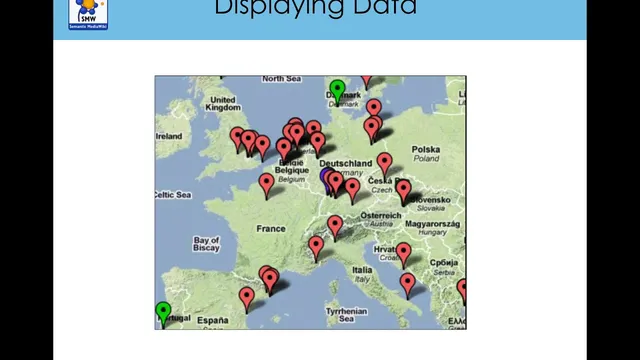
To show practical presentation options, the tutorial lists multiple ways organizations can display semantic data to stakeholders. Information can be shown on maps with drill-down pins representing assets; placed into calendars for events; rendered as control charts for engineering teams to compare measurements against upper and lower specifications; and organized for internal knowledge capture and feedback loops. The emphasis is that semantic data isn’t limited to tables—it can power whichever interface format best serves the audience.
Finally, the tutorial addresses how data integrity is maintained. Semantic MediaWiki supports forms that control how information is captured. Forms can use drop-down menus, tick boxes, attachments, and constrained selections so entries follow a consistent structure. That consistency makes the data reliable for querying and reporting. The tutorial even suggests using forms to record organizational minutes, linking decisions to people and related issues to preserve context and rationale.
Overall, Semantic MediaWiki is positioned as a content management and bespoke software foundation: capture structured facts through forms, query them across large knowledge bases, and present them in stakeholder-friendly formats to support better, faster decisions.
Cornell Notes
Semantic MediaWiki extends MediaWiki by converting wiki content into structured, computer-readable data. That enables automated queries across many pages—making it feasible to answer complex questions (like filtering clubs by stadium capacity) that would be impractical to compute by manually reading text. Structured data can also be repackaged into different outputs, from automatically generated tables to maps, calendars, and engineering control charts. Forms help maintain data integrity by enforcing consistent input formats through drop-downs, checkboxes, attachments, and constrained selections. The result is a flexible, business-oriented system that turns organizational knowledge into queryable assets and tailored dashboards.
What does “turning information into data” mean in Semantic MediaWiki, and why is it useful?
Why do complex questions become difficult with plain wiki pages?
How does Semantic MediaWiki change how tables and reports are produced?
What kinds of stakeholder-facing displays can semantic data power?
How does Semantic MediaWiki help ensure the integrity of captured information?
Review Questions
- How does converting wiki text into structured properties enable automated answers to cross-page questions?
- Give two examples of how semantic data can be displayed differently for different audiences.
- What role do forms play in maintaining data quality for querying in Semantic MediaWiki?
Key Points
- 1
Semantic MediaWiki is an open-source extension that integrates with MediaWiki to store wiki facts as structured, computer-readable data.
- 2
Turning text into data enables automated queries across many pages, avoiding manual scanning for complex questions.
- 3
Cross-page analytics become practical when facts like stadium capacity are stored as queryable fields rather than unstructured descriptions.
- 4
Structured data can feed multiple output formats, including tables, maps, calendars, and engineering control charts.
- 5
Forms enforce consistent data capture using drop-downs, checkboxes, attachments, and constrained selections, improving data integrity.
- 6
Semantic MediaWiki can function as a foundation for bespoke business software and content management built around an organization’s knowledge.