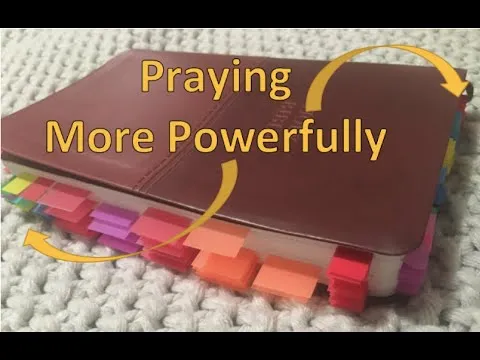
Setting Up a War Binder in a Bible / How to Pray for People More Effectively
Based on Bible Notetaking with Katie 's video on YouTube. If you like this content, support the original creators by watching, liking and subscribing to their content.
Build a prayer binder by pairing common request categories with specific Bible verses so intercession stays scripture-based.
Briefing
A “war binder” approach turns personal and intercessory prayer into a structured, Bible-based system—using categorized tabs and sticky-note prayer lists so requests can be tracked, revisited, and prayed through consistently. Instead of keeping verses scattered across notebooks, the method integrates scripture directly into the prayer workflow, aiming to make prayer feel more like a dedicated “closet” routine even when home space is limited.
The setup begins by choosing common prayer request categories—finances, family, miscellaneous needs, work or school, direction in life, home, protection, returning to the faith, health, unspoken requests, temperance/addictions, evangelism, spiritual growth, salvation, relationships/forgiveness, and more. Each category gets a relevant Bible verse (for example, Deuteronomy 8:18 for finances; Joshua 24:15–18 for family; Psalm 37:4 for desires; Isaiah 30:21 for guidance; Isaiah 32:18 for home; Deuteronomy 31:16 and Hebrews 13:6 plus Isaiah 54:17 for protection; Jeremiah 24:7 for returning to faith; Malachi 4:2 for health; Romans 8:26 for unspoken needs; and multiple passages for temperance and spiritual formation). The binder also includes blank sticky notes—often with front and back sides—so answered prayers can be moved or updated without damaging pages.
A key practical detail is how requests get captured in real life. Sticky notes can be filled after church announcements or conversations, while a separate note sheet can be used on-site and later transferred into the binder. For people who don’t want to carry the binder around, the method also allows capturing requests via phone messages to oneself and then adding them later. Color-coding is encouraged: one color can be reserved for personal prayers (the creator favors yellow), while other colors can represent family members, church members, or specific groups. This keeps the system both organized and emotionally usable.
Beyond categories, the binder connects to a second layer: tabs at the top of the Bible that group scripture by emotional and spiritual needs. The categories align with the “fruit of the Spirit” from Galatians 5:22–23—love, joy, peace, patience/long-suffering, gentleness, goodness, faith, meekness, temperance. As prayers arise (fear, anger, contentment, etc.), the corresponding Bible tabs provide ready-to-read verses to pray over someone’s life. The creator describes noticing mood shifts after reading the peace-related verses, and frames the practice as surrender-based: fear signals a lack of full rest in Jesus, while scripture helps restore trust.
The overall takeaway is a repeatable system: write requests into categorized sticky notes, then use Bible tabs to pray specific verses over those needs. The result is meant to feel like a “war room”—not just a place to store requests, but a daily, scripture-saturated routine for intercession and personal spiritual growth.
Cornell Notes
The war binder system organizes prayer requests into categories (finances, family, protection, health, unspoken needs, and more) and pairs each category with specific Bible verses. Sticky notes make it easy to add names, update requests, and move answered prayers without ruining pages. A second set of Bible tabs groups scripture by spiritual and emotional needs, largely tied to the fruit of the Spirit in Galatians 5:22–23, so prayers can be matched with relevant verses—especially when someone is dealing with fear, peace, anger, or contentment. The practice emphasizes honesty, surrender, and consistent intercession, turning prayer into a structured routine rather than scattered notes.
Why use sticky notes inside a Bible-based prayer binder instead of writing everything directly on pages?
How does the system capture prayer requests in real life when someone isn’t carrying the binder?
What role do the Bible’s top tabs play beyond the categorized sticky-note sections?
How are the fruit-of-the-Spirit categories used to match scripture to emotions?
What verses are used as examples for major prayer categories like finances, protection, and unspoken needs?
How does the approach connect prayer to surrender and trust rather than just listing requests?
Review Questions
- Which prayer categories would you create first, and what Bible verses would you pair with each one?
- How would you use the fruit-of-the-Spirit tabs to pray differently for someone who is afraid versus someone who is struggling with anger or contentment?
- What practical system would you use to capture requests during the week (church notes, phone messages, or both) and then transfer them into the binder?
Key Points
- 1
Build a prayer binder by pairing common request categories with specific Bible verses so intercession stays scripture-based.
- 2
Use sticky notes to add names quickly and to move or update requests when prayers are answered.
- 3
Capture requests immediately with a note sheet at church or a phone message to self, then transfer them later.
- 4
Color-code personal prayers versus others’ requests to keep the system readable and emotionally manageable.
- 5
Add Bible tabs that group verses by spiritual/emotional needs, especially the fruit of the Spirit from Galatians 5:22–23.
- 6
Pray by reading the highlighted verses over each person’s need, turning the binder into a daily “war room” routine.
- 7
Treat fear and struggle as prompts for surrender and trust, using scripture to realign the heart while praying.