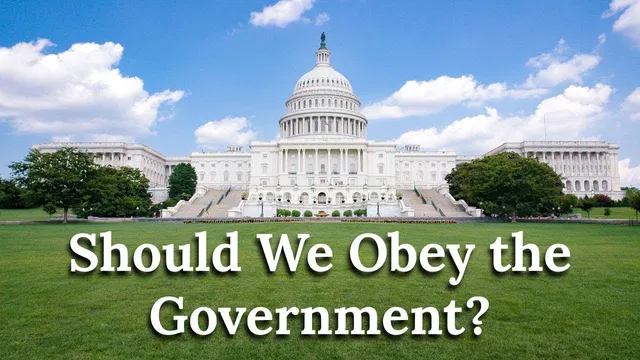
Should We Obey the Government?
Based on Academy of Ideas's video on YouTube. If you like this content, support the original creators by watching, liking and subscribing to their content.
Political authority is treated as morally special, but the transcript argues that special permission isn’t justified by any major theory of consent or benefit.
Briefing
Government power carries a moral specialness that ordinary people don’t grant to anyone else: states can tax, regulate speech, surveil communications, use violence, and even conscript citizens—yet the same actions are treated as unjust or unacceptable when carried out by non-governmental agents. The central question is why governments receive that exemption and whether that moral permission can be justified. The argument presented is that political authority is illegitimate because the main theories used to justify it—social contract, implicit consent, majority consent, and consequentialism—fail to establish a real moral basis for overriding individual rights.
Social contract theory claims legitimacy comes from an agreement between rulers and the ruled: citizens consent to obey laws and pay taxes in exchange for law and order. But no one has actually been presented with a contract to sign, and modern states emerged more from conquest and war than from consent. To patch that gap, some philosophers shift to implicit consent—agreement inferred from conduct. The transcript walks through several versions: passive consent (not opposing), consent through accepting benefits, and consent through participation in political practices. Each fails a basic contract requirement: a genuine contract needs a reasonable way to reject the proposed terms. If the state will impose the same laws and taxes regardless of objections, then silence or participation can’t count as meaningful agreement; it looks more like servitude.
That leads to a fourth idea—consent through presence—based on the claim that if people don’t like government they can leave. The response is that “leaving” is not a realistic option for most people because it would require giving up home, job, and community. The transcript also challenges majority consent: even if a majority agrees, it doesn’t follow that numerical superiority can strip minorities of rights or authorize coercion. The dinner-table analogy underscores the point—most people would reject the idea that four people can obligate the fifth to pay the whole bill, and they wouldn’t accept that majority will can justify concentration camps or death.
Consequentialist defenses fare no better. Even if governments sometimes produce net benefits, the transcript argues there are no objective criteria for weighing total costs and benefits, and history supplies examples of regimes that were clearly harmful (including Maoist China, Pol Pot’s Cambodia, Nazi Germany, and Stalin’s Soviet Union). More fundamentally, granting “special moral status” to state agents doesn’t automatically follow from producing benefits; it would be odd to deny similar status to other actors who provide benefits.
With formal justifications undermined, the transcript turns to psychology. It argues that widespread belief in government legitimacy is sustained by cognitive biases and self-protective mental mechanisms: status quo bias (treating existing norms as morally right), a Stockholm-syndrome-like dynamic (citizens emotionally aligning with their captors), and cognitive dissonance (telling oneself that obedience is duty even when taxes fund bombs or prisons). These pressures make people feel morally obligated to comply.
Still, skepticism about political authority doesn’t mean endorsing lawlessness. The transcript distinguishes moral duties that stand independently of the state—don’t cheat, steal, or kill—from political obligations that depend on authority. It concludes that more people should question government commands, especially when they become immoral, arguing that history shows obedience to unjust authority has produced far more death and destruction than disobedience.
Cornell Notes
The transcript argues that governments receive a “special moral status” that allows them to do things—taxation, coercion, surveillance, and violence—that would be considered immoral if done by non-governmental actors. Attempts to justify that status fail: social contract theory lacks real consent, implicit consent can’t meet the contract requirement of a meaningful way to reject terms, majority consent can’t ethically override minorities, and consequentialism lacks objective measures and still doesn’t explain why benefits justify special moral permission. The transcript then attributes belief in political authority to cognitive biases and psychological coping mechanisms such as status quo bias, a Stockholm-syndrome-like alignment, and cognitive dissonance. The practical takeaway is skepticism toward government commands, while still obeying independent moral rules like not stealing or killing.
Why doesn’t social contract theory ground political authority in the transcript’s view?
What’s the core problem with implicit consent (passive consent, benefits, and participation)?
How does the transcript critique “consent through presence”?
Why doesn’t majority consent justify coercing minorities?
What does the transcript say is wrong with consequentialist justifications for political authority?
Which cognitive mechanisms are offered to explain why people still believe in government legitimacy?
Review Questions
- Which specific contract requirement does the transcript use to reject implicit consent theories?
- How does the transcript distinguish moral duties that apply regardless of the state from political obligations that depend on authority?
- What role do status quo bias, Stockholm-syndrome-like alignment, and cognitive dissonance play in sustaining belief in political authority?
Key Points
- 1
Political authority is treated as morally special, but the transcript argues that special permission isn’t justified by any major theory of consent or benefit.
- 2
Social contract theory is rejected because no actual consent contract is ever produced; conquest and war are presented as the real origins of many states.
- 3
Implicit consent fails because it doesn’t provide a meaningful way to reject state terms; silence and participation can’t count as agreement when coercion is unavoidable.
- 4
Majority consent can’t ethically override minorities; numerical agreement doesn’t grant moral permission for coercion or rights deprivation.
- 5
Consequentialist defenses are criticized for lacking objective cost-benefit measures and for not explaining why benefits should grant state agents special moral status.
- 6
Cognitive biases and psychological coping—status quo bias, Stockholm-syndrome-like alignment, and cognitive dissonance—are offered as reasons people keep believing government is legitimate.
- 7
Skepticism toward political authority is paired with a distinction between independent moral rules (e.g., don’t steal or kill) and obedience to immoral commands.