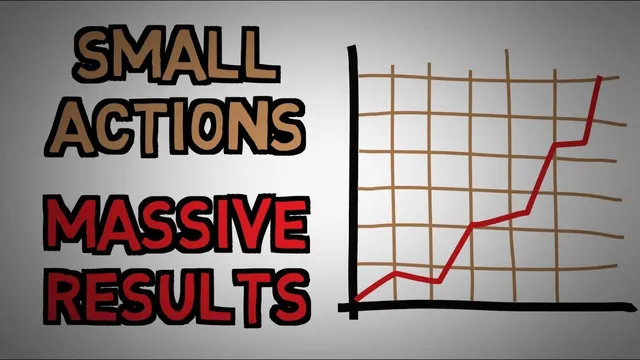
Small Daily Actions Lead To Massive Results - Consistency Is Key (animated)
Based on Better Than Yesterday's video on YouTube. If you like this content, support the original creators by watching, liking and subscribing to their content.
Consistent small actions can produce major outcomes even when early progress is invisible.
Briefing
A month of hammering with no visible cracks ultimately splits a giant rock—because progress can be slow, invisible, and still real. The core message is that lasting results come from consistent small actions over time, not from expecting immediate payoff after a single burst of effort. That distinction matters because it changes how people interpret effort: quitting too early turns “no immediate evidence” into a false signal that work is pointless.
The story centers on Mike, who watches a man chip away at a massive rock blocking a path. For weeks, the rock shows no cracks, and Mike assumes the effort is futile. After a month, Mike confronts the man with the blunt observation that nothing has changed. The man responds with a simple principle: the progress has been slow and hard to see, but it hasn’t been absent. Soon after, a cracking sound arrives and the rock splits in two—confirming that compounding work can produce sudden, dramatic outcomes even when the early stages look unchanged.
That lesson is then applied to everyday goals. People often expect big results—fitness, weight loss, a cleaner home, a business, a book, learning a language—to require massive, one-time action. The transcript challenges that assumption by contrasting “all at once” thinking with daily maintenance: cleaning a different section for 15 minutes each day instead of spending three hours in one go; saving and investing $30 today versus expecting millionaire-level wealth immediately; going to the gym three times for 30 minutes versus expecting instant shape; learning three French words tonight versus expecting fluency overnight. Each example is framed as a measurement problem—small improvements feel negligible in the moment, so they get dismissed.
Consistency reframes the timeline. The argument is that tiny actions accumulate until they cross a threshold, producing outcomes that appear to arrive “out of nowhere.” Working out every other day for 30 minutes is presented as more effective than trying to cram in long sessions. Similarly, learning a language through repeated small inputs is portrayed as the real path to speaking it.
The transcript also warns about a dark side: because daily effects often take time to show, people can rationalize harmful habits. Skipping the gym or eating an unhealthy meal doesn’t create instant visible damage, and mindless TV or unnecessary spending doesn’t trigger immediate consequences. But repeated choices compound—good decisions build momentum, while repeated missteps create “toxic results” over months and years. The takeaway is practical and forward-looking: current success or failure matters less than whether daily choices are steering toward goals. A person can have money, abs, or confidence today, but if spending, eating, or training habits don’t align with long-term direction, the trajectory will eventually reveal the cost.
In the end, the message is a two-way rule. Small steps in the right direction eventually show up as remarkable results; small steps in the wrong direction eventually lead to undesired outcomes. The only real choice is which path to repeat more often.
Cornell Notes
The transcript uses a rock-splitting story to argue that progress can be slow and invisible before it becomes obvious. A man chips away at a giant rock for almost a month with no visible cracks, yet the rock splits soon after—because the work was still accumulating. The same pattern applies to fitness, learning, cleaning, and financial goals: small daily actions compound into major outcomes over time. It also highlights a risk—bad habits can feel harmless day by day, but repeated choices compound into long-term problems. The practical focus is on consistency: daily decisions determine the path people end up taking.
Why does the rock split even though there are no visible cracks for weeks?
How does the transcript challenge the belief that big results require massive action?
What’s the gym example meant to teach about interpreting feedback?
What does “compounding” mean in the context of daily choices?
How does the transcript define the real measure of success?
Review Questions
- What evidence in the rock story supports the idea that progress can be real before it’s visible?
- Which daily-action examples are used to show that small inputs can lead to large outcomes over time?
- How does the transcript explain why bad decisions can be especially dangerous when their effects aren’t immediate?
Key Points
- 1
Consistent small actions can produce major outcomes even when early progress is invisible.
- 2
Immediate lack of visible results is not proof that effort is ineffective; many changes take time to surface.
- 3
Big goals are more reliably reached through daily maintenance than through occasional, massive bursts of effort.
- 4
Good habits and bad habits both compound over time, so the long-term direction of daily choices matters.
- 5
Bad decisions often feel harmless day to day because consequences may not appear immediately.
- 6
Current success doesn’t guarantee a good future; the deciding factor is whether daily behavior supports long-term goals.
- 7
Staying on the right track more often than the wrong one is the practical path to better outcomes.