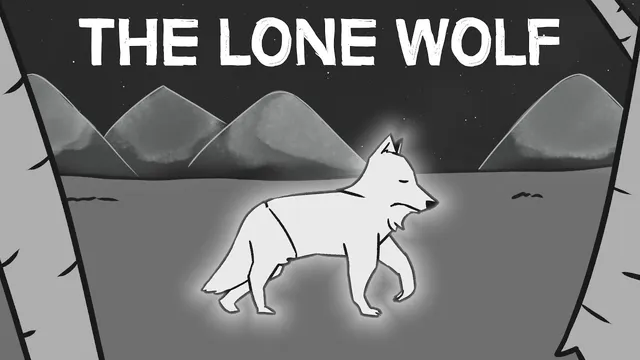
So, you're a lone wolf?
Based on Einzelgänger's video on YouTube. If you like this content, support the original creators by watching, liking and subscribing to their content.
Solitude can reduce conflict and social pressure, enabling freer self-expression, reflection, and creative focus.
Briefing
“Lone wolf” life is often sold as freedom from people, but it comes with a trade: avoiding social harm can bring peace, while the absence of community can quietly deepen emotional pain. The core claim is that solitude’s appeal is real—less noise, fewer conflicts, more control over one’s time and self-expression—yet the archetype is also romanticized, and the costs (including loneliness and vulnerability) are frequently underestimated.
The transcript begins with a personal arc: years of identifying as a loner, even naming a channel around that identity, and structuring daily life around independence—eating, sleeping, working, and spending time alone. That lifestyle feels like “ultimate freedom” in fantasy form: no social norms, no group expectations, no need to explain oneself, and no risk of offending others. The narrative then pivots to a more critical lens, using a hermit-in-the-mountains vignette to spell out why solitude is attractive. With no people around, there’s mental rest; disagreements disappear; emotions don’t need to be performed for an audience; and reflection and creativity can flourish because attention isn’t constantly pulled outward.
But the transcript argues that the “lone wolf” model is incomplete because it treats solitude as purely chosen. It anchors the motivation for distancing from others in a psychological and philosophical frame: Jean-Paul Sartre’s line “hell is other people,” drawn from the play “No Exit,” is interpreted as suffering caused by being seen, judged, and turned into an object in other people’s eyes. In that view, people can feel alienating not because of their existence, but because of the gaze—opinions, expectations, and the sense of losing control over one’s authentic self. The transcript then reinforces this with audience comments describing solitude as a response to toxic, hateful, emotionally draining, or manipulative relationships—sometimes even when the person is surrounded by others.
Still, the argument doesn’t stop at validation. It warns that social resignation can become dangerous, using the wolf metaphor to highlight practical vulnerability: without a pack, hunting becomes harder and survival more precarious, shifting from live prey to scavenging carcasses. The lone wolf image therefore carries both admiration and melancholy—independence paired with isolation.
The transcript then challenges two popular misconceptions about wolves using research-based corrections. First, wolf pack leadership isn’t an “alpha” dominance story; modern findings describe packs as breeding parents plus offspring from the past two or three years (often six to 10 individuals). Second, “lone wolves” aren’t lifelong loners: wolves that leave are “dispersers,” typically seeking mates and new family opportunities, and they reconnect by joining another pack or starting one. That reframes the human “tribe of one” ideal as a projection of desire rather than a natural wolf pattern.
The closing question turns the metaphor back on people: is stepping away permanent, or can it be a transition—healing and learning—before reconnecting with others more selectively and with clearer boundaries? The transcript’s bottom line is that solitude can be restorative, but it’s not a complete solution; the need for connection often returns, and avoiding people can’t replace community indefinitely.
Cornell Notes
The transcript presents “lone wolf” life as a tempting form of freedom—quiet, autonomy, and relief from conflict or judgment—but it also argues that solitude is often romanticized and can carry hidden costs. It links the desire to avoid people to the feeling of being objectified by others’ gaze, echoing Jean-Paul Sartre’s “hell is other people” from “No Exit.” Audience comments reinforce that many people choose solitude to escape toxic, emotionally draining relationships. The wolf metaphor is then corrected with research: packs are family units rather than alpha-led dominance hierarchies, and “lone wolves” are usually temporary dispersers seeking mates and new packs. The takeaway is that stepping away may be a healing phase, not a permanent end to connection.
Why does solitude feel like “freedom” in the transcript’s framing?
How does Sartre’s “hell is other people” connect to the choice to be alone?
What patterns show up in the audience comments, and what do they imply?
What misconceptions about wolf packs does the transcript correct?
What does the transcript suggest about loneliness versus solitude?
How does the wolf “disperser” concept reshape the human question of whether solitude is permanent?
Review Questions
- What specific benefits of solitude are listed, and which ones depend on the absence of other people (rather than on personal traits)?
- How does the transcript reinterpret Sartre’s “hell is other people,” and what mechanism of suffering does it emphasize?
- Which two wolf-related misconceptions are corrected, and how do those corrections change the meaning of “lone wolf” for humans?
Key Points
- 1
Solitude can reduce conflict and social pressure, enabling freer self-expression, reflection, and creative focus.
- 2
The desire to avoid people often stems from feeling judged or objectified by others’ expectations—an idea tied to Sartre’s “No Exit.”
- 3
Audience comments suggest many people choose solitude to escape toxic, emotionally draining, or manipulative relationships.
- 4
The lone wolf archetype is vulnerable to romanticization; practical survival without a pack can be harder and riskier.
- 5
Wolf research undermines two myths: packs are typically family units, and “lone wolves” are usually temporary dispersers seeking mates and new groups.
- 6
Loneliness and solitude aren’t identical; solitude can be contentment for some but can correlate with mental health strain for others.
- 7
Stepping away from people may function best as a transition for healing and boundary-setting rather than a permanent end to connection.