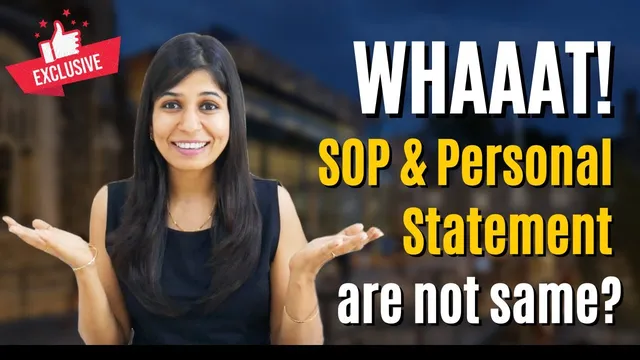
SOP & Personal Statement for study abroad 🔥 | Difference - How to write?
Based on WiseUp Communications's video on YouTube. If you like this content, support the original creators by watching, liking and subscribing to their content.
An SOP focuses on purpose, intent, motivation, and program fit using academic and professional qualifications.
Briefing
A personal statement and a statement of purpose (SOP) may both sit in the same application packet, but they serve different admissions goals. The core distinction is what each document is meant to reveal: an SOP is designed to demonstrate a student’s purpose, intent, and motivation for graduate study, tying academic background, qualifications, and experiences to a clear “fit” with the program. A personal statement, by contrast, is meant to show who the applicant is—qualities that typically don’t appear on a resume or transcript—such as values, mindset, and how the applicant is likely to contribute to the campus community.
That difference in purpose drives a second major contrast in direction and timing. An SOP is forward-looking, focusing on what the applicant plans to do after earning the degree—career goals, aspirations, and how the program will help achieve them. A personal statement is backward-looking, asking applicants to explain the experiences that shaped them into the person applying today. Challenges faced during upbringing, formative life events, and moments that molded personality are central, because the university is trying to understand the applicant’s trajectory as a human being, not just as a candidate with credentials.
Content structure also separates the two. An SOP has a more fixed, recognizable format: each section and detail is selected to persuade the admissions committee that the applicant is the right match for the program. Academic background, relevant qualifications, work or internship experience, technical skills, research exposure, and other achievements are typically included to show readiness to meet the program’s demands.
Personal statement content is less standardized and more flexible. Applicants can choose what to highlight to reflect a unique personality and life context, then use those details to indirectly demonstrate suitability for the opportunity. Instead of a strict checklist of academic accomplishments, a personal statement can include cultural or financial background, obstacles tied to those circumstances, and family attitudes toward education—such as whether studies were always valued or whether the applicant is the first generation to attend college. It can also focus on experiences that shaped a commitment to society, community-building, or other values that would influence how the applicant engages with peers.
Finally, the documents differ in expected sections. SOPs commonly include academic background, work or internship experience, technical projects, research, publications, achievements, career goals, and a “why this university/program” rationale. Personal statements have no set sections; they’re built around the applicant’s story and the traits the university wants to see in its student community. Together, submitting both documents can cover the full range—professional direction and personal formation—spanning past experiences and future plans.
Cornell Notes
An SOP and a personal statement target different admissions questions. An SOP emphasizes purpose and program fit: academic background, qualifications, technical skills, research exposure, and a forward-looking plan for how the degree supports career goals. A personal statement emphasizes identity and community contribution: values, mindset, and life experiences that shaped the applicant, often including challenges tied to culture, finances, or family attitudes toward education. SOP content is more fixed and structured, while personal statement content is flexible and tailored to the applicant’s unique story. Using both documents lets an applicant present both professional direction and personal formation—past experiences and future aspirations.
What is the main purpose of an SOP compared with a personal statement?
How do the two documents differ in time orientation (forward-looking vs backward-looking)?
Why is SOP content described as “fixed” while personal statement content is “flexible”?
What kinds of sections are typically expected in an SOP?
What kinds of topics can appear in a personal statement when there are no fixed sections?
Review Questions
- If an applicant wants to demonstrate program fit and future career direction, which document should lead, and what specific elements should it include?
- Choose one life experience (e.g., a cultural or financial challenge). How would that be framed differently in a personal statement versus an SOP?
- What does “backward-looking” mean in practice for a personal statement, and what evidence should support that story?
Key Points
- 1
An SOP focuses on purpose, intent, motivation, and program fit using academic and professional qualifications.
- 2
A personal statement focuses on identity—values, mindset, and community contribution—using life experiences not found on transcripts.
- 3
An SOP is forward-looking, centering career goals and how the degree supports future plans.
- 4
A personal statement is backward-looking, centering formative experiences and challenges that shaped the applicant.
- 5
SOP content follows a more fixed structure aimed at convincing admissions about readiness for program demands.
- 6
Personal statement content is flexible, allowing applicants to highlight cultural, financial, and family-education context.
- 7
SOPs typically include sections like research and achievements, while personal statements have no set sections and are built around the applicant’s story.