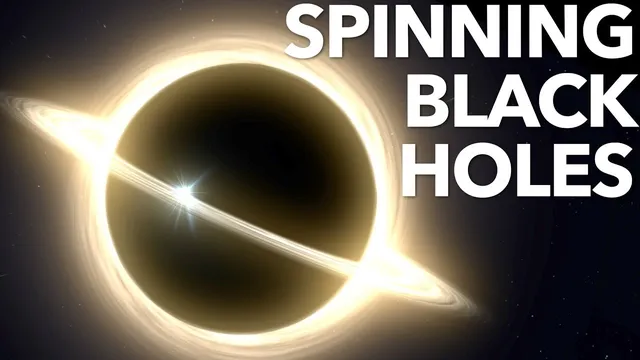
Spinning Black Holes
Based on Veritasium's video on YouTube. If you like this content, support the original creators by watching, liking and subscribing to their content.
The 2014 ASASSN X-ray detection from a galaxy’s center is best explained as a tidal disruption event, not a supernova.
Briefing
A tidal disruption flare in 2014 turned a previously quiet supermassive black hole into a measurable X-ray clock—revealing evidence about the black hole’s spin and offering a new way to study dormant black holes. On November 22, 2014, the All Sky Automated Survey for Super Novae (ASASSN) detected a burst of X-rays from the center of a galaxy about 290 million light-years away. Instead of a supernova, the event matched a tidal disruption: a star wandered too close to a black hole millions of times the Sun’s mass and was torn apart. The stellar debris formed an accretion disk—an orbiting ring of gas and dust heated by friction and gravity—radiating across visible light, ultraviolet, and X-rays.
What made the flare stand out wasn’t just that it lit up a dormant black hole; it also produced a repeating pattern. Three X-ray telescopes watched the same region for years and found a strong, regular pulse that brightened and dimmed every 131 seconds. The rhythm persisted for more than 450 days, and the pulse grew relatively stronger over time, modulating the X-ray signal by roughly 40%. That periodicity matters because black holes are largely described by two properties—mass and spin—and spin is notoriously difficult to measure at large distances.
Mass can be estimated from how a black hole’s gravity affects nearby objects, but spin influences the region close to the event horizon. General relativity introduces an innermost stable circular orbit (ISCO): inside a certain radius, stable orbits can’t exist and matter plunges inward. The ISCO radius depends on spin. Faster spin shrinks the ISCO, letting disk material orbit closer to the black hole and move at higher speeds. In practice, scientists can infer spin by estimating the effective inner edge of the accretion disk, often using one of three approaches: modeling the disk’s black-body spectrum, analyzing broadened iron emission lines shaped by Doppler and gravitational redshift, or—when those signals are absent—tracking periodic oscillations.
In this case, the 131-second X-ray cycle is interpreted as matter clumps orbiting near the ISCO. The proposed mechanism for producing a stable hotspot involves an unlikely prior resident: a white dwarf orbiting the black hole for perhaps one or two hundred years. When the tidal disruption event shredded the passing star, the debris cloaked the white dwarf in glowing material, creating an X-ray hotspot that orbited with a period tied to the black hole’s spin. The inferred spin parameter came out at least 0.7 and could be as high as the theoretical maximum near 0.998—implying disk material moving at roughly half the speed of light.
Beyond the technical win, the measurement has bigger implications. Spin distributions can hint at how supermassive black holes grow: sustained feeding from aligned gas streams tends to spin them up, while black hole mergers with randomly oriented spins can lower the final spin. With more spin measurements—especially from tidal disruption events that can probe the ~95% of supermassive black holes that are otherwise dormant—astronomers can better reconstruct both black hole growth and the evolution of galaxies over cosmic time.
Cornell Notes
A 2014 tidal disruption flare lit up a dormant supermassive black hole and produced a repeating X-ray pulse every 131 seconds for over 450 days. Observations from three X-ray telescopes showed the periodic signal stayed rhythmic and even strengthened relative to the baseline by about 40%. The periodicity is interpreted as orbiting clumps or a hotspot near the innermost stable circular orbit (ISCO), whose radius depends on black hole spin. A proposed scenario involves a white dwarf already orbiting the black hole; debris from the disrupted star cloaked it in glowing material, creating an X-ray hotspot whose orbital period constrains spin. The inferred spin parameter is at least 0.7 and could approach the theoretical maximum near 0.998, suggesting very fast rotation and offering a new route to measure spin in otherwise quiescent black holes.
What exactly happened in the 2014 event detected by ASASSN, and why wasn’t it a supernova?
Why does a repeating 131-second X-ray pulse matter for black hole physics?
How does black hole spin connect to the innermost stable circular orbit (ISCO)?
What are the three main ways to measure black hole spin mentioned here, and when does each work?
How does the proposed white dwarf scenario explain the observed periodicity?
Why do spin measurements help distinguish black hole growth histories?
Review Questions
- What observational features of the 2014 flare support interpreting the 131-second X-ray cycle as orbital motion near the ISCO?
- Compare the strengths and limitations of the black-body disk method, the iron-line method, and the periodic-oscillation method for determining spin.
- How does the ISCO radius change with spin, and why does that translate into different observable signatures?
Key Points
- 1
The 2014 ASASSN X-ray detection from a galaxy’s center is best explained as a tidal disruption event, not a supernova.
- 2
A dormant supermassive black hole became observable and produced a persistent X-ray pulse every 131 seconds for over 450 days.
- 3
The ISCO radius depends on black hole spin; faster spin shrinks r-isco, letting disk material orbit closer and move faster.
- 4
Spin can be inferred from accretion-disk black-body emission, broadened iron emission lines, or—when those signals are missing—periodic X-ray oscillations.
- 5
A proposed explanation for the periodic hotspot involves a white dwarf already orbiting the black hole, later cloaked by debris from the disrupted star.
- 6
The inferred spin parameter is at least 0.7 and could approach the theoretical maximum near 0.998, implying extremely rapid rotation.
- 7
Spin measurements can test whether supermassive black holes grew mainly through aligned gas feeding or through randomly oriented mergers.