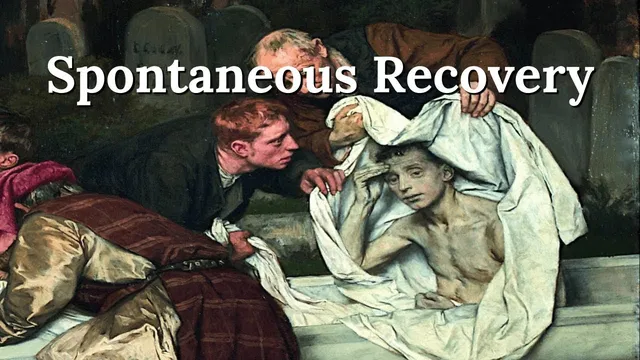
Spontaneous Recovery - The Body's Power to Heal from Cancer and Chronic Disease
Based on Academy of Ideas's video on YouTube. If you like this content, support the original creators by watching, liking and subscribing to their content.
Spontaneous recovery refers to unexpected remission from chronic diseases without standard medical interventions, and documented cases include cancers and autoimmune and neurological disorders.
Briefing
Spontaneous recovery—unexpected remission from diseases once considered terminal—suggests the body’s healing capacity can sometimes outpace conventional medical interventions. Documented cases include cancers, heart disease, multiple sclerosis, Crohn’s disease, rheumatoid arthritis, and other chronic illnesses, with some recoveries occurring without surgery, chemotherapy, or radiation. While such outcomes are rare and often go unreported, the medical literature contains enough examples to challenge the assumption that chronic disease progression is always fixed or that treatment is the only path to improvement.
The phenomenon is often described as “spontaneous,” but the term doesn’t necessarily mean “sudden” or “miraculous with no contributing factors.” In its older sense, “spontaneous” points to an internal tendency—something arising from within according to natural law. That framing matters because it shifts attention from luck alone to processes already present in the body, including immune activity and tissue repair, and then to the conditions that may help those processes work more effectively.
Cancer provides some of the clearest examples. Medical reports describe malignant tumors and metastases regressing without standard cancer therapies, noting that certain tumor types regress more frequently than others. Case-based accounts also exist: a man with pancreatic cancer scheduled for surgery experienced a heart attack that delayed the operation, and within weeks his cancer symptoms and lab findings began to resolve; months later, imaging showed the tumor had disappeared completely without surgery or cancer drugs. Other documented reports include spontaneous remission from inoperable pancreatic cancers and a grade four brain tumor case in which symptoms regressed after an unsuccessful operation, with the patient later leaving the hospital well.
Spontaneous recovery isn’t limited to oncology. Accounts extend across cardiovascular disease, autoimmune disorders, neurological conditions, blood disorders, and skin diseases. Some narratives even reference the “Lazarus phenomenon,” where patients recover from cardiac arrest after being declared dead and after resuscitation attempts end—an extreme example of the body’s capacity to reverse a trajectory toward death.
The central claim tying these cases together is that healing potential may be influenced by both physical and psychological factors, with psychological change singled out as especially important. Physical contributors mentioned include diet changes, regular exercise, improved sleep, and breaking addictions to drugs or alcohol. But above these sits “self-transformation”: the willingness to change one’s sense of self, not just one’s habits. The argument is that transforming identity can generate the courage and discipline needed for healthier behavior, while also disrupting maladaptive thought, belief, and emotional patterns that may drive harmful physiological responses through body-mind connections.
Researchers cited in the transcript describe psychological turning points—sometimes “existential shifts”—that precede remarkable recovery, including altered attitudes toward illness, treatment, relationships, and spiritual beliefs. One line of findings describes a move away from limiting aspects of personality and toward broader self-acceptance.
Rather than promising control over outcomes, the message emphasizes direction: healing is associated with psychological wholeness, defined as increased awareness and integration of one’s parts, supported by self-acceptance, self-knowledge, and courage. Even if illness can’t be fully controlled, the pursuit of wholeness is presented as meaningful in its own right—sometimes becoming clearer through suffering and mortality, when people discover a more authentic way of living.
Cornell Notes
Spontaneous recovery refers to unexpected remission from chronic diseases—sometimes including cancer—without the usual medical interventions. Although rare and not always reported, documented cases show tumors shrinking or disappearing and symptoms resolving across multiple disease categories. The transcript argues that “spontaneous” often means internally driven rather than purely random, and it highlights patterns in the literature: psychological turning points and shifts toward greater self-acceptance can precede recovery. Physical factors like diet, exercise, sleep, and ending addictions are also mentioned, but self-transformation is presented as a key facilitator. The overall takeaway is not guaranteed cure, but a framework for priming the body through psychological wholeness and healthier living.
What does “spontaneous” mean in the context of spontaneous recovery, and why does that distinction matter?
Which kinds of diseases are described as having spontaneous recoveries, and what examples are given?
How does the transcript connect psychological change to physical healing?
What physical factors are mentioned as recurring contributors to healing potential?
What does the transcript say is the “right kind” of self-transformation for healing?
Does the transcript claim people can control illness outcomes?
Review Questions
- What evidence is cited to support spontaneous recovery, and how is “spontaneous” defined to avoid the idea of pure randomness?
- Which psychological mechanisms are proposed to facilitate healing, and what research patterns are mentioned as precedents to recovery?
- How does the transcript define psychological wholeness, and why does it treat self-acceptance, self-knowledge, and courage as central?
Key Points
- 1
Spontaneous recovery refers to unexpected remission from chronic diseases without standard medical interventions, and documented cases include cancers and autoimmune and neurological disorders.
- 2
“Spontaneous” is framed as internally driven rather than necessarily sudden or causeless, pointing to natural healing processes already present in the body.
- 3
Cancer examples include spontaneous regression reports and case accounts such as pancreatic cancer resolving after a delayed surgery due to a heart attack.
- 4
The transcript links healing potential to both physical factors (diet, exercise, sleep, ending addictions) and psychological change, with self-transformation emphasized as especially important.
- 5
Psychological turning points—described as existential shifts—are presented as common precursors to remarkable recovery in research findings.
- 6
Healing is associated with psychological wholeness: self-acceptance, self-knowledge, and courage to live more authentically, rather than guaranteed control over disease outcomes.