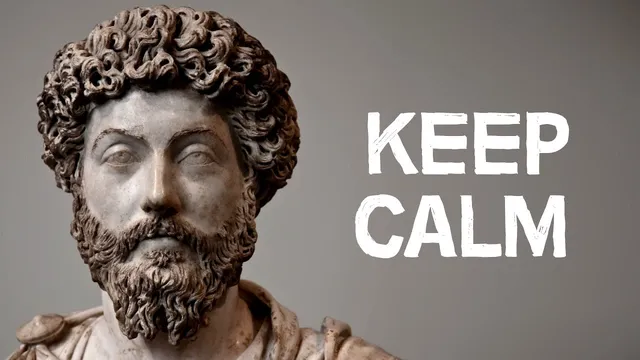
STOICISM | How Marcus Aurelius Keeps Calm
Based on Einzelgänger's video on YouTube. If you like this content, support the original creators by watching, liking and subscribing to their content.
“Do less” targets unnecessary actions and even unnecessary conversations, not industrious effort; moderation is the Stoic balance.
Briefing
Marcus Aurelius’ route to calm is less about escaping life’s pressures and more about changing what deserves attention. Stoicism links flourishing with inner peace, and his surviving work, *Meditations*, is used here to extract practical habits for a steadier mind—especially when leadership, uncertainty, and constant demands threaten to spill into anxiety.
The first tactic is “Do less,” but not as an excuse for laziness. Stoics prize industriousness, yet treat moderation as a virtue too. The key is to reduce what’s unnecessary—especially in a world packed with endless entertainment and distraction. Marcus Aurelius also applies “doing less” to speech: many conversations are described as nonsensical, going nowhere, and draining time and energy. The goal becomes focusing on essentials, which supports tranquility while also improving efficiency—“do less, better.” A practical method follows: at every moment, ask, “Is this necessary?” That question extends beyond actions to assumptions, since unnecessary beliefs often generate unnecessary behavior. The advice culminates in a simple daily routine—write a task list the night before. Planning the next day in advance is framed as a way to preempt mental worry, so the mind starts the morning with fewer open loops.
The second tactic rejects the common fantasy that peace can be found by changing locations. Marcus Aurelius is portrayed as skeptical of recreational travel and of retreating to quiet places like mountains or beaches to hide from daily worries. The reason is psychological: wherever people go, they carry themselves with them. Novelty fades, and the mind returns to its usual concerns. Instead, he recommends brief “escapes” inward—moments of reflection or contemplation akin to meditation. Two Stoic prompts are offered for these short mental retreats: first, that external things don’t truly “hold” the soul; disturbance arises from perception inside the person. Second, that everything seen will soon change and cease to exist, captured in the idea that life is “only perception” and the world is “nothing but change.”
The third pillar is “Remembering that all shall pass,” anchored in *memento mori*—the reminder of death as a way to accept the universe’s constant flux. Everything moves quickly: one moment can contain immersion, and the next can bring a totally different reality. Trends vanish, and even human life is described as brief in cosmic terms. That instability can provoke anxiety, but Stoicism reframes it as calm: if everything is temporary, clinging to good times and panicking over bad ones loses its grip. Even circumstances that seem extreme—like prison—include both good and bad days, and even wealth brings joy and suffering. The deeper claim is that inner life is also in flux, and people can influence how they react to change. With time’s “chasm” of past and future looming, Marcus Aurelius warns that self-importance, distress, and indignation make little sense—especially if the irritations themselves don’t last.
Cornell Notes
Stoicism, as practiced by Marcus Aurelius, treats calm as a skill built from attention and perception rather than from running away from stress. “Do less” means cutting unnecessary actions and even unnecessary talk, while staying industrious through moderation and focusing on essentials. Brief “escapes” should happen inward—through reflection—because traveling or hiding in quiet places only delays the return of one’s own mind. “Remembering that all shall pass” uses *memento mori* to confront life’s impermanence, reducing clinging and panic by reframing happiness and suffering as temporary and changeable. The result is a steadier inner world: people can’t control flux, but they can shape their reactions to it.
How does “Do less” produce calm without abandoning productivity?
Why does Marcus Aurelius distrust recreational travel as a path to tranquility?
What are the two Stoic prompts for short mental retreats?
How does *memento mori* reduce anxiety about instability?
What does “everything is in flux” imply about control and reaction?
Review Questions
- Which parts of daily life should be reduced under “Do less,” and how does the “Is this necessary?” test help?
- How do the inward “escapes” differ from traveling to mountains or beaches, according to the Stoic reasoning?
- What emotional effect is supposed to come from *memento mori*, and how does it change attitudes toward good and bad days?
Key Points
- 1
“Do less” targets unnecessary actions and even unnecessary conversations, not industrious effort; moderation is the Stoic balance.
- 2
A continual “Is this necessary?” check helps remove both needless activities and the assumptions that generate them.
- 3
Planning the next day with a task list the night before reduces morning mental worry by closing open loops.
- 4
Recreational travel offers only temporary novelty because people carry their own minds with them; brief inward reflection is the preferred retreat.
- 5
Short mental retreats use perception-focused prompts: disturbance comes from within, and everything seen will change and vanish.
- 6
*Memento mori* reframes impermanence as calm: clinging to good times and panicking over bad ones loses its logic when all conditions shift.
- 7
Because inner perception and reactions also change, people can’t stop flux but can choose how they respond to it.