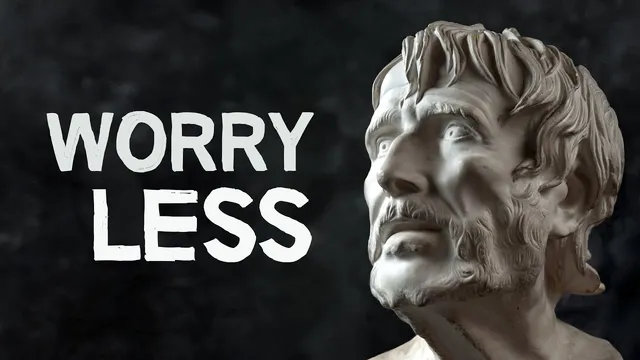
STOICISM | How to Worry Less in Hard Times
Based on Einzelgänger's video on YouTube. If you like this content, support the original creators by watching, liking and subscribing to their content.
Use the dichotomy of control to focus on actions rather than on external conditions like wealth, health, and reputation.
Briefing
Hard times don’t have to be mentally catastrophic because Stoicism draws a hard line between what can be controlled and what cannot—and then builds a way to live well inside that boundary. The core move is simple but demanding: tie well-being to one’s own actions, not to external conditions like wealth, health, reputation, or economic stability. When those externals wobble—as they often do during war, plagues, disasters, or economic decline—worry multiplies. Stoic practice aims to cut that worry at the root by treating many of the things people obsess over as “indifferents”: external circumstances that are neither inherently good nor bad and, crucially, largely beyond personal command.
That framework starts with the dichotomy of control. Epictetus is used to emphasize that the body, property, and reputation are not fully “up to us,” while only actions are genuinely free and unrestrained. If happiness is anchored to things that belong to the world—jobs, stock-market gains, social standing—then disappointment becomes predictable. The transcript illustrates the point with economic downturns: a person may lose money, employment, and income, yet the Stoic response is to stop treating those outcomes as the foundation of a good life.
Stoicism then adds a practical sorting mechanism. Virtue and vice map onto choices—what a person does for the community, or whether they exploit others for profit. Indifferents, by contrast, include wealth, health, disease, weakness, and poverty. The point isn’t to ignore survival needs like food and shelter; it’s to reconsider what “enough” really means when uncertainty rises. In wealthy societies, consumer culture can blur the line between necessities and obsolete wants. When hardship arrives, attachments to luxury goods and status become a direct pipeline to anxiety, because losing them feels like losing safety itself. Stoic counsel pushes people to simplify priorities so that fewer external threats can hijack their peace.
The transcript also tackles death and suffering head-on through memento mori—the remembrance that death is inescapable and built into nature. Western culture often treats death as taboo and tragedy, but the Stoics frame it as ordinary: animals and humans kill, children die at birth, and historical pandemics like the Black Death devastated Europe. The argument is not that suffering is pleasant, but that recognizing its inevitability can reduce panic. Seneca’s view is quoted to portray death as an end to pain and a return to a peaceful state.
Finally, the Stoic approach to the future is to stop trying to guarantee outcomes. People can influence events through present actions, but results depend on external forces no one can control. Worrying about what might happen is portrayed as powerless. The transcript closes by insisting that endurance is possible—history shows people surviving extreme hardship—and that no one can take away the “faculty” to respond well. In flux, change is constant; therefore, “this too shall pass” becomes not a slogan, but a disciplined expectation grounded in Stoic control.
Cornell Notes
Stoicism offers a way to worry less during hard times by separating control from everything else. Epictetus’ dichotomy of control says only one’s actions are truly free, while body, property, and reputation are not. The philosophy also distinguishes virtue and vice (tied to choices) from “indifferents” like wealth, health, disease, and poverty, which are external circumstances that can be threatened without destroying one’s ability to act. In practice, that means simplifying priorities, holding fewer attachments to luxury and status, and focusing on survival needs rather than fragile comforts. The approach is reinforced with memento mori (death is natural and inevitable) and with the reminder that the future’s outcomes can’t be guaranteed—only one’s response can.
How does the dichotomy of control reduce anxiety during economic or social collapse?
What are “indifferents,” and why does that distinction matter when hardship threatens?
Why does the transcript connect consumer culture to worry in hard times?
How does memento mori function as a coping tool rather than a morbid habit?
What does it mean to “not control our destiny,” and how does that change the role of worry?
Review Questions
- Which life areas in the transcript are treated as outside personal control, and what does that imply for where happiness should be anchored?
- How do virtue/vice and indifferents differ, and how does that distinction guide decisions during economic uncertainty?
- What coping effects are attributed to memento mori and to the refusal to guarantee future outcomes?
Key Points
- 1
Use the dichotomy of control to focus on actions rather than on external conditions like wealth, health, and reputation.
- 2
Treat many threatened “life conditions” as indifferents—external circumstances that can change without destroying virtue.
- 3
Reassess needs during hardship by distinguishing basic survival requirements from luxury and status-driven wants.
- 4
Practice memento mori by remembering death and suffering are natural and inevitable, reducing panic about the worst outcomes.
- 5
Stop trying to guarantee the future; influence events through present actions while accepting that results depend on external forces.
- 6
Build calm by simplifying attachments: the more someone depends on externals, the more vulnerable peace becomes when they are lost.
- 7
Endurance is framed as possible because no one can take away the capacity to respond well to whatever comes next.