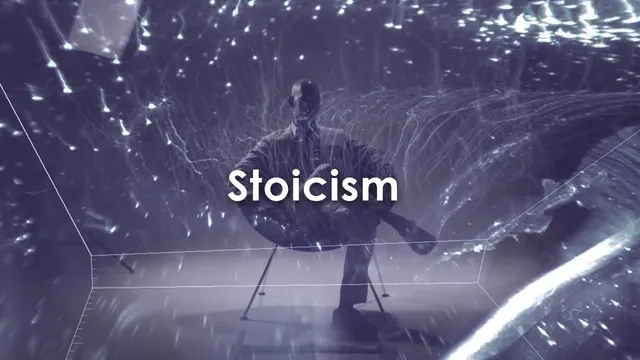
Stoicism & The Art of Not Caring
Based on Pursuit of Wonder's video on YouTube. If you like this content, support the original creators by watching, liking and subscribing to their content.
Stoicism separates external events from internal interpretations, making reaction and judgment the main controllable arena.
Briefing
Stoicism reframes happiness as something built from within rather than something purchased from the outside. People are born hungry, vulnerable, and confused, then spend years trying to eliminate those feelings by controlling the world—chasing wealth, fame, power, and status with the belief that future acquisition will finally deliver security. That hope can feel reasonable, but it also traps people in dependence: when happiness is tied to external conditions, it becomes unstable, and the hunger for “more” never ends.
Stoicism draws a hard line between two domains of life: what lies outside the mind (external events and circumstances) and what lies inside it (interpretations and reactions). External reality does not care about personal preferences, and it cannot be negotiated into comfort. The philosophy does not demand passivity; it allows people to pursue preferred goals, even ambitious ones. The key is where joy and meaning come from. If wealth or recognition is treated as the source of peace, then peace collapses whenever those rewards are delayed, taken away, or never achieved. A “successful” person, in the Stoic sense, can remain okay without the very things they typically want for comfort.
Roman emperor and Stoic Marcus Aurelius is used as a living example: despite having access to everything, he emphasizes that little material is needed for a happy life. Stoicism recommends training the mind by periodically stripping away comforts that people rely on, not as punishment but as proof of inner strength. Seneca echoes this theme in Letters from a Stoic, arguing that people often discover how unnecessary many things are only after they begin to go without them. The point is not to reject ambition, but to stop outsourcing well-being to possessions and circumstances.
Time and perspective become central tools. Seneca advises keeping what is truly one’s own and finding happiness now, warning that waiting until the “dregs of the cask” leaves only a small, vile remainder. Stoicism also insists that nothing is inherently good or bad; judgments make it so. The wise person is not lifted by prosperity or crushed by adversity because they rely on themselves and derive joy from their own character.
The philosophy culminates in acceptance and indifference toward what happens—paired with self-honest action and virtue. People are portrayed as tiny parts of a larger natural order, so events should be met with relevance rather than panic. Stoicism is not presented as effortless or perfectly attainable; desire and negative reactions still arise. But it offers a target: cultivate calmness and resilience by controlling reactions, living with humility and good virtue, and defining happiness through how one thinks and lives, not through what one owns or how others judge.
Cornell Notes
Stoicism argues that lasting happiness cannot depend on external conditions like wealth, fame, or power, because those rewards are unstable and often out of reach. It divides life into what cannot be controlled (external events) and what can be controlled (interpretations and reactions). The practice is to pursue goals if desired, but to anchor joy in focus, presence, and virtue rather than in outcomes. Marcus Aurelius and Seneca are used to illustrate that people often realize how unnecessary many comforts are only when they temporarily go without them. By reshaping perspective—judging events differently and finding happiness “now”—Stoicism aims to build calmness that survives prosperity and adversity.
Why does chasing wealth, fame, or power tend to keep people unhappy in a Stoic framework?
What are the two domains of life, and how do they change what a person should work on?
How do Marcus Aurelius and the idea of “going without” function as Stoic training?
What role does perspective play in Stoic judgments about good and bad?
Why does Seneca emphasize time and finding happiness “now”?
If Stoicism encourages acceptance, does it mean doing nothing?
Review Questions
- How does Stoicism justify allowing ambition while rejecting dependence on outcomes?
- In Stoic terms, what changes when a person treats judgments as the source of “good” and “bad”?
- What is the purpose of temporarily going without comforts, and how does it relate to inner control?
Key Points
- 1
Stoicism separates external events from internal interpretations, making reaction and judgment the main controllable arena.
- 2
Tying happiness to wealth, fame, or power creates instability because those rewards are uncertain and can be delayed or lost.
- 3
Stoicism permits pursuing preferred goals, but requires anchoring joy in focus, presence, and virtue rather than in outcomes.
- 4
Marcus Aurelius is used as evidence that power does not require material dependence for peace.
- 5
Seneca argues that many comforts are revealed as unnecessary only when people begin to go without them.
- 6
Finding happiness “now” depends on directing attention and perspective, not waiting for future conditions to fix life.
- 7
Stoicism aims for calm resilience through acceptance of what happens and self-honest, virtuous action despite inevitable human desire and setbacks.