Stop Highlighting Blindly: The Progressive Summarization Secret!
Based on Tiago Forte's video on YouTube. If you like this content, support the original creators by watching, liking and subscribing to their content.
Use progressive summarization as a three-pass highlighting workflow: excerpt first, bold second, highlight/underline third.
Briefing
Progressive summarization turns ordinary highlighting into a multi-layer retrieval system: first capture the most resonant excerpts, then bold the key points inside those excerpts, and finally apply a third, more selective highlight to compress the result into one or two sentence “message blocks.” The payoff is speed and selectivity—when revisiting a note, the reader’s eyes jump straight to what matters, making it far easier to decide whether the source is relevant and to extract usable context without rereading everything.
The method starts with a simple rule: don’t highlight everything that seems important. Instead, save only the strongest material—quotes or passages that are most relevant, useful, personal, surprising, or otherwise “sticky.” This first layer already reduces friction. For example, when working from a Psychology Today article, the approach avoids storing the full text and instead keeps only the most important quotes. That smaller set becomes a working substrate for later distillation. If the reader later needs full context, a link to the original article can be stored at the bottom, preserving traceability without forcing a full reread.
A second layer of summarization adds structure inside the excerpts. The reader bolds the main points found within the first-layer highlights. This creates a quick “gist view” that can be scanned in under a minute, compared with the five to ten minutes of focused attention required to read the original article. The timing matters too: the second pass is often done during lighter moments—breaks, evenings, or weekends—when the reader has less energy for deep work but still wants to refine notes.
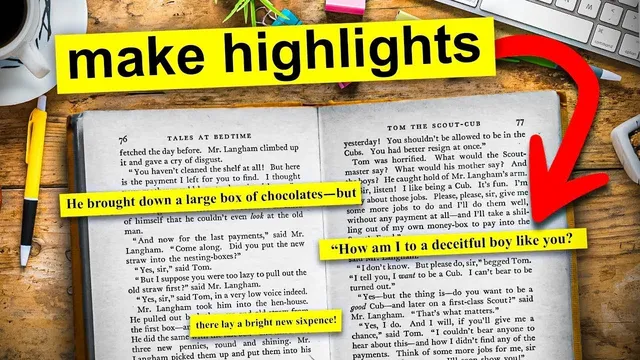
Layer three is reserved for notes that are especially long, interesting, or valuable. Many note apps support bright yellow highlighting; if not, underlining or other formatting can substitute. The goal is to compress the combined bolded-and-highlighted sections into compact passages—typically one or two sentences—that preserve the core message of the original source. Over time, this produces a note library where each entry can be evaluated instantly: the reader can decide in a blink whether the idea fits current needs, and if it does, the note already contains the essential takeaway plus the original link for verification.
At its core, progressive summarization treats highlights as an evolving index rather than a one-time annotation. With limited time and energy for revisiting past notes, the layered approach increases the number of ideas that can be collected, reviewed, and connected—because the path back to relevance is shorter every time.
Cornell Notes
Progressive summarization upgrades highlighting into three passes that make old notes fast to scan and easy to trust. First, capture only the most resonant excerpts (e.g., the best quotes from a Psychology Today article) rather than saving full text. Second, bold the main points inside those excerpts to create a quick gist view that can be reviewed in under a minute. Third, for especially valuable notes, apply an additional highlight (or underline) so the combined bolded/highlighted content compresses into one or two sentence “message blocks.” The result is instant relevance checking plus built-in context via a link to the original source.
How does progressive summarization differ from traditional one-time highlighting?
Why is the first layer about saving excerpts rather than copying full text?
What does the second layer (bolding) accomplish, and when is it typically done?
What is the purpose of the third layer, and what should the final output look like?
How does the method handle the need for full context later?
Review Questions
- What are the three layers of progressive summarization, and what is the specific goal of each layer?
- In the Psychology Today example, how do the time costs of reading the original article compare with scanning the distilled layers?
- Why does adding a link to the original source matter even after heavy distillation?
Key Points
- 1
Use progressive summarization as a three-pass highlighting workflow: excerpt first, bold second, highlight/underline third.
- 2
Capture only the most resonant excerpts (quotes or passages), not entire texts, to reduce future scanning noise.
- 3
Bold the main points inside your first-layer excerpts to create a fast “gist view.”
- 4
Reserve the third layer for especially valuable or lengthy notes, compressing the message into one or two sentences.
- 5
Store a link to the original source so distillation doesn’t sacrifice traceability or verification.
- 6
Treat revisiting notes as a speed problem: layered formatting helps decide relevance in seconds, not minutes.