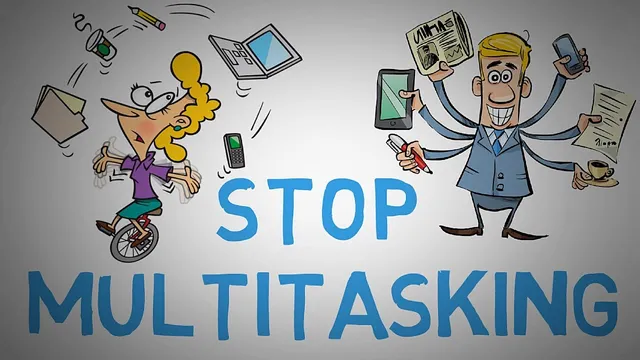
STOP MULTITASKING NOW - Why It's NOT Efficient to Multitask (animated)
Based on Better Than Yesterday's video on YouTube. If you like this content, support the original creators by watching, liking and subscribing to their content.
Multitasking often fails because the brain’s deliberate attention system switches rapidly between tasks rather than processing them in parallel.
Briefing
Multitasking is widely treated as a productivity superpower, but it reliably makes people slower, less accurate, and mentally less “present” by forcing the brain to juggle attention rather than process tasks in parallel. The core claim is blunt: trying to do two things at once doesn’t get more done—it gets less done, because attention keeps switching and never fully resets to where it left off.
The mechanism starts with how the brain’s deliberate system works. Even when people feel like they’re handling tasks simultaneously, the deliberate mode rapidly shifts attention between activities. Each switch carries a setup cost: time to start the new task and to re-engage the one that was paused, plus the risk of losing the exact mental position where work stopped. That switching overhead grows when tasks are complex, with estimates ranging from roughly 25% extra time to well over 100% for harder work.
A key concept used to explain the lingering effects is “attention residue,” introduced by business professor Sophie Leroy in a 2009 paper titled “Why Is It So Hard to Do My Work?” The idea is that when attention moves from task A to task B, it doesn’t immediately detach from task A. Even after finishing task A, part of attention remains stuck processing it, so performance on task B suffers until someone commits to a single task long enough to let the residue fade.
Real-world examples make the cost concrete. If a person is writing and a coworker interrupts with a business discussion, the interruption may seem brief, but returning to writing leaves the mind divided—still partly tracking the interaction. One cited finding from Microsoft employees reports that after an email interruption, it took about 15 minutes to fully regain the original train of thought, regardless of whether the email was answered. Multiply that recovery time across a day of frequent pings and interruptions, and the “time saved” by multitasking turns into a hidden productivity tax.
The transcript also challenges the cultural belief that multitasking skill improves with practice. Habitual multitaskers may actually take longer to switch between tasks than occasional multitaskers, suggesting they lose the ability to focus for sustained periods. It further cites research by Stanford professor Clifford Nass: in a study of 262 students grouped by how often they multitasked, the frequent multitaskers performed worse on every measure. The confidence gap was striking—people believed they were good at multitasking, yet they were “lousy at everything.”
There is, however, a boundary condition. Some “two-at-once” behaviors are possible when one task is automatic and doesn’t require conscious attention—like walking while talking or chewing gum while reading a map. Driving illustrates the limit: chatting is manageable on quiet stretches because driving is routine, but when traffic becomes unpredictable and driving demands conscious control, the ability to multitask collapses. The transcript links this to safety outcomes, noting that one in five serious crashes is caused by distracted driving.
The takeaway is practical: stop treating multitasking as efficient. Avoid splitting attention during phone calls, meals, and writing. Choose one task, protect uninterrupted focus, and let attention residue clear before switching.
Cornell Notes
Multitasking is portrayed as a productivity trap because the brain’s deliberate attention system rapidly switches between tasks rather than processing them in parallel. Switching creates a time cost to reorient and restart work, and it leaves “attention residue,” meaning part of attention remains stuck on the previous task even after the switch. Research cited in the transcript links interruptions to long recovery times—about 15 minutes after an email—for people to fully regain their train of thought. Studies attributed to Sophie Leroy and Clifford Nass suggest that frequent multitaskers can perform worse, even when they believe they’re better at it. The only reliable “two-at-once” cases involve one automatic task that doesn’t require conscious attention, such as routine driving on calm roads.
Why does multitasking reduce speed and accuracy even when people feel they’re handling tasks at the same time?
What is “attention residue,” and how does it affect performance after an interruption?
How long does it take to regain focus after an interruption like email?
Do frequent multitaskers get better at switching with practice?
What did Clifford Nass’s study find about people who multitask often?
When can doing two things at once work without harming performance?
Review Questions
- What are the two main cognitive costs of multitasking described in the transcript, and how do they differ?
- How does “attention residue” explain why brief interruptions can have long-lasting effects?
- Why does the transcript claim multitasking can be dangerous in driving, and what condition makes it unsafe?
Key Points
- 1
Multitasking often fails because the brain’s deliberate attention system switches rapidly between tasks rather than processing them in parallel.
- 2
Task switching carries a setup/reorientation cost and can cause people to lose the exact mental position where they paused work.
- 3
“Attention residue” means attention remains partially stuck on the previous task after switching, dividing focus until it fades.
- 4
Interruptions have measurable recovery time; a cited Microsoft study puts full focus regain at about 15 minutes after an email interruption.
- 5
Frequent multitaskers may not perform better—research cited from Clifford Nass found worse performance across measures despite high self-confidence.
- 6
Some “two-at-once” activities work only when one task is automatic; when both tasks require conscious attention, multitasking breaks down.
- 7
The same attention limits that reduce productivity can increase safety risks, including distracted driving.