Stop Trying to Get It And You'll Have It | The Backwards Law
Based on Einzelgänger's video on YouTube. If you like this content, support the original creators by watching, liking and subscribing to their content.
Efforts to suppress intrusive thoughts can keep them active, making dissatisfaction harder to escape.
Briefing
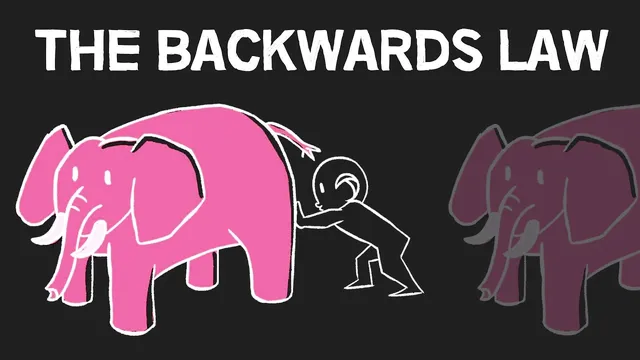
The core claim is a paradox about control: the harder people try to eliminate dissatisfaction or force happiness, the more that dissatisfaction persists—so the fastest route to what they want is often to stop trying to get it. The transcript opens with the “pink elephant” thought experiment: consciously suppressing an intrusive image fails because the effort to remove it keeps it present. That same dynamic is then applied to everyday emotional life, where general dissatisfaction shows up as sadness, stress, anger, or boredom. The more someone invests in becoming “less dissatisfied,” the more dissatisfied they become, because the struggle itself keeps the target—lack—alive.
That pattern is framed as “the law of reversed effort,” also called “the backwards law,” associated with philosopher Alan Watts. In this view, willpower works for external outcomes—earning money, training for a marathon—because effort can directly shape circumstances. But the backwards law is said to concern deeper wants: the “holy grail” of what people truly seek, such as happiness, love, friendship, or a long healthy life. Those external markers can feel like the solution, yet the pursuit can backfire. The chase reinforces the sense that the desired state is missing right now, so the person feels farther from fulfillment even while moving toward the goal.
Alan Watts is used to argue that people often can’t define what they truly want. A quoted passage claims that people don’t really know what they want because they either already have it or can’t know themselves—likened to a knife cutting itself or fire burning itself. That uncertainty helps explain why the search continues: a “collective delusion” persuades people that changing external conditions—objects, money, scenery, even bodily adjustments—will cure the felt sense of lack. The transcript counters that the felt lack is tied to discontent with the present moment. Greater discontent means more suffering; the more change is required to feel content, the less content people feel.
The argument then turns to how goal-setting can intensify inadequacy. Using Mark Manson’s framing, the transcript suggests that pursuing something only highlights the gap between who someone is and who they believe they must become. Raising the income threshold for happiness makes inadequacy worse; lowering it reduces the feeling because the “goalpost” moves closer. Still, people keep setting bars high, maintaining the itch while trying to cure it.
Arthur Schopenhauer is introduced to explain why striving can be self-defeating. The will-to-live is described as directionless, continual striving that cannot be satisfied by anything the world offers. Pleasure becomes “an error and an illusion” because no attained wish delivers lasting satisfaction. True contentment, in this account, comes from negating the will—effectively “stop trying to get it and you’ll have it.” Alan Watts is also used with examples of paradoxical effort: trying to stay afloat makes someone sink, trying to fall asleep keeps someone awake, and holding breath makes it harder to keep.
Finally, the transcript uses Zen imagery to make the mechanism concrete: cloudy water clears only when it’s left alone. Stirring and grasping represent attempts to force happiness; clarity represents contentment that arrives when the mind stops stirring the water of desire. The takeaway isn’t anti-ambition, but a warning against believing that the pursuit of happiness automatically produces happiness—inviting people to practice “not wanting” more often while still making necessary changes in life.
Cornell Notes
The transcript argues that striving to eliminate dissatisfaction or force happiness often intensifies the very problem it targets. The “pink elephant” example illustrates how suppression fails: the more effort goes into getting rid of an intrusive thought, the more it persists. This is linked to the “law of reversed effort” (backwards law) associated with Alan Watts: pursuing what one wants can produce the opposite outcome by keeping the sense of lack active. Schopenhauer’s will-to-live theory adds that continual striving cannot be satisfied by worldly achievements, because the will itself sustains the feeling of incompleteness. Contentment, in this framing, comes from stopping the struggle—like letting cloudy water settle—rather than forcing clarity through more grasping.
Why does trying not to think of something (like the pink elephant) tend to backfire?
How does the “backwards law” differ from ordinary willpower used for external goals?
What does the transcript claim about not knowing what one truly wants?
How do goal-setting and “moving the goalpost” affect feelings of inadequacy?
What role does Schopenhauer’s “will” play in perpetual dissatisfaction?
Why does the Zen water story treat “doing nothing” as the path to clarity?
Review Questions
- How does the pink elephant example illustrate the mechanism behind the backwards law?
- In what way does the transcript distinguish external goal pursuit from the pursuit of happiness?
- According to Schopenhauer as presented here, why can’t worldly achievements deliver lasting satisfaction?
Key Points
- 1
Efforts to suppress intrusive thoughts can keep them active, making dissatisfaction harder to escape.
- 2
The backwards law claims that pursuing happiness or contentment can produce the opposite result by intensifying the sense of lack.
- 3
External willpower may help with measurable goals, but the same strategy can fail for internal states that are hard to define.
- 4
High thresholds for happiness can deepen inadequacy; lowering the threshold can reduce suffering by moving the goalpost closer.
- 5
Schopenhauer’s will-to-live framework portrays striving as self-perpetuating, since the will itself sustains dissatisfaction.
- 6
Paradoxical effort examples (sleep, breath, floating) suggest that some outcomes require stopping the struggle rather than increasing control.
- 7
Zen imagery frames contentment as clarity that arrives when grasping stops and conditions settle on their own.