Stop Using Your Willpower - Do This Instead
Based on Better Than Yesterday's video on YouTube. If you like this content, support the original creators by watching, liking and subscribing to their content.
Quitting a habit often fails when the environment keeps presenting the same visible cues, especially during hunger or fatigue.
Briefing
Quitting a bad habit often fails not because someone lacks discipline, but because temptation is built into daily life. A simple switch—removing visible sweets and replacing them with easier alternatives—can make “good” behavior automatic, while “bad” behavior becomes harder to initiate.
In the first scenario, Mike has strong routines (reading, meditation, exercise) but keeps eating processed sugar almost every day. After reading an article about the harms of processed sugar, he decides to quit. The next day, he comes home tired and hungry, walks into the kitchen, and sees chocolate chip cookies sitting on the counter. He tries to rely on willpower, ignoring them while cooking something else. But hunger and repeated exposure win: he passes the cookies again and eats them anyway, failing within a day. The takeaway is blunt—setting a goal without changing the environment leaves the person constantly exposed to the same cues, making relapse likely.
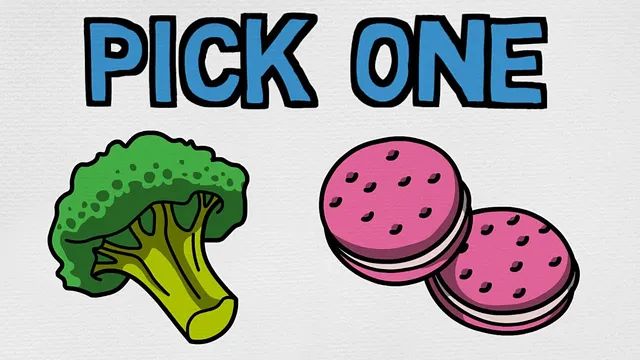
A second scenario flips the setup. Mike returns home hungry, but the counter no longer displays cookies. Instead, apples are placed where they’re visible and easy to grab. When hunger hits, he eats the apple and moves on—no “failure” occurs because the environment now supports the intended behavior. The contrast highlights an “invisible force” shaping choices: people often act based on what’s easiest and most obvious, not what’s best.
The transcript extends this idea with everyday examples. When someone wants a drink and soda is unavailable, they choose water not necessarily because it’s healthier, but because it’s immediately accessible. Likewise, if someone wants soda but it requires a two-mile walk, the effort becomes a real barrier. The same logic applies to habits like overeating, smoking, or gaming: research suggests that people who seem highly self-controlled aren’t fundamentally different—they’re simply better at optimizing their surroundings so they spend less time in tempting situations.
That optimization is practical. If unhealthy food is always present, healthy eating becomes harder. If TV and video games are always available, distraction becomes the default. Disciplined people reduce exposure by changing what’s in reach: keeping only healthy food at home, limiting access to screens, or replacing them with accessible alternatives like books or musical instruments. In the short run, willpower can overpower temptation; in the long run, repeated exposure turns the environment into the driver of behavior.
To change behavior, the prescription is to make good actions easier and bad actions harder. The transcript gives a concrete plan for reading more while watching less TV: place a book visibly next to the couch, and move the TV remote out of sight (for example, into a drawer in another room). When laziness strikes, the person encounters the book first and must expend extra effort to reach the remote. The broader message is that motivation and willpower matter, but the environment often determines what choices feel effortless—so controlling immediate surroundings is the most reliable lever for long-term change.
Cornell Notes
The core claim is that habit failure often comes from environmental cues, not from a lack of willpower. Mike’s attempt to quit processed sugar collapses when cookies remain visible on the counter; he gives in after repeated exposure while hungry. When the cookies are removed and apples are placed where they’re easy to grab, the same person succeeds because the environment supports the goal. Research cited in the transcript suggests “disciplined” people aren’t uniquely self-controlled—they reduce time spent in temptation. Long-term behavior change comes from making good choices easy and bad choices difficult, such as placing books within reach and hiding the TV remote.
Why does Mike fail so quickly after deciding to quit processed sugar?
What changes in the second scenario, and why does it matter?
How does the transcript connect self-control to environment rather than personality?
What’s the “effort barrier” example, and what does it teach about habit change?
How do the reading/TV setup changes work as an environment hack?
What does the transcript mean by short-run willpower versus long-run environmental influence?
Review Questions
- Give two reasons the cookies-on-the-counter setup makes quitting processed sugar harder, even after a strong decision.
- Describe one specific environmental change that would make reading easier and TV harder, using the logic from the remote/book example.
- According to the transcript, why might “disciplined” people succeed without relying on massive willpower every day?
Key Points
- 1
Quitting a habit often fails when the environment keeps presenting the same visible cues, especially during hunger or fatigue.
- 2
Replacing tempting items with healthier, visible alternatives can turn a resisted choice into an easy default.
- 3
Many everyday decisions follow the path of least effort, not necessarily the path of best health or preference.
- 4
Research discussed in the transcript links apparent self-control to environmental optimization—less time in temptation, fewer moments requiring resistance.
- 5
Long-term behavior change depends on reducing exposure to bad options and increasing access to good ones.
- 6
Small setup changes—like placing a book within reach and hiding a remote—can shift what people do automatically when motivation drops.
- 7
Willpower can help briefly, but repeated temptation tends to overwhelm it over time.