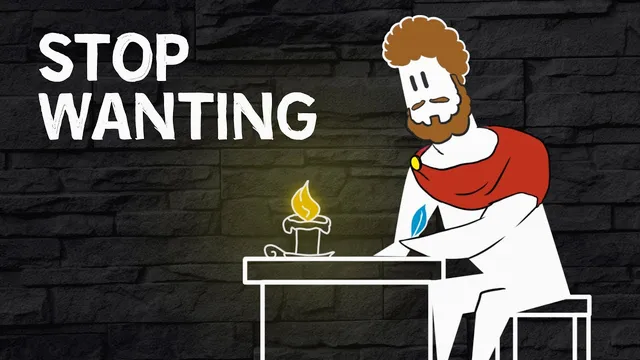
Stop Wanting, Start Accepting | The Philosophy of Marcus Aurelius
Based on Einzelgänger's video on YouTube. If you like this content, support the original creators by watching, liking and subscribing to their content.
Stoic acceptance targets emotional dependence: wanting the universe to comply with preferences reliably produces disappointment.
Briefing
Marcus Aurelius’ Stoic message centers on one practical shift: stop treating life as something the universe must satisfy, and start accepting what happens as it happens. Wanting the world to match personal preferences doesn’t just fail to guarantee happiness—it also makes people emotionally dependent on events they can’t control. The result is a cycle of disappointment, anger, and anxiety whenever reality falls short, from rude remarks and lost ambitions to illness, aging, and death.
Stoicism in the *Meditations* pushes a different posture. First comes acceptance of other people. Other humans are unpredictable, driven by their own wills, and capable of both kindness and cruelty. A joke, insult, or even malice doesn’t automatically injure the mind; harm arrives only when a person adds internal reaction—anger, sadness, or violence—onto the external event. Marcus Aurelius urges readers to “add nothing of your own from within,” and to stop wasting energy trying to control what others do. The focus should return to the self: influence where possible, but recognize that trying to micromanage other people’s behavior is futile and distracts from useful work.
Second comes acceptance of transience. Everything—empires, reputations, generations, and bodies—passes quickly. Children resemble leaves in the wind; even the most celebrated figures become dust. That impermanence can sting, especially when death arrives soon after life begins. Yet Stoicism reframes the same fact as relief: if nothing lasts, then fewer things deserve panic, and time becomes more precious. The “only now” emphasis—each person lives only the brief instant—turns transience into motivation rather than despair.
Third comes acceptance of misfortune through the dichotomy of control. Adversity is unavoidable, but fighting it creates a double burden: the event itself and the disappointment of having it occur. Instead of praying for outcomes to change, Stoic practice redirects prayer toward what can be controlled—fortitude, reduced fear, and the ability to stop wanting things to be otherwise. Happiness tied to external circumstances hands power to fate; happiness grounded in inner judgment keeps a person free.
Fourth comes acceptance of change. The world is not static; it is “nothing but change.” Even seemingly stable objects shift, and living systems constantly replace old parts with new ones. People cling to the status quo, but the feared change is already underway. Trying to hold reality still is like grasping water.
Finally comes acceptance of one’s nature. People struggle with bodies, weaknesses, and aging, but Stoicism argues for living within limits while using reason to govern passions. Humans uniquely possess rational judgment, which can override animal impulses and reframe pleasure, pain, and events as they come. The overarching claim is that accepting external circumstances—however unpleasant—is not surrender but a rational choice grounded in how the world works.
Cornell Notes
Marcus Aurelius’ Stoicism urges people to replace “wanting” with acceptance because most outcomes depend on forces outside personal control. External events—other people’s behavior, life’s impermanence, misfortune, and constant change—cannot be managed directly, but internal judgment can. The *Meditations* repeatedly ties this to the dichotomy of control: focus prayer and effort on fortitude, fear reduction, and the ability to stop trying to force reality to match preferences. Transience makes time urgent and reputations insignificant; misfortune becomes bearable when inner resilience is prioritized. Reason, Stoics say, lets humans govern passions and live in harmony with nature rather than in constant resistance.
Why does Stoicism treat insults or jokes as less harmful than the emotional reaction to them?
How does the dichotomy of control change what “prayer” is supposed to accomplish?
What does transience do to a person’s priorities, according to Marcus Aurelius?
Why does Stoicism argue that resisting misfortune increases suffering?
How is “change” treated differently from mere impermanence?
What role does reason play in accepting one’s nature?
Review Questions
- Which parts of life does the Stoic dichotomy of control place outside personal power, and how does that affect emotional dependence?
- How do transience and reputation connect to the Stoic idea of living “only now”?
- What practical difference does Stoicism claim exists between an external event (like an insult) and the internal emotions attached to it?
Key Points
- 1
Stoic acceptance targets emotional dependence: wanting the universe to comply with preferences reliably produces disappointment.
- 2
External events don’t automatically harm the mind; harm comes from internal judgment and added reactions.
- 3
Trying to control other people’s behavior wastes energy because their actions follow their own will.
- 4
Transience reframes priorities: if everything passes quickly, fewer things deserve panic and time becomes more urgent.
- 5
Misfortune becomes more manageable when effort shifts from changing outcomes to building fortitude and reducing fear.
- 6
The dichotomy of control applies to prayer and action: focus on what can be influenced internally rather than outcomes externally.
- 7
Reason is the mechanism for acceptance, letting people govern passions and live in harmony with nature’s limits and changes.